

Open-source deepfake detector achieves up to 91% accuracy in tests.
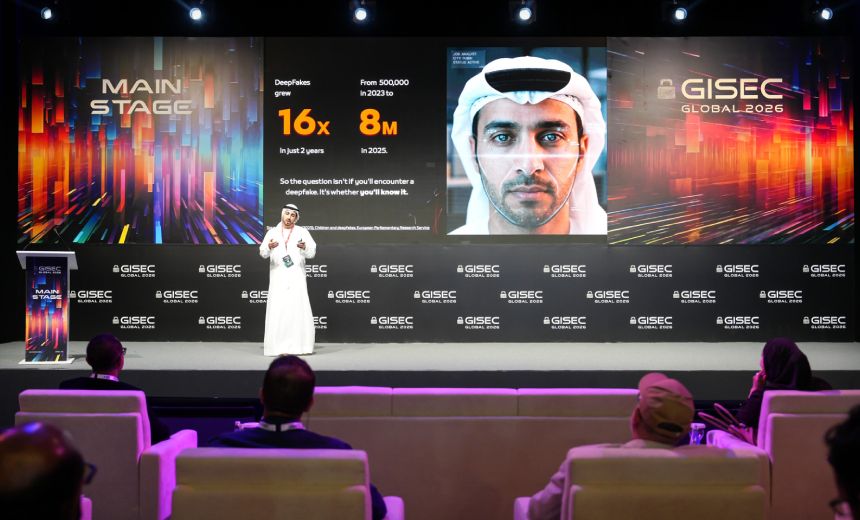
Dubai: The Dubai Electronic Security Center (DESC) has unveiled SARAAB, an artificial intelligence model designed to detect deepfake videos, which the centre says is the first open-source deepfake detection AI model developed by a government entity in the Arab region.
SARAAB was officially launched on September 16, 2026, on the opening day of GISEC Global 2026 at the Dubai Exhibition Centre in Expo City Dubai.
Developed entirely by an Emirati team at DESC, the model forms part of the centre’s wider push to develop advanced AI-powered cybersecurity solutions capable of keeping pace with rapidly evolving digital threats.
The initiative also aims to strengthen digital security and build greater trust in the online environment as AI-generated content becomes increasingly sophisticated.
Developed entirely by an Emirati team at the Dubai Electronic Security Center, SARAAB forms part of the centre’s wider efforts to develop advanced AI-powered cybersecurity tools that can respond to rapidly evolving digital threats and strengthen trust in the online environment.
The launch comes as artificial intelligence becomes increasingly capable of generating highly realistic fake videos, making it more challenging for individuals, organisations and digital platforms to distinguish genuine content from manipulated material.
Up to 91 per cent detection accuracy
According to DESC, SARAAB achieved up to 91 per cent accuracy in detecting deepfake content. It also recorded 89 per cent accuracy when tested against previously unseen data that was not used during the model’s training.
The centre said comparative assessments found that SARAAB achieved the highest accuracy among the open-source deepfake detection models included in its testing.
One of the model’s key capabilities is its ability to analyse short-form content, detecting potential manipulation in video clips as brief as seven seconds.
By comparison, other open-source models evaluated by the Dubai Electronic Security Center generally required video clips of at least 15 seconds to carry out effective analysis.
Open-source release planned
SARAAB’s ability to detect deepfakes in clips as short as seven seconds gives it an advantage over the other open-source models tested by DESC, which required longer footage for analysis.
The capability is particularly relevant as short-form videos continue to spread rapidly across social media and other digital platforms, making it increasingly challenging to determine whether visual content is genuine or AI-manipulated.
DESC plans to make SARAAB publicly available through Hugging Face and GitHub, giving AI engineers, cybersecurity specialists and researchers access to the model to test its capabilities, build on its technology and contribute to its further development.
The open-source release is also aimed at encouraging greater collaboration within the global AI and cybersecurity community while supporting continued advances in deepfake detection technology.
The development of SARAAB represents another step in the UAE’s efforts to strengthen home-grown cybersecurity capabilities, with the Dubai Electronic Security Center using artificial intelligence to anticipate emerging digital threats, protect the community and reinforce the country’s digital security.

