

Southeast Asia turns to Moscow for fuel as Strait of Hormuz disruptions and price spikes shake global energy markets.
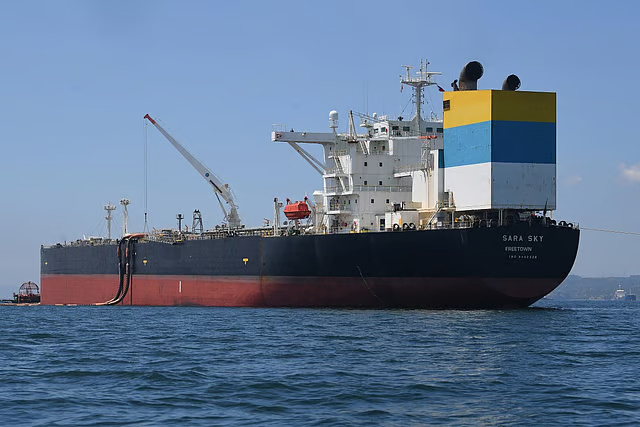
Manila: Several Association of Southeast Asian Nations (ASEAN) countries are increasingly turning to Russian oil and fuel supplies to offset shortages and price spikes caused by the “energy emergency” stemming from the Middle East crisis.
The shift is reshaping regional energy dynamics and raising concerns over Moscow’s long-term geopolitical influence in the region.
Disruptions to crude flows through the Strait of Hormuz following renewed conflict have strained traditional supply routes, forcing energy-dependent Southeast Asian importers to diversify supply sources amid soaring prices and tightening inventories.
Analysts say the rush toward Russian crude and fuel highlights both the urgency of the current energy crunch and the risks of deepening ties with Moscow amid US-led sanctions linked to Ukraine.
How ASEAN is shifting toward Russian supplies
Philippines: Manila received its first shipment of Russian crude in five years in March — around 750,000 barrels delivered to the Bataan refinery — while its sole major refiner, Petron Corporation, also confirmed purchasing about 2.48 million barrels of Russian crude to strengthen supplies amid the Middle East crisis.
Indonesia: The government said it has agreed to import around 150 million barrels of Russian crude oil this year to reduce reliance on disrupted Middle Eastern shipments.
Vietnam, Malaysia and Myanmar: These countries have expressed interest in Russian oil as prices rise and supply reliability weakens, with leaders engaging Russian officials on potential energy cooperation, according to observers.
Shift
The move comes as ASEAN energy ministers and dialogue partners discuss coordinated responses to supply volatility and rising costs, including stockpiling and stronger regional cooperation mechanisms.
Experts warn that while Russian fuel offers short-term relief, growing dependence could increase Moscow’s leverage in Southeast Asia at a time when other powers, including the United States and China, are also competing for influence.
Southeast Asia imports most of its oil from the Middle East, making the region especially vulnerable to supply disruptions.
With the Strait of Hormuz still largely off-limits to shipping because of the ongoing Middle East conflict, ASEAN members are recalibrating supply chains and sourcing strategies to secure critical energy needs.
Data analysed from Global Petrol Prices shows that Southeast Asian countries make up a large share of the nations experiencing the sharpest increases in fuel costs for both gasoline and diesel as of late March 2026.
The Philippines ranks second globally for gasoline price increases, with prices rising 71.6 per cent since February 23.
It also ranks third worldwide for diesel price hikes, with prices surging 111 per cent over the same period.
The region’s vulnerability is largely linked to Asia’s heavy dependence on the Strait of Hormuz, a vital route for global oil and gas shipments.
Any disruption at this chokepoint quickly sends shockwaves through energy markets, pushing prices higher and increasing pressure on consumers and businesses alike.
For Southeast Asian economies, the surge is more than just a market story — it is a stark reminder of how exposed the region remains to global energy shocks, especially when geopolitical tensions threaten major supply routes.

