

No two rescues are the same, and each one carries a story that Abdulkarim remembers.
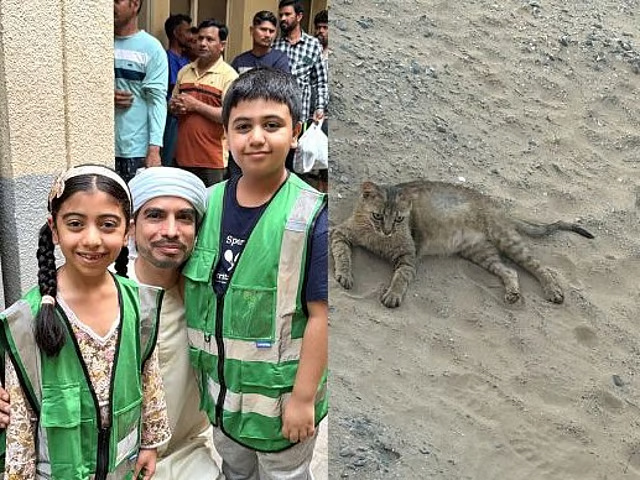
Abdulkarim Ismail Al Zarouni may be modest when speaking about himself, but mention the cats he has rescued across the UAE and the stories come pouring out.
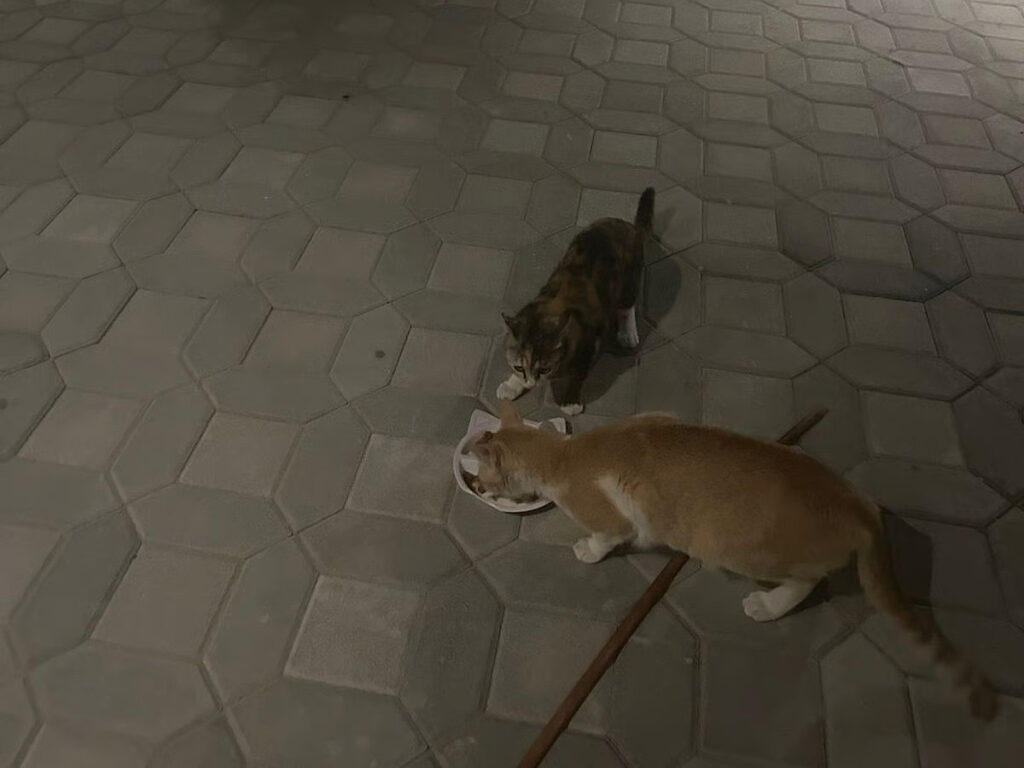
Thanks to his dedication, nearly 30 stray cats in one part of Dubai know exactly where to go when it’s time to eat. They gather at designated feeding spots, following familiar routes and patiently waiting for Abdulkarim, who has spent years caring for them.
Some remain outdoors under his watchful eye, while others have found temporary shelter inside his home. For Abdulkarim, caring for the animals is not a task pencilled into his daily schedule — it has become a natural part of family life, woven into his everyday routine and driven by a long-standing commitment to helping vulnerable animals.
“Some of them sleep in our home, and we feed them too,” he said.
For Abdulkarim, animal welfare is a family effort rather than a solo undertaking. His mother lends a hand, his children are actively involved, and caring for the cats has become deeply woven into their daily lives.
What began as an act of kindness has evolved into a shared family mission, with compassion and responsibility passed from one generation to the next. Looking after the animals is not seen as a burden, but as a collective commitment rooted in empathy and care.
Born and raised in Dubai, Abdulkarim Ismail Al Zarouni grew up witnessing a problem that often went unnoticed — abandoned and stray animals struggling to survive on the streets.
“We used to see so many abandoned and dumped cats when we were growing up,” he recalled.
Unable to ignore animals in distress, Abdulkarim spent years rescuing cats and helping vulnerable animals whenever he could. What began as a personal commitment gradually evolved into a larger mission as the number of cases continued to rise, reinforcing the need for a more structured and sustainable approach.
In 2024, he and a partner launched Amal CSR, a UAE-based initiative dedicated to animal welfare and sustainability. Initially operated by volunteers, the organisation has since secured funding support, enabling it to expand its programmes and broaden its impact across both animal welfare and environmental sustainability efforts.
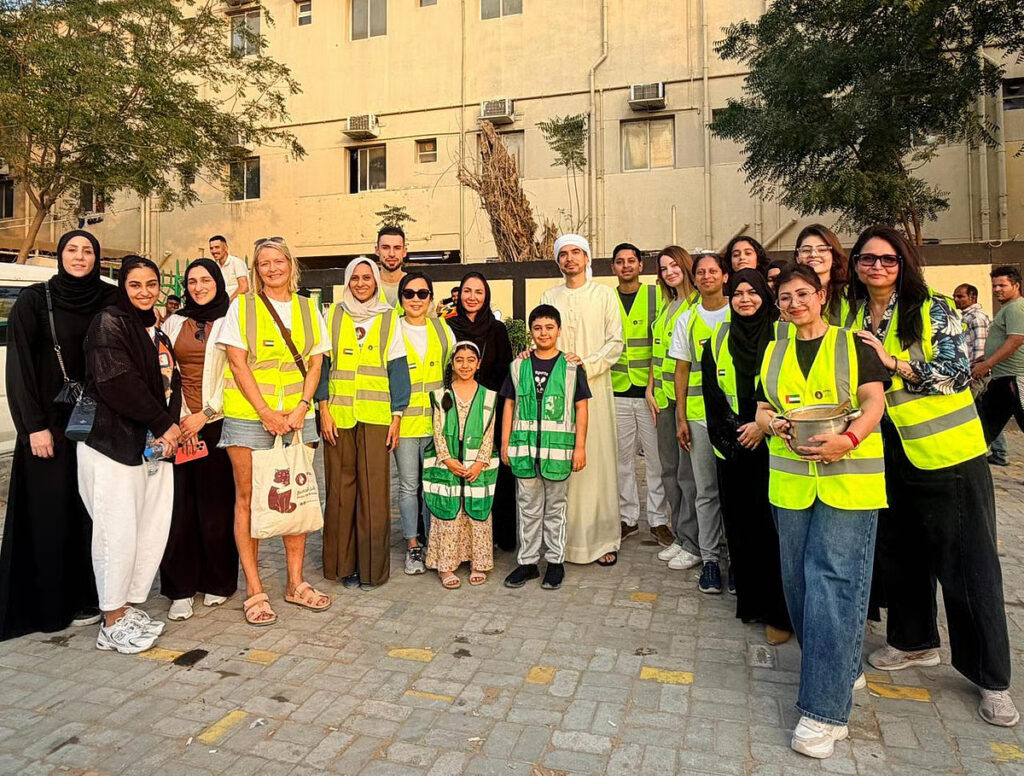
Many of those rescue efforts begin in places most people would never think to search.
For Abdulkarim Ismail Al Zarouni, every rescue has its own story. Some cats are found roaming the desert, dehydrated, hungry and struggling to survive. Others are discovered on construction sites or in industrial zones, where harsh conditions make life especially difficult. Then there are the pets abandoned in parks after their owners leave the country, left to fend for themselves without food, shelter or care.
While each case presents unique challenges, the goal remains unchanged: to give the animals a second chance at life.
These rescues rarely happen alone. Across the UAE, networks of dedicated volunteers work together to identify and assist vulnerable animals. When a cat or dog in distress is spotted, photos and information are quickly circulated through rescue groups, often triggering a coordinated response within hours.
Volunteers help arrange transport, veterinary treatment, temporary foster care and, where possible, permanent homes. Their collective efforts ensure that animals receive the support they need as quickly as possible.
“We try to save the cats in the best way that we can,” Abdulkarim said. “Whether that’s taking them to the vets or carrying out TNR.”
TNR, or Trap-Neuter-Return, involves humanely trapping stray cats, sterilising and vaccinating them, and then returning them to their familiar environment. The approach is widely used to improve animal welfare while helping manage stray cat populations in a sustainable way.
Trap-Neuter-Return, commonly known as TNR, is one of the most widely used humane approaches to managing stray cat populations. The process involves trapping cats, sterilising and vaccinating them, and then returning them to their original territories, helping to reduce suffering while preventing uncontrolled population growth.
But caring for abandoned animals often comes at a significant personal cost.
“Some are left behind in parks. People just dump them and leave them behind when they leave the country,” Abdulkarim said. “We take them to the vets, and pay for them, though it costs a lot.”
Veterinary treatment, food, transportation and long-term care can quickly become expensive. Yet for Abdulkarim Ismail Al Zarouni, the financial burden is outweighed by the opportunity to improve an animal’s life.
Every rescue, medical treatment and successful recovery reinforces a principle that has shaped his work for years: communities are stronger when compassion is shared and responsibility is collective.
That philosophy extends beyond animal welfare. Through Amal CSR, Abdulkarim is also supporting environmental sustainability efforts, including tree-planting programmes and initiatives aimed at strengthening urban ecosystems and enhancing community wellbeing.
By combining animal welfare with environmental action, the organisation seeks to create a broader culture of care — one that benefits both vulnerable animals and the communities in which they live.
For Abdulkarim, the link between animal welfare and environmental stewardship is a natural one. In his view, caring for vulnerable animals and protecting the environment are part of the same mission — creating healthier, more compassionate communities.
To him, the connection is simple: both are rooted in respect, responsibility and a desire to leave the world better than it was found.
“Whether it’s helping an abandoned cat or planting a tree, it’s all about making a positive difference,” he said.
That philosophy continues to guide the work of Amal CSR, where animal welfare and environmental action go hand in hand. For Abdulkarim, every rescue, every tree planted and every act of kindness contributes to a larger goal — building a more caring, sustainable future for both people and animals.

