

The passport has become a major talking point after the MEA reiterated that an Indian passport should not be considered definitive proof of citizenship.
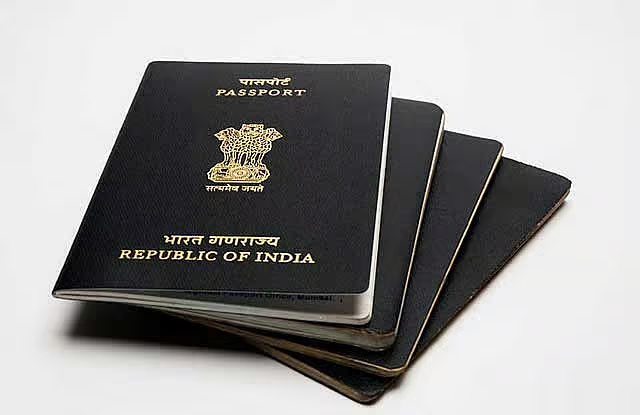
Whether you are planning a summer holiday or renewing your travel documents from the UAE, it is increasingly important to understand what an Indian passport can—and cannot—do.
For millions of Indians, the passport is more than just a travel document. It is carefully stored in lockers, used for visa applications, job changes, and overseas travel, and is often considered one of the most important documents a person owns.
However, a recent clarification from India’s Ministry of External Affairs has sparked renewed discussion around its legal significance.
However, a recent clarification by India’s Ministry of External Affairs (MEA) that an Indian passport is not definitive proof of citizenship has reignited debate and highlighted the many misconceptions that still surround the small blue booklet.
Myths vs facts about Indian passports: what every UAE traveller needs to know
The announcement has left many Indians, including those living overseas, wondering what a passport actually proves, whether existing passports remain valid as India rolls out e-passports, and what other common assumptions may not be entirely accurate.
Here’s a fact check of some of the biggest myths surrounding Indian passports.
Myth 1: An Indian passport is proof of Indian citizenship
Fact: It is primarily a travel document, not conclusive proof of citizenship.
This has become a key talking point after the MEA reiterated that an Indian passport should not be treated as definitive proof of citizenship.
While passports are issued only after document verification, Indian law distinguishes between a travel document and legal proof of citizenship. Citizenship is governed by the Citizenship Act, while passports are issued under the Passports Act. Section 20 of the Passports Act also allows the government, in exceptional circumstances and in the public interest, to issue a passport or travel document to a non-citizen.
In everyday use, an Indian passport remains one of the strongest indicators of nationality. However, if citizenship is legally questioned, additional supporting documents may be required depending on the case.
Myth 2: Everyone must immediately replace their passport with an e-passport
Fact: Existing passports remain valid until expiry.
India is gradually introducing chip-enabled e-passports to enhance security and reduce forgery risks.
However, travellers do not need to replace valid passports immediately. Existing passports remain valid until their expiry date, after which applicants may receive an e-passport depending on availability and application location.
Myth 3: An e-passport allows authorities to track your location
Fact: It does not.
A common misconception is that chip-enabled passports function like tracking devices.
In reality, the embedded chip stores passport and biometric data securely and can only be read by authorised immigration systems. It is designed for identity verification and fraud prevention, not location tracking.
Myth 4: Passport fees in India remain unchanged this year
Fact: Fees have been revised from July 1.
India has updated passport issuance and renewal fees effective July 1, impacting both new applications and reissue requests.
Fee structures vary based on booklet type, application category, and service mode (normal or Tatkal). Officials have clarified that the revised rates apply only to new applications submitted from the effective date and do not affect already-issued passports.
Myth 5: You can travel until the day your passport expires
Fact: Many countries require at least six months’ validity.
Many countries require passports to be valid for at least six months beyond the intended date of travel. Airlines may also deny boarding if this condition is not met.
Travellers are advised to renew passports well before expiry, especially frequent flyers.
Myth 6: ‘Renewal’ and ‘reissue’ mean the same thing
Fact: Most cases are processed as reissue.
The term “renewal” is commonly used, but under India’s Passport Seva system, most cases are classified as “reissue”.
This includes expired passports, exhausted pages, damage, loss, or changes in personal details. Understanding the distinction helps applicants choose the correct service.
For adults, passports are generally valid for 10 years, while for minors they are usually valid for five years or until age 18, depending on circumstances.
Myth 7: Passport holders can have dual citizenship
Fact: India does not allow dual citizenship.
Holding an Overseas Citizen of India (OCI) card is often misunderstood as dual citizenship.
However, OCI status does not confer Indian citizenship or political rights such as voting. OCI holders must travel on the passport of their country of nationality.
Myth 8: A damaged passport is still usable if details are readable
Fact: It may not be accepted.
Passports that are torn, water-damaged, missing pages, or have a damaged biometric chip may be considered invalid.
Depending on the extent of damage, travellers may face issues during immigration or visa processing. Authorities generally recommend replacing damaged passports rather than risking travel.

