

Indian passport holders can access 56 destinations visa-free or with a visa on arrival, while UAE residency may unlock additional travel options.
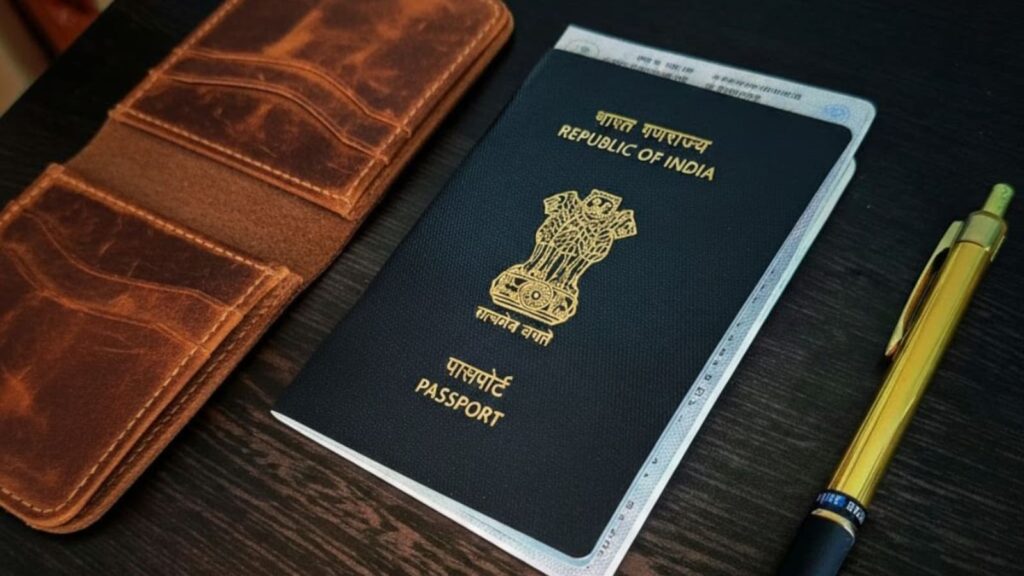
India’s passport has slipped to 80th place in the latest Henley Passport Index released in July, despite offering visa-free or visa-on-arrival access to 56 destinations.
The drop follows a period of improvement. Earlier this year, India climbed to 75th place in the 2026 Henley Passport Index, after ranking 85th in 2025.
The latest change highlights how passport rankings can shift even when the number of visa-free or visa-on-arrival destinations remains largely unchanged.
For the millions of Indians living and working in the UAE, the latest ranking underscores both the travel opportunities and limitations that come with an Indian passport when planning overseas trips.
What does the ranking measure?
The Henley Passport Index ranks the travel freedom of 199 passports using data from the International Air Transport Association (IATA).
India’s current mobility score of 56 means Indian passport holders can access 56 destinations through a combination of visa-free entry, visa-on-arrival (VOA), electronic travel authorisations (ETA) and similar simplified entry arrangements.
Most of these destinations are in Asia, Africa and the Caribbean. However, Indian travellers still require visas in advance for several popular destinations, including the United States, the United Kingdom and most Schengen countries.
Why did India’s ranking fall?
Experts note that passport rankings are relative rather than absolute. A country’s position can decline even if its visa-free access remains unchanged.
This typically happens when other countries negotiate new visa-waiver agreements or expand reciprocal travel arrangements more quickly. Diplomatic ties, border security standards, international cooperation and confidence in travel documentation also influence a passport’s global standing.
As a result, passport strength is determined by international mobility rather than a country’s economic size or geopolitical influence alone.
Passport under the spotlight
The latest ranking comes amid increased attention on India’s passport.
Last month, the Ministry of External Affairs (MEA) reiterated during Passport Seva Divas that a passport is primarily a travel document and should not be regarded as conclusive proof of citizenship. The clarification sparked widespread public and political debate.
While passports are issued only after official verification and remain strong evidence of nationality, the government has maintained that citizenship is established through underlying legal records and documentation rather than the passport itself.
The discussion also follows the government’s recent revision of passport fees — the first increase in 14 years — bringing renewed attention to the document’s value, cost and international travel benefits.
Countries Indians can access more easily
Indian passport holders can visit 56 destinations without obtaining a visa before departure or by receiving a visa on arrival or ETA.
Visa-free destinations include: Angola, Barbados, Bhutan, British Virgin Islands, Cook Islands, Dominica, Fiji, Grenada, Haiti, Jamaica, Kazakhstan, Kiribati, Macao (SAR China), Malaysia, Mauritius, Micronesia, Montserrat, Nepal, Niue, Philippines, Rwanda, Senegal, Thailand, The Gambia, Trinidad and Tobago, and Vanuatu. Kenya, Seychelles and St. Kitts and Nevis also offer simplified entry through an ETA.
Visa-on-arrival destinations include: Burundi, Cambodia, Cape Verde, Comoros, Djibouti, Ethiopia, Guinea-Bissau, Indonesia, Jordan, Laos, Madagascar, Maldives, Marshall Islands, Mongolia, Mozambique, Myanmar, Palau, Qatar, Samoa, Sierra Leone, Sri Lanka, St. Lucia, Tanzania, Timor-Leste, Tuvalu and Zimbabwe.
Additional travel flexibility for UAE residents
For Indians living in the UAE, travel opportunities can extend beyond the passport itself.
Several countries offer simplified entry procedures, visa-free access or visas on arrival for Indian nationals holding a valid UAE residence visa, subject to their immigration policies. Popular destinations among UAE residents include Mauritius, Seychelles, Thailand, Malaysia, Indonesia, Nepal and Bhutan.
Countries such as Maldives, Sri Lanka, Jordan, Georgia, Azerbaijan, Kenya and Madagascar may also offer relatively straightforward entry for eligible UAE residents, depending on current immigration rules.
Travellers should always check the latest entry requirements with their airline, the destination country’s embassy or immigration authorities before booking, as visa policies can change without notice.

