

Here’s how a little-known rule legally allowed a UAE resident to get their right index finger inked.
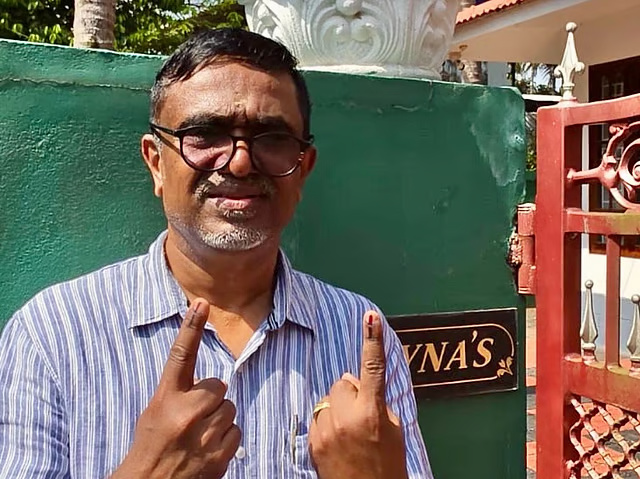
Dubai: While thousands of Keralites headed to polling booths across the state on Thursday, one Indian expat in the UAE did something that drew both curiosity and smiles. Dubai resident Babu MC cast not one, but two votes in the Kerala Assembly Election 2026 — and every part of it was legal.
Babu, who travelled to his hometown with his wife Shyna Babu to take part in the electoral process despite regional tensions, is believed to be among the few UAE residents who returned from the polling booth with ink marks on both index fingers, the left and the right.
A public relations officer at a Dubai-based company, Babu proudly shared photos of his inked fingers on social media, prompting many to wonder how casting two votes was permitted.
The secret lies in a little-known electoral provision called companion voting, which is intended for visually impaired and physically infirm voters who are unable to cast their ballot independently.
“It applies in cases of visually challenged and infirm voters,” Babu told Gulf News. Under this rule, eligible voters can authorize a companion to vote on their behalf by submitting an official letter to the presiding polling officer.
What sets companion voters apart is a simple but important detail: while regular voters have their left index finger inked to prevent multiple voting and maintain election integrity, companion voters have their right index finger inked instead.
“I believe only companion voters follow the system of having their right index finger inked to indicate they have voted on behalf of someone else,” Babu said.
Who did he assist?
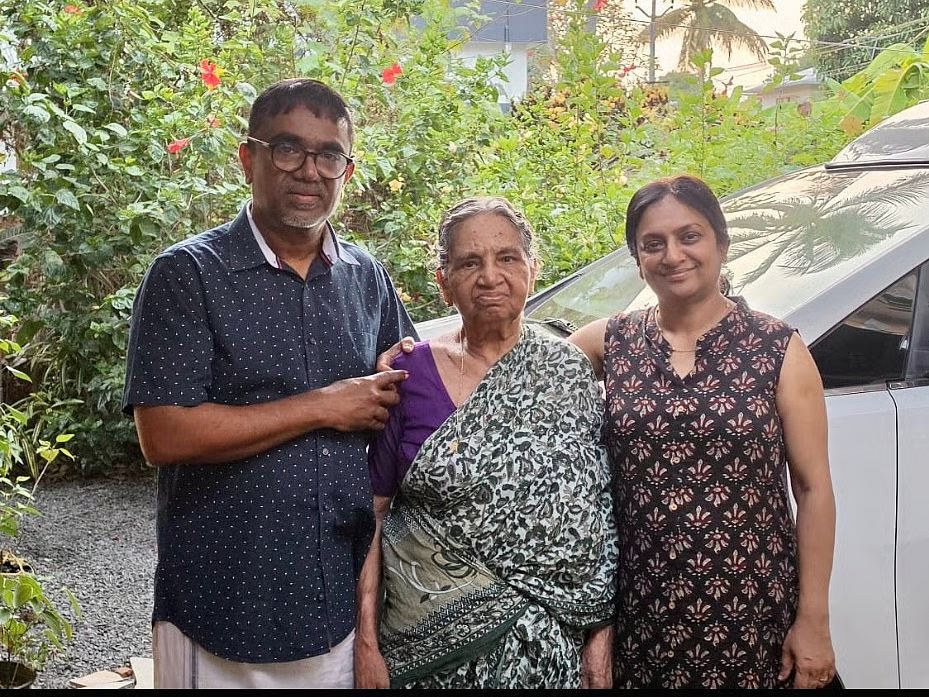
In Babu’s case, the person he assisted was his own mother, who is over 80 years old. “Due to old age, she has developed visual impairment and also finds it difficult to walk properly,” he said.
On Thursday, Babu and Shyna went to the polling booth in Kannur district along with both their mothers. While Shyna’s mother voted independently, Babu’s mother gave him an authorization letter to cast her vote on her behalf.
As a result, two votes were cast, two fingers were inked, and one son had a memorable day he is unlikely to forget anytime soon.
“This is my second time casting her vote. The last time was during the Panchayat elections,” said Babu.
Right index finger inked twice
However, he recalled that earlier he was only able to cast his mother’s vote. “I was not on the voters’ list for the local body elections. This is the first time I was able to vote twice,” he said.
“Democracy is a core value for every Indian citizen, and voting is its most important expression. Even amid regional tensions, both of us, who believe in democracy, came and exercised our right to vote, and this time I cast two votes,” he added.
For Shyna, an assistant financial manager based in Dubai, the day also carried quiet happiness. “I voted after a long time. I am glad we could take both our mothers to vote and later to the famous Kadalayi Sree Krishna Temple. They were both very happy today,” she said.
Call for better access
Meanwhile, there is a broader discussion in India about improving accessibility at polling stations for visually impaired voters. While companion voting provides a workaround, disability rights advocates and election reform groups have been advocating for more independent solutions.
In Tamil Nadu, for example, there have been demands for audio-enabled VVPAT (Voter Verifiable Paper Audit Trail) machines that would allow visually impaired voters to verify their vote independently without relying on a companion.
Activists and organisations supporting persons with disabilities have argued that, while the current system is helpful, it still does not provide visually impaired voters with complete independence at the ballot box. They believe that audio-enabled assistance would be an important step toward making elections truly inclusive.

