

It’s all about playing the long game—and they do it exceptionally well.
They move with MS, not against it.
A radiating sense of strength shines through the UAE’s National Multiple Sclerosis Society. In the space between fatigue and hope, members build full lives—whether showing up for work, parenting, or training for the Open Masters Games held earlier this year in Abu Dhabi.
It’s about playing the long game—and they do it remarkably well.
“I want to live as normally as possible”
For Abu Dhabi-based Marie Meillaud, living with multiple sclerosis starts with perspective. Her initial diagnosis felt like a tsunami, but she chose to move forward rather than fight the condition.
She embraces this philosophy wholeheartedly, letting it guide both her professional and personal life. Meillaud is determined to live as normally as possible. “I have a demanding operations role, where I lead a team, maintain an active social life, and raise 10-year-old twins like any other parent. I continually set new personal goals, including challenges such as the Open Masters Games,” she explains.
MS doesn’t cloud her mind every morning, but its presence is always felt. She respects it and is grateful that her condition remains relatively stable. Still, the fatigue that comes with the illness can feel endless. “It is my main challenge. I prioritise sleep and try to go to bed early, even though anyone living with MS knows there’s no real trick to overcoming the fatigue.”
If she pushes too hard, her body reminds her to slow down—sometimes through burning sensations, numbness, or a sudden energy crash. “My steady approach means treating my energy as a precious resource and managing it carefully.”
This awareness guides her through daily life. Before the Open Masters Games, she wasn’t very active and didn’t feel the need to exercise. “These games were an eye-opener for me. They made me realise how important daily physical activity is. You need to listen to your body and take care of it.”
And perhaps most importantly, she makes a clear distinction between herself and her diagnosis: “MS is something I live with; it is not who I am.”
The Invisible Weight
MS is an invisible illness, and undeniably exhausting. As Meillaud explains, its “invisibility” can make her feel lonely or misunderstood—after all, if people can’t see what you’re going through, it’s hard for them to truly understand.
Yet, paradoxically, it has also given her strength. “The world doesn’t always see or understand my challenges, but I’ve learned to stand tall within it. My family, friends, and colleagues may not always feel what I feel, yet by treating me as capable, present, and strong, they have quietly helped me remain exactly that.”
Finding Rhythm, Building Community
When Meillaud was first diagnosed, support systems were scarce. Today, that has changed thanks to organisations like the National Multiple Sclerosis Society. “I have always chosen openness over silence about my MS. I am proud to be a Person of Determination and even prouder to advocate for MS awareness,” she says. Her diagnosis came at a time when the UAE had no established or active MS community, making the early days feel unpredictable.
But with the launch of the National Multiple Sclerosis Society, she knows one thing for certain: she isn’t alone. “Even if I cannot attend every event, simply knowing that I’m not alone brings immense comfort and strength.”
Love and support also persist at home through daily routines. Consistency in sleep, healthy homemade meals, regular exercise, and careful planning are key. “Probably influenced by my job, I need things to be organised, structured, and well planned. Every weekend, I prepare the full weekly menu for our family, from lunches to dinners. It helps me stay focused and avoids last-minute changes,” she explains.

A Family That Moves as One
Their family motto is simple: MS exists, but it does not lead their lives.
For Marie and her partner Sirik, MS has been a shared journey. They navigate daily life as a team, always choosing openness over silence. “Our twins were born just two years after Marie’s diagnosis. When they turned six, we began explaining MS in simple, child-appropriate terms so they could understand without fear,” Sirik explains.
They adapt around the hardest days, but most days carry a sense of normalcy—work, school, social dinners, busy weekends, and outdoor activities. Above all, their home is filled with laughter.
Sirik adds that he makes sure Meillaud always feels supported and seen.
They cannot hide MS, but neither does it define or dominate their lives.
As he adds, they weren’t naturally “sporty” people, yet they committed fully and accomplished something they are immensely proud of. “For four months, our routine—and even our family rhythm—shifted. Three times a week, we drove to an Olympic pool for practice before the kids were awake. It wasn’t always easy, but even if the children weren’t training with us, they were part of the journey and encouraged us in their own way,” he says.
The discipline, mutual support, and celebration of victories side by side strengthened their bond and deepened their understanding of each other. “It reminded us that when we move in the same direction together, we are capable of far more than we imagine.”
The Finish Line That Changed Everything
For many in this community, the Open Masters Games earlier this year marked a turning point. As Meillaud recalls, when she first expressed interest in representing the NMSS at the Games, she had no idea what the journey ahead would entail.
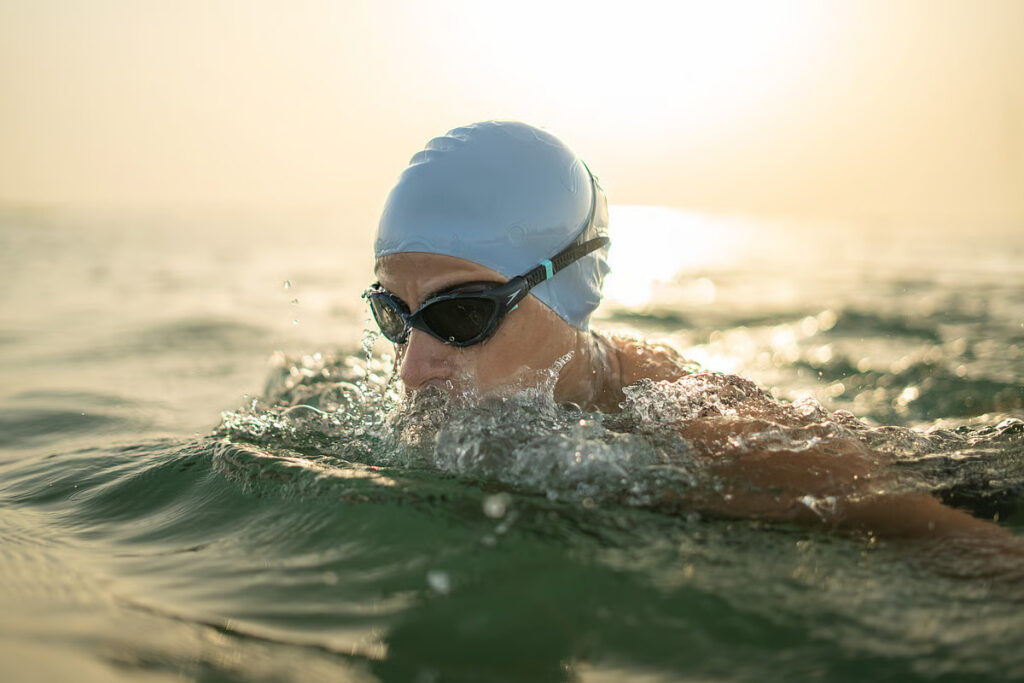
She didn’t even know how to swim freestyle. “It came at a time when I was facing health and mental challenges and truly needed a personal goal to regain motivation and direction in my life.”
Thus began four months of intense, regular training, filled with doubts and moments when she wanted to quit.
Yet she never felt alone. “I was supported, trusted, and constantly encouraged not to give up. The NMSS team and my family stood by me in the most beautiful way, cheering with signs during our races all the way to the finish line. It was just amazing,” she says.
Movement as Medicine
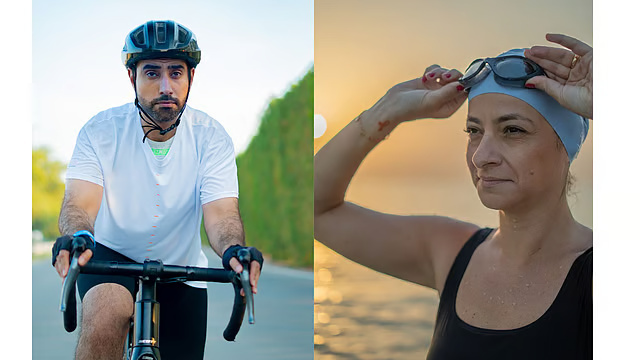
While Meillaud found pride in swimming, in another part of Abu Dhabi, Mohamed Al Harbi discovered freedom on a bike.
For Al Harbi, the journey with MS began long before his diagnosis, marked by confusion, imbalance, and uncertainty. Cycling became a way to regain control and steady himself when his body felt unpredictable. “Before my diagnosis, I experienced fatigue and coordination issues without understanding why,” he explains.
Once on a bike, the experience felt almost therapeutic. Physically, it helped manage stiffness and fatigue. Mentally, it cleared his head, reduced stress, and sharpened his focus. “On days when symptoms feel heavy, even a short ride reminds me that I am still strong and capable,” he says.
And when MS tries to slow him down, movement pushes him forward. “Each time I complete a ride or workout, I feel like I am taking charge of my body instead of letting the condition define me.”
Even the diagnosis, though difficult, brought clarity amid the fear and emotions it stirred—tempered with a sense of relief. “Finally understanding what was happening allowed me to take action. I became more intentional about my health, my rest, and my movement. Exercise stopped being optional and became part of my treatment and daily routine,” he explains.
Along the way, he gained important lessons. MS teaches you to listen to your body, he says. Some days call for rest; others allow for strength. “It has taught me patience with setbacks, resilience, and gratitude for every small victory.”
Strength in Small Steps
Some found freedom in swimming, others in cycling, and Deborah Dunne embraced both spinning classes and cycling.
Movement has become a vital part of her life. “Attending Crank, the spinning classes I go to, has played a huge role in keeping me motivated and consistent. It gives me structure and a space to focus and clear my mind. Even walking my dogs helps me reset,” she says.
These moments of quiet allow her to reconnect with herself and recognize what her body is still capable of. That steady practice led to a major achievement: completing a 40km road race at the Open Masters Games this year.
Breaking it down, she explains, “Preparing for and completing the 40km road race in 1 hour and 26 minutes was a powerful moment for me. It wasn’t just about the time—it was about what it represented: resilience and trusting my body.”
Crossing the finish line was an emotional moment, filled with overwhelming pride and tears of joy. “I actually cried with joy before the finish line because of the incredible support I received from the National Multiple Sclerosis Society, my husband Alan, my friends, and, of course, my family,” she recalls.
For her, it was never just about completing the race. It was about carrying the MS community with her and making them proud. She proved that MS could not hold her back.
Changing What’s Possible
MS does not control their lives.
“I want people to understand that we are normal people living full, meaningful lives. MS does not define who we are,” says Meillaud.
She also urges nuance. “Invisible symptoms don’t mean we don’t need support. And visible symptoms don’t mean we are already supported enough. MS is complex, and living with it long-term requires empathy, patience, and awareness.”
For Al Harbi, the message is one of possibility: a diagnosis is not the end of your dreams. “With determination, support, and movement adapted to your body, it’s possible to live fully, stay active, and achieve more than you ever imagined.”
For families walking this path together, the lesson is simple: when you’re surrounded by loved ones, anything is possible. That support gives you the strength to push through the toughest moments, and over time, that strength multiplies.
Eventually, you realise just how far you’ve come—and somehow, together, you keep moving forward.

