

Fitch: Disruption may be temporary as global supply and stockpiles cushion markets.
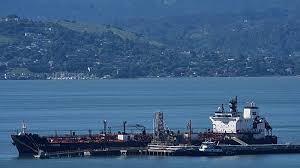
Dubai: Escalating tensions around the Strait of Hormuz have disrupted tanker traffic and pushed oil prices higher, sparking concerns for global energy markets and Gulf trade routes.
Credit ratings agency Fitch Ratings said the disruption is unlikely to be long-lasting, despite the ongoing squeeze on shipping.
Angelina Valavina, EMEA head of natural resources and commodities at Fitch, described the situation as an “effective closure” of the Strait of Hormuz, with shipping companies avoiding the route due to security risks.
Tanker traffic drops sharply
Shipping data shows that tanker traffic through the Strait of Hormuz has plunged sharply since the outbreak of conflict involving Iran on February 28, with vessel transits falling by a large margin as shipping companies avoid the risky waterway amid rising attacks and security warnings.
Tanker traffic through Strait of Hormuz drops sharply
Ship-tracking data shows that tanker traffic through the Strait of Hormuz has fallen sharply since the outbreak of conflict involving Iran. Hundreds of vessels have either remained outside the waterway or rerouted to avoid attacks, while some ships have been damaged in strikes linked to the conflict.
The Strait of Hormuz is one of the world’s most critical energy chokepoints, with around 20 million barrels of crude oil and petroleum products moving through the strait each day. This accounts for roughly a quarter of global seaborne oil trade and about 20% of global oil consumption.
Exports from Gulf producers dominate these flows:
- Roughly half originate from Saudi Arabia and the UAE
- The remainder mainly comes from Iraq, Kuwait, and Iran
- About half of the shipments go to China and India
Fitch: Strait of Hormuz closure unlikely to last
Fitch Ratings expects the disruption to be temporary, citing the strait’s vital economic importance. Angelina Valavina, EMEA head of natural resources and commodities at Fitch, said the “effective closure of the Strait of Hormuz… is likely to be temporary given its vital economic role.”
Fitch: Market fundamentals should limit sustained oil price surge
Angelina Valavina, EMEA head of natural resources and commodities at Fitch Ratings, said that underlying market fundamentals should prevent prolonged oil price spikes. “This, alongside global oil market oversupply, should limit oil price rises and mitigate any potential disruptions to Iranian oil supply,” she noted.
Fitch also expects limited changes to its long-term price outlook. “We do not expect significant upside to our December 2025 assumption of an average Brent oil price of $63 per barrel for 2026,” Valavina added.
Global supply remains strong
Oil markets entered the crisis with a surplus in supply, according to Fitch:
- Global oil supply rose by about 3 million barrels per day in 2025
- Demand growth was well below 1 million barrels per day
- Supply is forecast to grow another 2.4 million barrels per day in 2026
- Demand is expected to increase by around 0.8 million barrels per day
About half of the new supply comes from non-OPEC+ producers, who are largely unaffected by Middle East tensions. Additionally, OPEC+ holds around 4.3 million barrels per day of spare capacity, providing an extra buffer for global markets.
Oil stockpiles provide a cushion
Global oil inventories offer additional protection against prolonged disruption. Stocks reached approximately 8.2 billion barrels by the end of 2025, the highest level since March 2021.
Fitch Ratings estimates that these reserves could cover more than 400 days of halted shipments through the Strait of Hormuz if necessary.
Key pipelines reduce dependence
Gulf producers also operate pipelines and infrastructure that bypass the strait, reducing reliance on this critical chokepoint.
Pipelines provide alternative routes
Saudi Arabia operates the East-West pipeline, capable of transporting about 5 million barrels per day to Red Sea export terminals. Meanwhile, the UAE runs a pipeline linking onshore oil fields to Fujairah on the Gulf of Oman, with a capacity of 1.5 million barrels per day and peak flows of 1.8 million barrels per day.
These infrastructure routes allow some oil exports to continue without passing through the Strait of Hormuz, helping to mitigate immediate disruption risks.
Risks remain if conflict expands
Iran produces around 3.5 million barrels per day, exporting roughly 2 million barrels daily, equivalent to about 3.5% of global crude supply.
Fitch Ratings said that global oversupply could offset potential disruptions from Iranian production. However, the agency warned that uncertainty remains regarding the scale and duration of the conflict.
A prolonged blockage of the Strait of Hormuz or damage to regional energy infrastructure would significantly tighten global oil markets and push prices higher.

