

UAE professionals weigh in on Etihad Rail and the future of job hunting in the UAE.

How often do you evaluate a job offer against your current role and conclude: it’s simply too far away?
For years, distance has been a decisive factor in hiring decisions across the UAE.
A promising role in another emirate often meant hours on the road, unpredictable traffic, rising fuel costs, and reduced time at home. For those without access to a car, the challenge was even greater, with limited public transport options and shared commuting costs adding further strain.
However, as Etihad Rail’s passenger network moves closer to reality, HR professionals say that calculation could begin to shift. Faster connections between Abu Dhabi, Dubai, Sharjah, and Fujairah are expected to improve mobility, while also expanding employers’ access to talent previously beyond reach. As a result, candidates may no longer rule out opportunities purely on the basis of distance.
However, recruitment experts agree on one point: trains alone will not reshape the labour market. The success of this shift will depend as much on employers redesigning jobs, benefits, and working patterns as it does on the rail network itself.
Where Etihad Rail is expected to significantly widen the job search radius is among professionals willing to trade slightly longer total journey times for a more predictable, less stressful commute and improved career opportunities. For instance, a professional in Fujairah could reach Dubai in around 50 minutes by rail.
Distance is no longer the biggest barrier
While distance may not always be the sole reason candidates decline an offer, recruitment experts say it often becomes the deciding factor once salary, role, benefits, and visa considerations are taken into account.
Sarah Brooks, Managing Director at Fikrah HR, notes that these factors collectively shape candidates’ decisions. In her experience, mid-career professionals with families commonly turn down roles involving inter-emirate commutes of 90 minutes or more each way, even when the compensation package is attractive.
She adds that the impact of distance varies depending on the route. While a Dubai–Sharjah commute may still be considered manageable, longer inter-emirate journeys such as Sharjah to Ras Al Khaimah or Ajman can become deal-breakers, particularly when employers require full-time on-site attendance with limited flexibility in working hours.
Often, the reason is never stated directly. Candidates may say, “let’s pause for now,” or drop out late in the hiring process. What they often mean is: “I can’t see myself doing this commute five days a week.” As Brooks notes, while commute may not always appear in rejection reports, it strongly influences acceptance behaviour in the current market.
Ravi Jethwani, CEO of Innovations Group, estimates that commute-related rejections account for roughly 15–20% of last-stage candidate dropouts, adding that changing traffic conditions have made professionals less willing to commit to long daily drives.
Commute may not be the only reason a candidate declines an offer, but it often becomes the deciding factor when comparing similar opportunities, says Anil Singh, Chief Business Officer, KSA at TASC Outsourcing.
He adds that improved rail connectivity could significantly reshape perceptions of employment opportunities across the UAE. With many companies already offering hybrid working arrangements, enhanced rail links could further increase candidates’ willingness to consider roles outside their home emirate.
Nicki Wilson, Managing Director at Genie Recruitment, also notes that this shift could meaningfully change how professionals evaluate jobs across the country.
Recruiters on the ground are observing similar behavioural patterns. Nicki Wilson, Managing Director at Genie Recruitment, highlights cases in Abu Dhabi where candidates have ruled out opportunities entirely due to commuting concerns, regardless of the role’s quality or compensation.
The challenge extends even earlier in the talent pipeline. Dr Roma Raina, Head of Corporate Alliances and Partnerships at Manipal Dubai, notes that students balancing full-time work with evening studies are particularly sensitive to travel time and cost.
“We have seen students turn down good opportunities simply because the daily commute was not practical, particularly for internships and entry-level roles where the salary or stipend does not justify the travel time and cost,” she said.
She added that long commutes and heavy traffic can make it difficult to balance academic and professional commitments, leading students to decline otherwise valuable opportunities when the logistics do not add up.
A much bigger hiring map
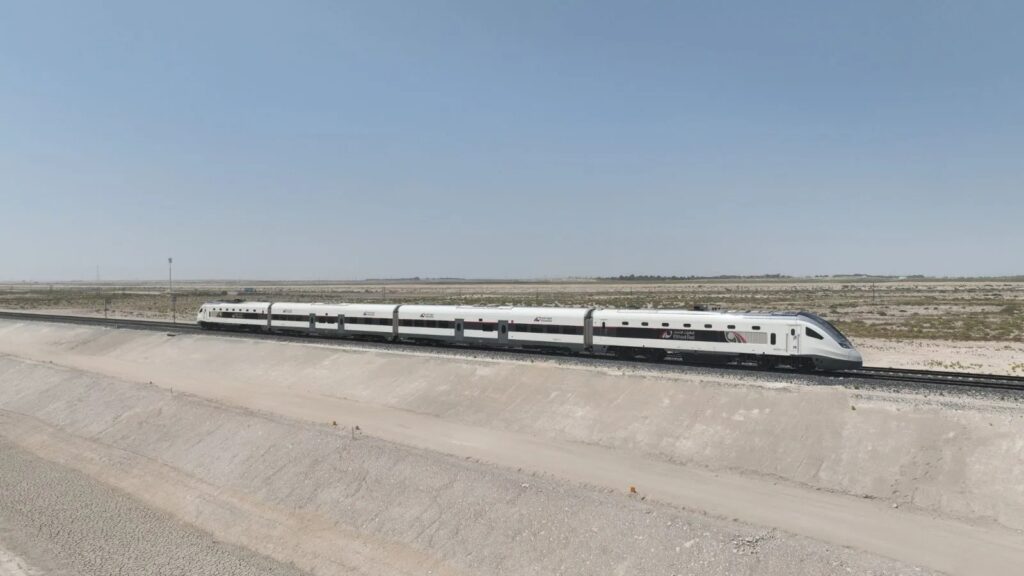
The biggest opportunity may lie in how companies recruit. Today, many employers limit their search to nearby candidates, as daily cross-emirate commuting is often impractical. If that changes, recruiters say the UAE’s hiring map could expand almost overnight.
Improved rail connectivity has the potential to significantly widen the talent pool available to employers, says Singh. By reducing travel times between emirates, companies may be able to attract qualified candidates who previously ruled out roles due to long or inconvenient commutes.
However, recruiters caution that the train journey itself is only one part of the equation. Brooks believes Etihad Rail will certainly “shrink” perceived distances between emirates, particularly on routes such as Abu Dhabi–Dubai and Dubai–Fujairah. However, she notes that candidates will think beyond advertised travel times, considering the full door-to-door commute.
Drawing on her experience in London, Brooks explains that reaching the station, completing the train journey, and travelling from the station to the workplace can sometimes make the total commute comparable to driving, once feeder transport or taxis are factored in. Where rail becomes truly transformative, she says, is for professionals willing to trade a stressful drive for a more predictable and consistent commute.
A professional in Fujairah being able to reach Dubai in around 50 minutes by rail, or an Abu Dhabi-based employee accessing roles in Dubai or Sharjah without immediate relocation, meaningfully changes what is considered “realistic” in terms of commuting, she said.
Brooks believes the impact could be particularly significant for specialist roles. A UAE national based in Fujairah, she noted, may now be able to work in Dubai without uprooting their entire family, while Abu Dhabi-based organisations could access Dubai-based specialists without requiring immediate relocation.
She added that accessibility is a key factor. Wilson said one of the biggest barriers to cross-emirate hiring has never been distance alone, but whether the journey is practical. If travel becomes easier, faster, and more predictable, employers are likely to consider candidates from a much wider geographical pool.
For businesses in the UAE’s major commercial hubs, the benefits could be immediate. Jethwani believes companies in Abu Dhabi and Dubai will be able to recruit highly specialised professionals from Sharjah, Fujairah, and other emirates without expecting them to endure long daily commutes.
From “too far” to “easy enough”
The shift is likely to be more psychological than physical. Today, candidates often dismiss opportunities primarily on the basis of location. However, HR professionals expect this decision-making process to become more nuanced in the months ahead.
As Wilson notes, the conversation could shift from “How far is the office?” to “How easy is it to get there?”
Brooks expects a similar evolution, adding that once commuters can use travel time to catch up on emails, decompress, or simply relax, perceptions of distance begin to change. However, she stresses that this shift will not happen overnight, as candidates will still want to assess how the overall journey fits into their daily lives.
“What I think we’ll hear more of is: ‘I’ll consider it if the train timings and total door-to-door journey make sense for my life,’” she said.
She also drew on her experience in London, where she commuted by rail into central London before transferring to the Underground and walking at either end. She noted that accepting this routine allowed her to access work opportunities in the city. “The same can be said for the UAE,” she said. “I would be open to using the train to commute again. I actually miss that time—it was great for reading, listening to music, and working.”
Work-life balance isn’t just about fewer minutes
Life could feel very different when employees are no longer behind the wheel, stuck in traffic, and dealing with daily congestion. A rail journey that is slightly longer on paper may, in practice, feel less exhausting than a shorter drive through heavy traffic, Brooks said.
“For some, a rail-based commute that is slightly longer in minutes but far less stressful may actually enhance their sense of balance, because they arrive at work and home with more mental bandwidth,” she said.
However, she cautioned employers against assuming that easier travel will automatically translate into greater availability beyond working hours. “A shorter or more comfortable commute does not automatically mean people will accept longer hours or more demanding roles,” she added.
Broader hiring decisions are also increasingly influenced by more than salary alone, with candidates considering flexibility, wellbeing, and overall personal time. Wilson noted that many commuters would welcome the opportunity to use travel time to read, catch up on work, listen to podcasts, or simply unwind. Improved connectivity could also encourage professionals to live in more affordable areas while staying connected to major employment hubs, and may even reduce reliance on private car ownership.
Accessibility is increasingly becoming part of the employee experience itself. As Singh points out, “Reliable and efficient transport options can help reduce the stress and time associated with daily travel, allowing employees to spend more time on personal priorities, family commitments, and wellbeing.”
If commuting becomes faster, more predictable, and less draining, candidates may no longer feel they are sacrificing family time simply by choosing to work in another emirate.
Work-life balance is increasingly being linked to the overall employee experience, with commuting playing a key role in that equation. Reliable and efficient transport options can help reduce the stress and time associated with daily travel, allowing employees to spend more time on personal priorities, family commitments, and wellbeing.

As transport networks evolve, accessibility is expected to become an increasingly important factor for candidates when assessing potential employers and career opportunities, says Anil Singh, Chief Business Officer, KSA at TASC Outsourcing.
HR’s next challenge: Designing jobs around rail
So what will really change—recruitment strategies, relocation models, or employee benefits?
Brooks expects forward-looking organisations to move away from immediate relocation requirements. Instead of an all-or-nothing approach where employees are expected to move to a specific emirate from day one, she anticipates more phased arrangements.
“We’re likely to see phased models where employees can commute by rail for an initial period, with the option and support to relocate later,” she said.
She also foresees the emergence of rail-specific benefits as part of employee packages, including subsidised monthly rail passes, support for first- and last-mile connectivity, and working patterns aligned with train schedules to allow more flexible start times.
Beyond recruitment, she added, the implications are likely to extend into sustainability goals and corporate reporting.
“Supporting rail over long-distance car commutes can reduce an organisation’s commuting-related emissions footprint, feed into Scope 3 reporting, and demonstrate tangible progress on sustainability commitments, while also improving offer acceptance and retention.”
Similarly, Wilson expects employers to introduce commuter support programmes, travel allowances, and subsidised rail passes as part of a more flexible employee value proposition. In her view, any measure that reduces friction between where talent lives and where opportunities exist is likely to improve hiring outcomes.
As connectivity improves, some recruiters also believe the need for extensive relocation support may gradually diminish. With a larger talent pool accessible across emirates, organisations may no longer need to rely on persuading candidates to relocate, instead hiring talent where they already live.
Ravi Jethwani, CEO of Innovations Group, said: “In my view, HR teams’ recruitment process will become less challenging as they will have access to a larger talent pool—they are not restricted by the emirate in which the candidate resides. With such improved connectivity, there is less need for extensive relocation support provided by employers, and job acceptance rates should naturally improve for the reasons mentioned.”
Ultimately, not every job decision comes down to salary, title, or ambition. In the UAE, it often depends on whether the journey makes sense.
Etihad Rail may not change that instinct, but it could change the answer. What once felt too far away may soon feel, if not easy, then at least possible.
And possibility, in hiring, is where everything begins.

