

Many shipping firms are still holding back and waiting for explicit safety guarantees from Iran, along with clear operational guidance on transit procedures through the Strait of Hormuz, before resuming normal movements.
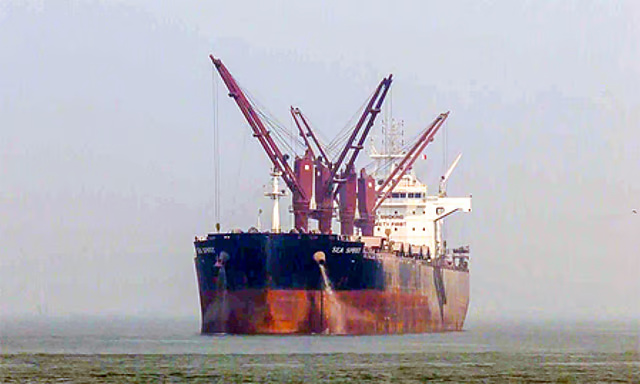
The Strait of Hormuz may be officially declared “open,” but for now it is functioning more like a high-risk exclusion zone than a normal shipping route.
A brief two-week ceasefire initially triggered optimism, sending oil prices lower and boosting stock markets. However, that sentiment quickly faded, as only a small number of vessels attempted to pass through the waterway even after the agreement was announced.
Fragile ceasefire
So far, the fragile ceasefire—which has largely quieted air activity in the region—has not yet reassured shipping operators enough to risk passage through the narrow Strait of Hormuz, a key chokepoint that carries around 20% of global oil supplies.
With many tankers still waiting in queue across the Gulf and few viable alternatives available, crude prices have started edging back toward the $100 per barrel level.
The movement highlights how heavily global markets rely on uninterrupted flows through the Strait of Hormuz.
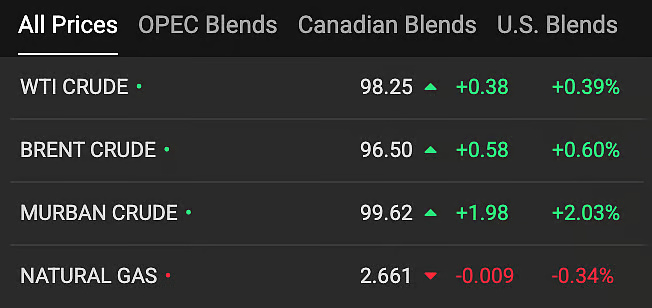
As of 5:07 AM GMT (9:07 AM Gulf Standard Time), Murban crude was at $99.62, up 2.03%, while the US benchmark West Texas Intermediate (WTI) rose slightly to $98.25, gaining 0.27%.
Brent crude also rose 0.60%, trading at $96.50.
Uncertainty remains high, with shipping executives saying the ceasefire has not reduced risk enough to justify transit, despite mutual assurances from Donald Trump and Iran that the waterway should remain safe for passage.
Many firms continue to wait for formal, written safety guarantees from Iranian authorities, along with clear instructions on permitted routes and sailing schedules, as well as longer-term clarity on the security outlook for the Strait of Hormuz.
At present, that kind of operational framework is still absent.
Hapag-Lloyd, the world’s fifth-largest container shipping line, currently has six vessels effectively stuck in the Gulf, opting to keep them anchored rather than attempt the passage.
“Our top priority is the safety of our employees on land and at sea,” spokesman Nils Haupt told CNN. “Based on our current risk assessment, we are refraining from transiting the strait.”
Traffic remains heavily disrupted, with analysts at Allianz Economic Research warning that it could take six months or longer for flows through the Strait of Hormuz to return to pre-conflict levels.
Before the conflict, more than 100 oil and cargo vessels passed daily through the 33-kilometre-wide (21-mile) strait, according to shipping intelligence data from Lloyd’s List. However, current movement has slowed to a trickle: maritime analytics firm Kpler reports only two oil or gas tankers have transited since the ceasefire announcement, while MarineTraffic data shows hundreds of vessels—including over 400 tankers, 34 LPG carriers, and 19 LNG carriers—still concentrated in the region.

