

High prices are dampening jewellery demand, while investors continue to buy physical gold.
Dubai: Gold demand is set to stay strong through 2026, as geopolitical risks, inflation concerns and elevated prices drive investors toward bars, coins and exchange-traded funds, even as jewellery buyers scale back their purchases.
The World Gold Council said investment demand and central bank purchases are expected to remain the key pillars of the market this year, with Asian buyers likely to play a bigger role. Jewellery demand, meanwhile, is set to stay under pressure, as record prices push consumers toward lighter pieces or lower-premium investment options.
The outlook follows a strong first quarter, with global gold demand—including over-the-counter investment and stock changes—rising 2 per cent year-on-year to 1,231 tonnes. The total value of demand surged 74 per cent to a record $193 billion for the quarter, highlighting how elevated prices are reshaping consumer and investor behaviour.
Gold volatility has increased notably in 2026, with prices climbing above $5,400 an ounce in January before undergoing a sharp but contained correction. This mix of strong price momentum and heightened geopolitical risk has driven investment demand—particularly in Asia—as investors turn to physical gold for safety. At the same time, continued central bank buying has helped offset periods of tactical selling.
Louise Street, Senior Markets Analyst at the World Gold Council, said these trends underscore the market’s shifting dynamics, with investment flows playing a more dominant role.
Investors take the lead
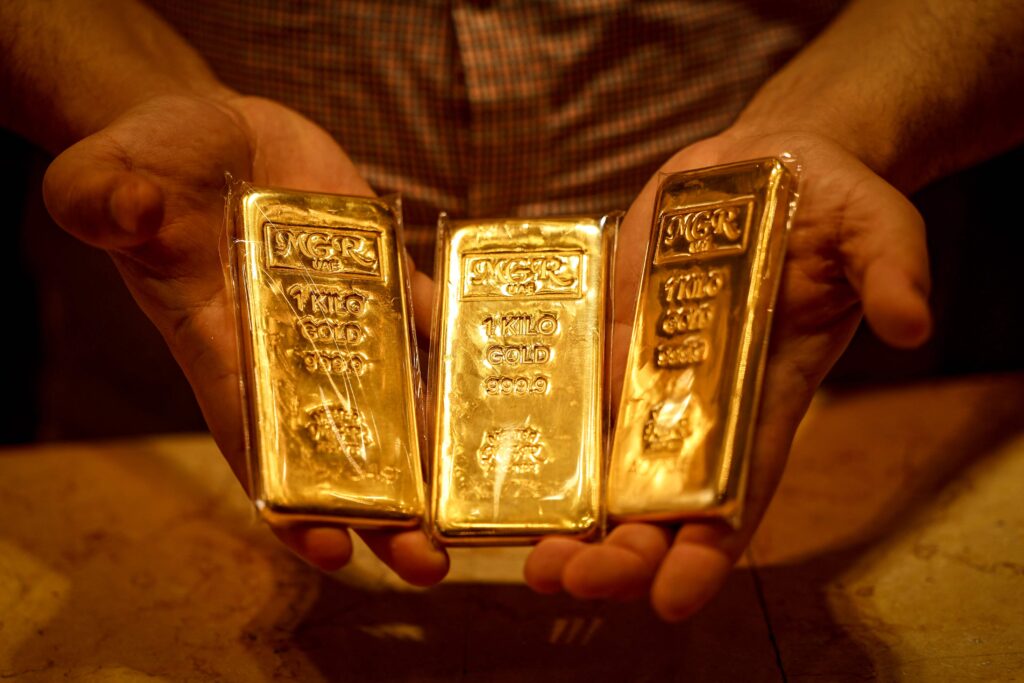
The clearest shift in the first quarter came from retail investors, with bar and coin demand rising 42 per cent year-on-year to 474 tonnes—making it the second-highest quarter on record in the World Gold Council’s data series.
China led the surge, with demand jumping 67 per cent to a record 207 tonnes. India, South Korea and Japan also posted strong gains, while the US and Europe saw increases of 14 per cent and 50 per cent, respectively.
The trend highlights a broader shift in the market. Jewellery has traditionally accounted for a large share of physical gold demand, particularly across Asia and the Middle East. But elevated prices are now pushing part of that demand into bars and coins, where premiums are lower and the investment appeal is clearer.
The World Gold Council expects this transition to continue through the year, with bar and coin demand playing a more prominent role as high prices, limited alternative investments in some markets, inflation concerns and geopolitical uncertainty drive both savers and short-term buyers toward physical gold.
Gold-backed ETFs also saw inflows in the first quarter, with holdings increasing by 62 tonnes. The trend was uneven, however: Asian-listed funds added 84 tonnes, while US-listed funds recorded outflows in March, tempering the overall global gains.
This regional divergence is likely to remain important through the rest of the year. Asian investors are expected to continue providing strong support, driven by price momentum and demand for risk hedges, while Western demand may be more sensitive to shifts in interest rates and bond yields.
High prices hit jewellery volumes
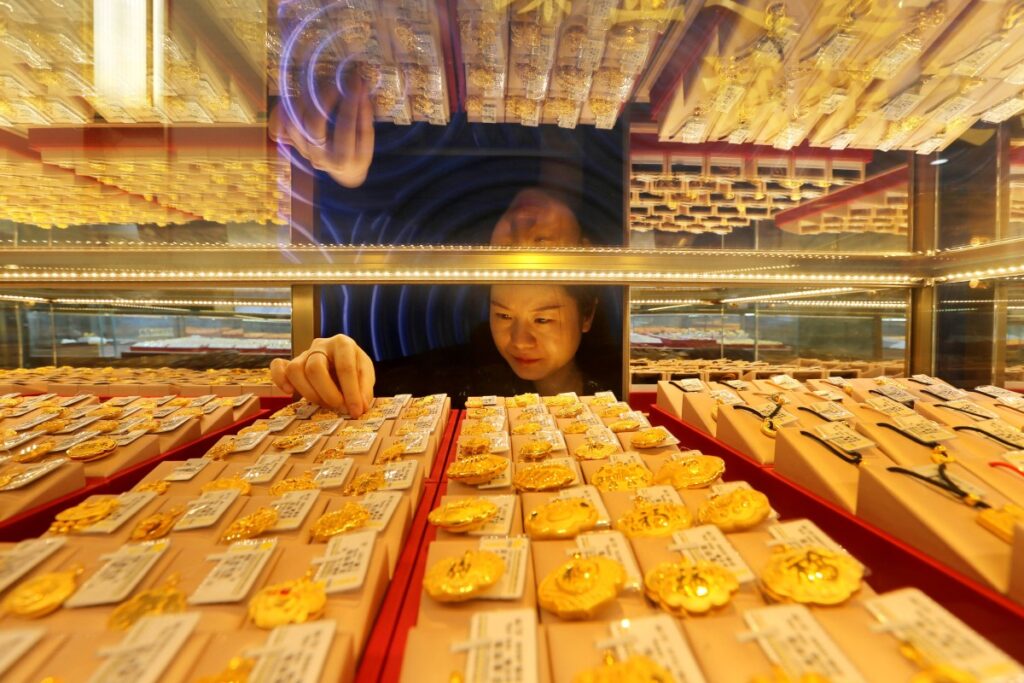
Jewellery demand reflected the other side of the gold market, with global volumes falling 23 per cent year-on-year to around 300 tonnes—the weakest quarterly level since the early stages of the pandemic in 2020.
Consumers have not abandoned gold entirely—they are simply buying less of it. Jewellery demand by value rose 31 per cent year-on-year to $47 billion, marking the highest first-quarter spend on record.
This shift is significant for retailers. Buyers are still willing to spend, but are changing what they purchase. Lighter-weight pieces, lower-carat items and old-gold exchanges are becoming more common, especially as higher prices and broader inflation pressures squeeze household budgets.
In China, jewellery demand dropped 32 per cent year-on-year to 85 tonnes, affected by elevated prices, weaker consumer confidence and changes to VAT rules. Even so, spending on gold jewellery rose 16 per cent to $13 billion—showing continued attachment to gold, albeit in different forms.
India showed a similar trend. Jewellery demand declined 19 per cent to 66 tonnes, but the value of demand reached a record $10 billion for the first quarter. Consumers shifted toward lighter, lower-carat and studded jewellery, while wealthier buyers continued to opt for heavier pieces.
Middle Eastern markets also saw double-digit declines in jewellery volumes, although spending rose 30 per cent year-on-year to a record $5 billion. Ramadan and Eid provided some support, but high prices and the outbreak of conflict in the region weighed on consumer activity across parts of the market.
Central banks keep buying
Central banks continued to be a key pillar of demand, with official sector net purchases reaching 244 tonnes in the first quarter—up 3 per cent year-on-year and 17 per cent higher than the previous quarter.
This came despite some selling by central banks and sovereign institutions during the period. Turkey, Russia and the State Oil Fund of Azerbaijan were among the notable sellers, but overall purchases still outweighed the increase in sales.
Poland was the largest reported buyer, adding 31 tonnes during the quarter and lifting its reserves to 582 tonnes. Uzbekistan followed with 25 tonnes, while China’s central bank added 7 tonnes, taking its total gold reserves to 2,313 tonnes.
The UAE Central Bank also increased its holdings by 1 tonne during the quarter, according to the World Gold Council.
Central bank buying has emerged as a major force in the gold market since 2022, and the World Gold Council expects it to remain strong this year, with full-year purchases projected in the range of 700 to 900 tonnes—broadly in line with last year’s levels.
This sustained demand reflects a longer-term reserve strategy. Central banks have been diversifying their holdings amid sanctions risks, currency volatility and geopolitical tensions, while gold’s liquidity continues to make it a valuable asset during periods of market stress.
Rates remain the main headwind
Gold’s outlook continues to be shaped by interest rates. Higher bond yields raise the opportunity cost of holding a non-yielding asset like gold, potentially limiting ETF demand—particularly in Western markets.
The World Gold Council said government bond yields are likely to stay elevated until there is greater clarity on the path of policy rates, with central banks still navigating supply shocks linked to the US-Israel-Iran conflict.
This creates a mixed backdrop: geopolitical risks continue to support gold demand, while persistently high interest rates may cap the scale of inflows. The Council expects investment demand to remain positive in 2026, though likely below the levels seen in 2025.
Supply rises, but only slightly
Total gold supply increased 2 per cent year-on-year to 1,231 tonnes in the first quarter, broadly matching total demand. Mine production hit a record for the period, while recycling rose 5 per cent.
Even so, the recycling response has been relatively modest given the high-price environment. The World Gold Council noted that while elevated prices and pressure on household finances have encouraged some selling, recycled supply is expected to rise only gradually this year.
A prolonged US-Iran standoff could bring more old gold back into the market, particularly if higher energy costs strain household budgets. Supply from India may also increase if gold-backed loans come under pressure.
Mine production is expected to edge higher through the year as strong prices support margins. However, the Council is monitoring risks such as energy shortages in parts of Oceania and Asia, which could constrain output growth.

