

The updated guidelines are designed to minimise health risks and promote healthy growth.
Schools and institutions must ensure these rules are enforced, with a designated staff member regularly monitoring that banned items are neither served on campus nor brought in from home.
According to guidance from Abu Dhabi’s education authority, school lunch boxes should avoid sugary drinks, high-fat and high-sugar foods, heavily processed items, additives, and certain dairy and soy products. The authority has issued updated healthy eating guidelines along with a list of foods and beverages prohibited on school premises.
Early Education Institutions (EEIs) across the UAE capital have been directed by the Department of Education and Knowledge to implement a comprehensive food and nutrition policy, ensuring that parents are actively involved in decisions about their children’s dietary habits.
The policy specifies which foods are banned in Abu Dhabi schools, whether served by the institution or brought from home. The updated guidance aims to reduce health risks, promote healthy growth, and ensure consistent practices across meals provided by schools, snacks brought from home, and items shared during celebrations.
Abu Dhabi Schools’ Food and Nutrition Guidelines
Schools must clearly define and communicate the list of prohibited foods and beverages to staff and parents. They are also required to implement regular monitoring and enforcement measures. According to the policy, Early Education Institutions (EEIs) must prohibit at least the following categories:
Sugar-sweetened drinks
- Fruit juices made from syrups
- Soft drinks
- Energy or sports drinks (except isotonic sports drinks)
Caffeinated drinks
- Hot or iced coffee
- Hot or iced tea
Foods with added sugars
- Candies, sweets, marshmallows, caramel, cotton candy, lollipops, jelly/jellies, chewing gum
- Chocolates (except dark chocolate)
- Ice cream, slushies, and other processed frozen desserts
- Flavoured or sweetened milk and yogurt
Foods excessively high in salt (sodium)
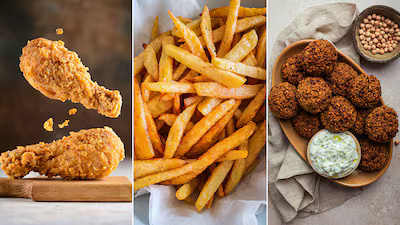
- Fried foods including fried chicken, chicken nuggets, falafel, and samosas
- Fried or baked potato- and corn-based snacks, such as chips, puffed corn balls, and sticks
- Processed meats including hotdogs, deli meats, and sausages
- Pickled vegetables
Ultra-processed foods
- Foods containing artificial sweeteners, preservatives, colours, or flavours made from chemicals
- Foods with added monosodium glutamate (MSG)
- Foods containing the following additives: Sunset Yellow (E110), Quinoline Yellow (E104), Carmoisine (E122), Allura Red (E129), Tartrazine (E102), and Ponceau 4R (E124)
- Sauces such as mayonnaise, chilli sauces, ketchup (except low-salt/low-sugar), and ready-made sauces including ranch, jalapeño, and Italian
Other prohibited items
- Pork-based products or foods containing pork derivatives
- Foods with added alcohol (ethanol) or by-products
- Foods containing hydrogenated fats
- Honey for infants under 12 months
- Unpasteurised foods or drinks
- Soy milk and soy-based sauces
- Nuts
- Foods that may pose choking hazards
Monitoring and Enforcement
EEIs must ensure that rules are followed, with an assigned staff member (such as a nurse or health and safety officer) conducting regular checks to prevent banned items from being served or brought from home. Institutions should maintain records of violations and specify corrective actions, particularly in cases of repeated non-compliance.
Formalising these restrictions helps create safer, healthier environments that support children’s long-term wellbeing from the earliest years.
Dietary Requirements of Children
- EEIs must follow clear nutrition rules for children of all ages. For special events, food must be clean, safe, of good quality, and compliant with health regulations. Food should never be used as a punishment or reward.
- Babies under six months should only receive food or water if recommended by a paediatrician. Older infants may start solid foods or water only with medical guidance.
- Children aged two years and older must follow recommended nutrition guidelines for healthy growth, with regular monitoring of height and weight.
Bottle-feeding and Mealtime Safety
- Staff must follow proper bottle-feeding procedures and support breastfeeding by providing suitable spaces and guidance.
- Children should always be supervised during meals.
- EEIs must provide age-appropriate utensils, furniture, and equipment to ensure safe and comfortable eating.
Legal Compliance
Failure to comply with these policies may result in legal consequences or penalties under ADEK regulations, Federal Decree Law No. 31 of 2021, or other applicable laws. ADEK also has the authority to intervene if an EEI breaches its responsibilities.

