

The U.S.–Israel offensive against Iran is altering the security landscape and putting both global energy stability and diplomatic frameworks to the test.
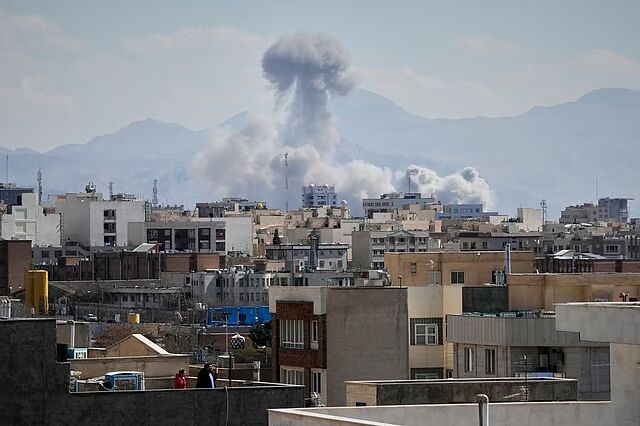
The regional and global landscape is no longer merely drifting toward conflict; it is accelerating into a new and perilous phase of open confrontation. The military strikes carried out by the United States and Israel against Iran on February 28, 2026, represent a watershed moment in an already fragile regional order and international system. What had previously been a shadow conflict — managed through deterrence, proxies, and calibrated escalation — has now shifted into direct, overt military engagement, with profound implications not only for the Middle East but for global stability as well.
This escalation comes at a time when the international environment is already strained by economic fragility, waning diplomatic engagement, climate emergencies, and protracted conflicts spanning Europe to Latin America. Instead of consolidating post-pandemic recovery, the world faces a widening arc of instability. In the Middle East, ongoing wars in Gaza and Lebanon, persistent instability in Yemen and Syria, and threats to maritime navigation in the Red Sea had already placed enormous pressure on regional security structures. The intensifying Israeli–Iranian confrontation, now compounded by direct U.S. involvement, has made the region the epicenter of a broader geopolitical shock.
Humanitarian Toll Mounting
The humanitarian and economic toll on the region continues to grow. The Middle East has endured decades of compounded crises — armed conflicts, displacement, economic downturns, and fragile governance. Each new escalation further erodes institutional resilience and public trust. Civilian populations bear the brunt of uncertainty, while regional economies — many still recovering from prior shocks — face heightened volatility in markets, investment flows, and fiscal stability.
Nowhere are the consequences more pronounced than in the energy sector. The Gulf remains the backbone of the global energy supply, and any military escalation involving Iran immediately raises concerns over the security of critical maritime corridors, particularly the Strait of Hormuz. A substantial share of the world’s oil and liquefied natural gas exports flows through this narrow waterway. Even the perception of threat — whether from direct strikes, missile launches, or naval disruptions — triggers instant price volatility, higher insurance premiums, and fears of supply chain interruptions. In a world already struggling with inflationary pressures and fragmented trade, such instability intensifies global economic strain.
Retaliatory Dynamics
Equally alarming is the expansion of retaliatory actions beyond the primary combatants. Arab Gulf states have largely maintained cautious and balanced diplomatic stances, emphasizing de-escalation and dialogue while striving to prevent the conflict from escalating further. These countries recognize that regional stability is intrinsically linked to global economic security. Despite these efforts, Iran’s decision to extend retaliatory measures toward targets or interests associated with neighboring Gulf states marks a deeply troubling development with serious regional and international implications.
Such actions risk undermining established mediation channels and eroding the political capital invested in de-escalation. Targeting or threatening states that were not direct participants in the strikes — and that had actively sought to prevent escalation — does not enhance strategic leverage. Instead, it opens new arenas of tension, potentially compelling these states to recalibrate their security doctrines and strengthen defensive alignments, thereby deepening regional polarization rather than containing it. Strategically, broadening the conflict’s geography heightens systemic risk and reduces the prospects for negotiated restraint.
Regional and international relations are consequently entering a more fragmented phase. Doubts about the effectiveness of international organizations are mounting, especially as major powers increasingly resort to force in resolving disputes. Trade wars, technological rivalry, and geopolitical polarization have already weakened multilateral cooperation; the current escalation further entrenches divisions and diminishes incentives for compromise.
Serious Consequences
The implications extend far beyond immediate military confrontation. Geostrategic tensions undermine cooperation on critical global challenges, including climate change, counterterrorism, and sustainable development. The Middle East, one of the regions most vulnerable to climate stress, requires coordinated adaptation strategies and technological collaboration. Yet rising distrust and strategic competition divert attention and resources toward militarization rather than sustainability, jeopardizing long-term resilience and development.
Global military expenditure — already reaching approximately $2.5 trillion in 2023 and $2.7 trillion in 2024, according to the Stockholm International Peace Research Institute — underscores a structural shift toward securitization. Further escalation in 2026 is likely to push these figures even higher, diverting resources from social development, infrastructure, and climate resilience toward defense spending. This reallocation exacerbates inequality, deepens poverty in conflict-affected regions, and fuels cycles of displacement.
Fertile Ground for Extremism
Geopolitical crises also create fertile conditions for extremism. Polarization, sectarian narratives, and perceptions of injustice can be exploited by non-state actors seeking recruitment and mobilization. History demonstrates that prolonged instability in the Middle East can give rise to armed groups that transcend borders, destabilizing wider regions and threatening international security.
The current trajectory presents a paradox: the more crises intensify, the greater the need for cooperation — yet the political space to achieve it continues to shrink. Sustainable solutions to energy security, climate adaptation, economic resilience, and counterterrorism depend on collective frameworks. However, as states increasingly prioritize deterrence and power projection, multilateralism recedes.
Recalibration Toward Diplomacy
The unfolding confrontation highlights a fundamental lesson: security built solely on military calculations is inherently fragile. Lasting stability in the Gulf and the broader Middle East cannot be secured through escalation cycles that expand the circle of conflict. It requires a strategic recalibration toward diplomacy, mutual security guarantees, and respect for regional sovereignty.
Despite the challenges, a narrow window remains to redirect policy choices toward cooperative frameworks that safeguard energy corridors, protect civilian populations, and prevent further regional spillovers. The alternative is a prolonged period of volatility in which the Strait of Hormuz, global energy markets, and fragile regional societies remain hostage to recurring escalations.
Peace and development must re-emerge as organizing principles for both regional and international engagement. Without a collective recognition that perpetual confrontation undermines all actors, the interplay between geostrategic crises and weakened cooperation will continue to define this era — imposing immense costs on the Middle East and the world.

