

Ali Abdullah Al Awbad has spent seven years preparing traditional wood-fired meals for labourers and the less fortunate, serving up to 900 people in a single day.
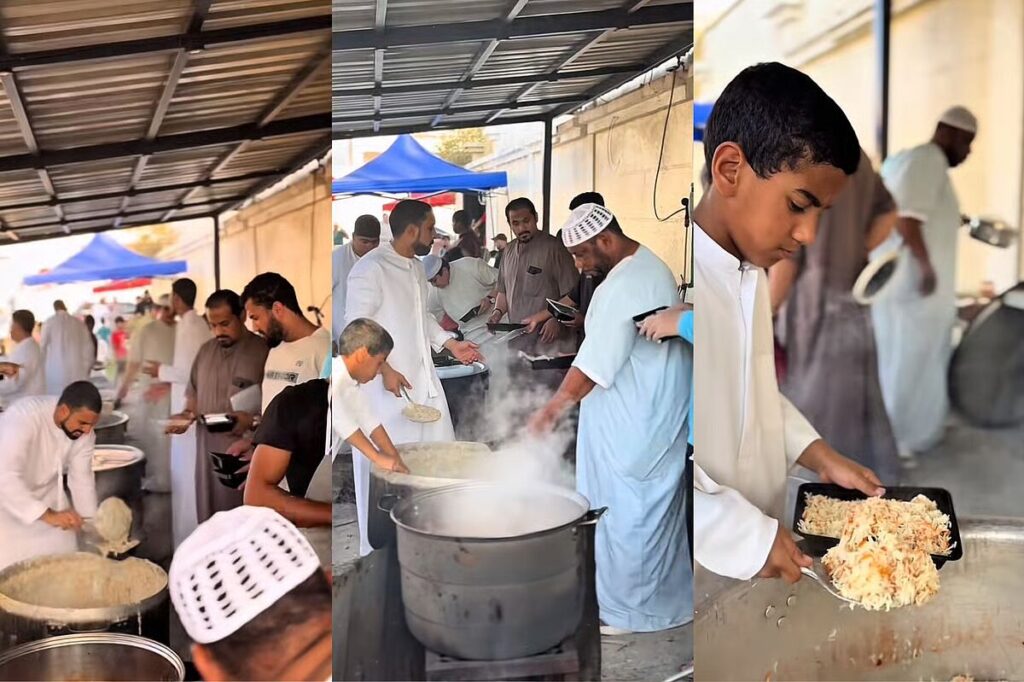
Ali Abdullah Al Kaabi has been cooking traditional wood-fired meals for labourers and the less fortunate for seven years, serving up to 900 people in a single day.
Every Ramadan, as the sun sets and the call to Maghrib prayer echoes through the streets of Murbah in Fujairah, the aroma of slow-cooked harees and grilled meat fills the air from a doorstep that has become a landmark of generosity for hundreds of workers and families in the area.
Ali Abdullah, a self-taught Emirati cook from Murbah, has spent the past seven years turning the front of his home into an open-air kitchen and a welcoming gathering place for labourers, the elderly, and anyone who comes to his door hungry.
What began in 2019 with a single pot of harees has grown into nine pots, becoming one of Fujairah’s most quietly remarkable charitable traditions, now feeding up to 900 people in a single day.
“I started with just one pot of harees,” Al Kaabi said. “The following year, I increased the quantities. Now I sometimes cook two pots of harees alone — that’s 30 kilograms — and rice up to 60, 70, sometimes even 100 kilograms. By the end of the night, not a single grain is left.”
Kitchen without walls
Al Kaabi does not own a restaurant, nor does he have a commercial kitchen. Yet every Ramadan, the pavement outside his home in Murbah transforms into a fully operational cooking station, where towering pots are set over open wood fires — a deliberate choice that celebrates both heritage and hospitality.
“Gas is easier, I know that,” he said. “But cooking on wood is something old and traditional. The older people who can no longer leave their homes sit and watch the pots and remember. And the rice cooked with wood has a completely different taste. There is no comparison.”
The menu he prepares is a tribute to Emirati culinary heritage, featuring harees, grilled lamb and chicken, meat and chicken stews, liver, and freshly cooked rice.
On any given evening during Ramadan, Al Kaabi and his circle of friends and relatives — who volunteer their time and sometimes contribute firewood, meat, and supplies — prepare 40 whole chickens in saloona, upwards of 27–28 kilograms of lamb, and around 20 kilograms of liver, alongside hundreds of freshly made samosas.
From one pot to nine
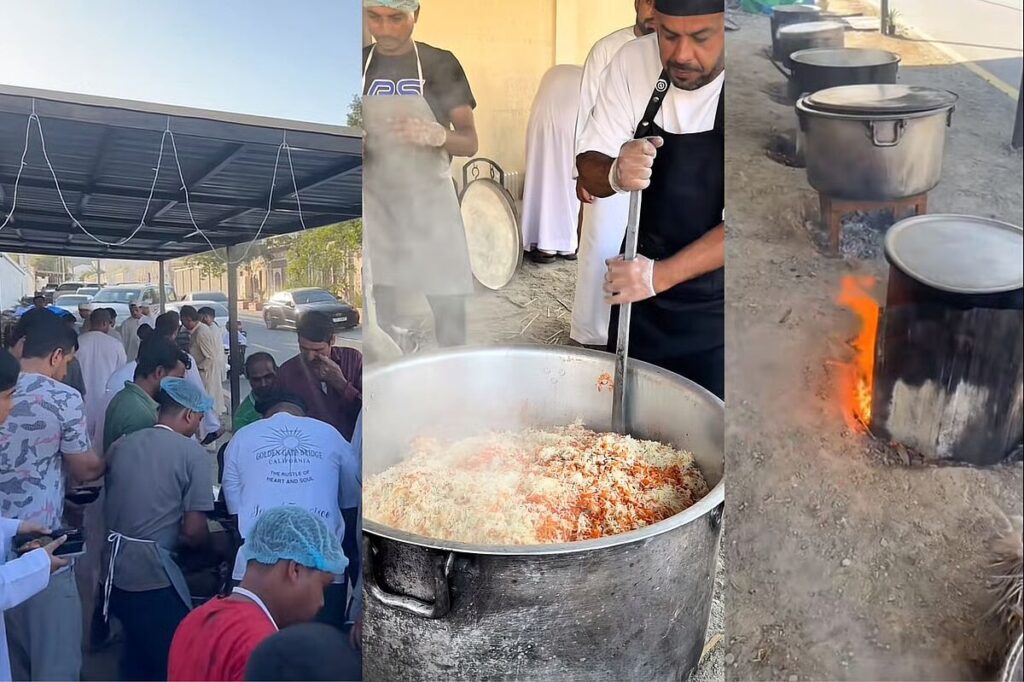
The scale of Al Kaabi’s initiative has grown steadily each year. He noted that on peak nights, it now requires nine or ten pots. On the first Friday of this Ramadan, the crowd outside his home was so large that it spilled into the surrounding streets, with an estimated 900 people coming to eat.
“The street was blocked,” he said. “We had to have people organise the queue. Some of the older Pakistani workers — they are elderly and cannot stand in line — so we told them to come to us from the inside. We serve them first and send them on their way. It would be wrong to make them wait.”
He takes care to ensure elderly and vulnerable workers are served respectfully and extends the same warm welcome to Emirati citizens who stop by out of curiosity or to sample the traditional dishes.
Al Kaabi’s goal is also to introduce foreign workers to traditional Emirati cuisine. Harees, the ancient slow-cooked wheat-and-meat dish smoky from the wood fire, is unfamiliar to many of the Arab labourers who make up a large portion of his guests.
“Many of the workers had never tasted harees in their lives, but they loved it,” he said. “So I cook it now with large quantities — 15 whole chickens — so they can enjoy it properly.”
His generosity doesn’t end with food. After the meal, Al Kaabi sets up a tea and juice station that remains open until well past midnight for anyone wishing to sit and rest.
A community effort
Al Kaabi is quick to point out that this initiative is far from solitary. Friends, relatives, and even some workers themselves contribute, bringing firewood, donating meat, or helping manage the crowds.
He recalled one worker from the early days who arrived with a load of firewood on his own initiative, wanting to share in the reward of giving. “He said he wanted to help,” Al Kaabi said. “He could not speak much Arabic, but he brought the wood. He wanted to be part of it.”
Neighbours and community members from Fujairah, Sharjah, Al Ain, and beyond have also contributed ingredients and supplies, turning what began as a personal act of charity into a collective expression of Emirati values: generosity, neighbourliness, and care for the vulnerable.
Al Kaabi does not seek recognition. “I do not need anyone to thank me, praise be to God,” he said. “The reward is with Allah.” He added that seeing the workers happy is enough.

