

New Dubai tenants pay 9% less as renewers stay put, while Downtown and Marina rents fall by up to 15%.
Dubai: Tenants moving into new homes are securing lower rents, while those renewing their contracts are largely managing to keep rental increases in check across several Dubai neighbourhoods. Two recent studies by property consultants JLL and fäm Properties highlight a growing gap between new tenants and existing residents.
According to JLL’s Living Market Dynamics report for the third quarter of 2026, new lease registrations jumped 48.6 per cent compared with the previous quarter. Registrations also increased 13.7 per cent year-on-year, largely driven by the seasonal leasing rush ahead of the new school year. Total rental registrations rose 7 per cent annually.
The report found that average rents in some Dubai neighbourhoods declined by 5.2 per cent in the 12 months to September. Apartment rents fell 5.3 per cent, while villa rents recorded a smaller decline of 3 per cent.
JLL attributed the increase in relocation activity to more competitive rental rates and greater negotiating power among tenants.
Renewals, meanwhile, grew at a considerably slower pace, rising just 2.4 per cent year-on-year and 8.3 per cent quarter-on-quarter.
The findings suggest that tenants are increasingly choosing to relocate to secure better rental deals rather than remain in their existing homes, making relocation the faster-growing segment of Dubai’s rental market.
New tenants secure lower rents as Dubai’s rental market shifts
A separate study by fäm Properties, based on Dubai Land Department tenancy contract registrations, highlights the growing difference between new leases and renewals.
The research compared 18,096 new apartment leases and 17,234 renewals registered between August and October with the rents paid for the same properties in 2025. It found that new tenants were paying an average of 9 per cent less than the previous year’s rent for identical properties.
Around 73 per cent of new leases were registered below their 2025 rental levels. The proportion was just 24 per cent between January and March before rising to 60 per cent from April to July.
The median rental change also shifted significantly. New leases moved from 2.6 per cent above 2025 levels in the first quarter to 5.5 per cent below between April and July, before falling further to 9.1 per cent below in the August-October period.
Renewals followed a different trend. Around 44 per cent of tenants who renewed their contracts faced higher rents than the previous year, while 37 per cent continued paying the same amount.
Where did Dubai rents fall the most?
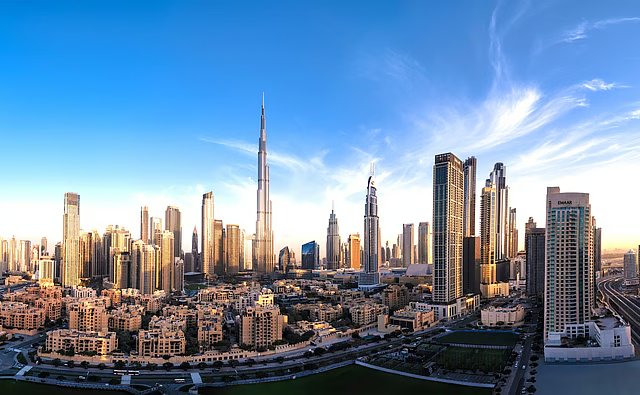
Some of Dubai’s prime residential communities recorded the steepest rental declines for new tenants, with Downtown Dubai and Dubai Marina among the areas offering the biggest savings.
The largest reductions included:
- Burj Khalifa and Downtown Dubai: 15 per cent
- Business Bay: 14.6 per cent
- Marsa Dubai, including Dubai Marina: 13.6 per cent
- Al Merkadh: 11.9 per cent
- Al Thanyah Fifth, including Jumeirah Lake Towers: 11.2 per cent
- Al Barsha South Fourth, including Jumeirah Village Circle: 11.1 per cent
Affordable neighbourhoods see smaller declines
More affordable residential communities recorded relatively modest rental adjustments.
Dubai Sports City saw rents decline by 6 per cent, while Dubai Production City recorded a 5.7 per cent drop. Discovery Gardens registered a smaller reduction of 4.7 per cent.
International City was an exception, with rents remaining unchanged overall. However, 46 per cent of new leases in the area were registered above their 2025 levels.
“Conditions are becoming more varied, and understanding what is happening means looking beyond headline averages,” said Firas Al Msaddi, CEO of fäm Properties.
He expects Dubai’s rental market to continue evolving through 2027.
Despite the rental adjustments, activity across the wider property market remains strong. fäm Properties recorded 339,557 freehold contracts during the first 10 months of 2026, 6.8 per cent more than in the corresponding period last year. The full-year record for 2025 stands at 377,976 contracts.
New housing supply could influence rental trends
The volume of new homes entering the market could also shape rental and property price movements in the coming months.
JLL reported that Dubai delivered nearly 14,000 residential units in the third quarter and expects approximately 17,000 additional units to be completed in the fourth quarter.
However, rising construction material costs could limit the extent of any further price corrections, according to Taimur Khan, JLL’s Head of Research for the Middle East and Africa.
“New launches are expected to stay more measured compared to recent years, as developers focus on delivering existing pipelines on time,” he added.
Abu Dhabi’s rental market moves in the opposite direction
Abu Dhabi is witnessing a different trend, with its rental market showing stronger renewal activity.
JLL’s report found that the emirate’s rent-freeze regulation has made renewing existing contracts a more attractive option for tenants. Renewals rebounded 29.1 per cent quarter-on-quarter, contributing to a 14.3 per cent increase in total rental registrations.
New rental contracts, however, declined 18.5 per cent year-on-year, leaving overall registrations 6.9 per cent below the previous year’s level.
Rents in selected Abu Dhabi communities continued to increase, although at a slower pace. In the year to the third quarter of 2026, villa rents rose by 0.3 per cent, while apartment rents increased by 4 per cent.