

Vehaan Subramanian Funds Half of Solar-Powered Water Plant in Uttar Pradesh Village.
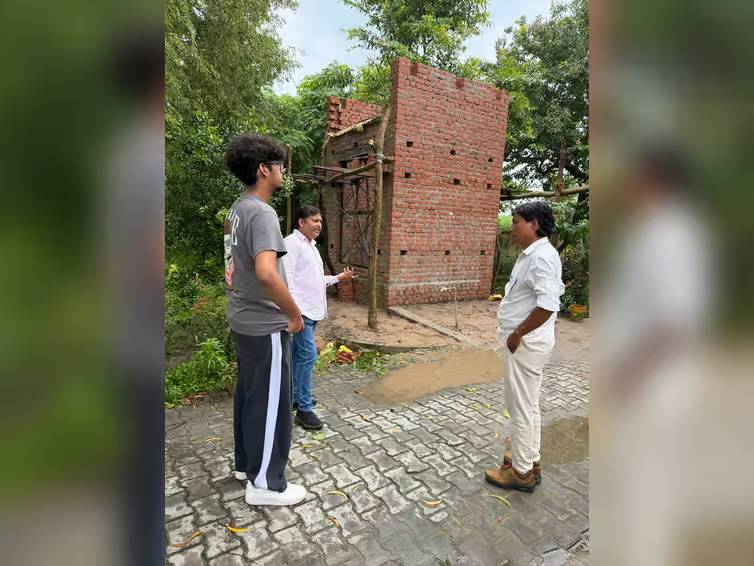
What began with a Dubai teenager researching arsenic contamination in drinking water has developed into a clean-water project serving thousands of villagers in Uttar Pradesh, where residents can now collect treated water from a solar-powered plant he helped design and finance.
Eighteen-year-old Vehaan Subramanian, a student at Dubai College, has completed a water treatment facility in Parsiya village in Uttar Pradesh’s Lakhimpur Kheri district. The plant is designed to provide cleaner drinking water to more than 3,000 residents from over 1,000 families.
Commissioned on September 6, the facility can treat approximately 2,000 litres of groundwater per hour and is already being used by local residents, according to village head Laxman Prasad Rana.
Laboratory results provided by Vehaan showed that arsenic levels in untreated groundwater measured 0.026mg per litre, equivalent to 26 micrograms per litre. Following filtration, the concentration fell below 0.005mg per litre, which was beneath the laboratory’s detection limit.
The untreated water sample was analysed at an EIAC-accredited laboratory in Dubai on September 10, while a sample collected after treatment was tested at a NABL-accredited laboratory in Lucknow on September 18.
The results also showed turbidity dropping from 2.61 NTU before treatment to undetectable levels afterward. Iron and sulphate concentrations in the treated water were also reported below the laboratory’s detection limits.
From a LinkedIn post to a village water plant
For Vehaan, the idea began after he came across a LinkedIn post discussing arsenic contamination in India’s groundwater.
Although he was already aware of water contamination, he said he had not understood the scale of the arsenic problem or realised that contaminated water could appear completely clear and normal.
As he researched the subject further, what initially began as scientific curiosity developed into a broader concern about the communities affected.
Vehaan said the invisible nature of arsenic particularly struck him. Families could collect apparently clean water from a hand pump and consume it every day without having any visible indication that it contained a potentially harmful contaminant.
His initial research focused on understanding how arsenic could be removed from water. But the question soon evolved into something more practical: if effective methods of removing arsenic already exist, why are communities still consuming contaminated water?
That question became the foundation of Project ARUNA — short for Arsenic Removal Using Non-Regenerative Adsorption.
Vehaan said he did not want the initiative to stop at studying the problem, conducting experiments or publishing academic research. His aim was to follow the issue from scientific research and chemistry through engineering, government approvals and ultimately to the delivery of treated water in an affected village.
He began studying groundwater data and existing community-scale treatment systems before developing a design of his own.
As part of his research, Vehaan also collaborated with Professor Rehab Mahmoud and researchers associated with Beni-Suef University to study an advanced adsorbent for arsenic removal. Their work was published in the journal Catalysts in May.
However, he decided against using the experimental material in the first village installation because it still required additional long-term testing, scale-up assessment and continuous-flow field trials.
Instead, Vehaan selected granular ferric hydroxide (GFH), a more established treatment medium commonly used for arsenic removal.
He said the decision reflected an important principle of scientific research: the objective is not necessarily to prove that a researcher’s own solution must be used, but to examine the available evidence and select the approach most appropriate for real-world conditions.
Designed for a village, not a laboratory
The final treatment system was developed specifically for conditions in rural Uttar Pradesh, where electricity supplies can be unreliable and groundwater contains iron alongside arsenic.
Powered by solar panels, the facility draws groundwater from a bore approximately 200 feet below the surface and pumps it into a 2,000-litre raw-water storage tank. From there, the water moves through several treatment stages designed to remove iron and other impurities before reaching the arsenic adsorption process.
Vehaan said the objective was not to create an unnecessarily complex system, but one capable of functioning reliably in a remote community.
He wanted the plant to be durable enough for local conditions, effective in treating the village’s specific groundwater problems and straightforward enough for residents to maintain over the long term.
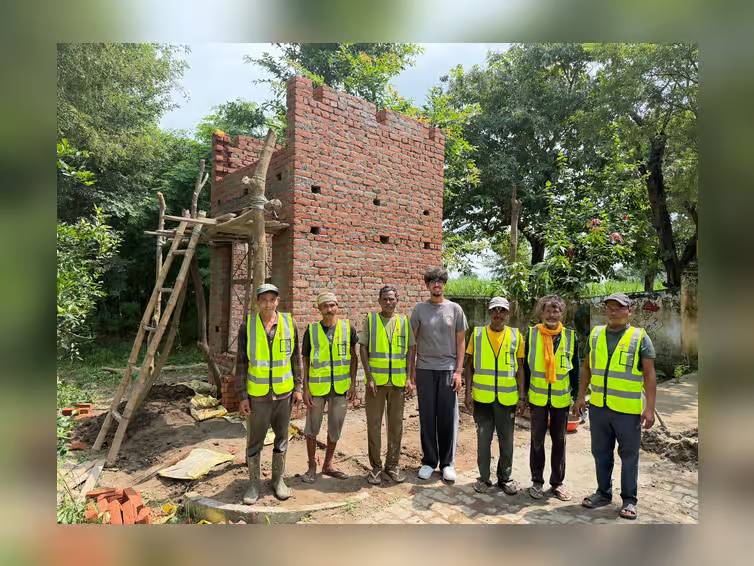
The facility was constructed with the help of local workers, including masons, plumbers, welders, painters and electricians. Vehaan also spent time at the site alongside village head Laxman Prasad Rana, overseeing the installation and construction work.
‘The water would turn yellow’
Before the treatment plant became operational, families in Parsiya largely depended on groundwater drawn from hand pumps for drinking and everyday household needs.
Residents who could afford to do so purchased drinking water, while some households relied on small filtration systems when electricity was available. Rana said commercially available reverse-osmosis filters often failed to last because of the condition of the groundwater.
According to Rana, villagers were already aware that something was wrong with their water supply.
He said water drawn from hand pumps would develop a yellowish colour after sitting in a container for several hours. Areas surrounding the pumps had also developed permanent yellow staining, while white clothes washed in the groundwater could become discoloured.
Residents had reported health problems including stomach ulcers, kidney stones and jaundice, Rana said. However, he stressed that medical evidence would be required before any of those conditions could be directly linked to the groundwater.
Since the treatment facility began operating, residents have started collecting and drinking the filtered water.
The plant is centrally located beside the village office, government school and primary healthcare centre, making it accessible to the surrounding community. Three taps allow residents to fill drinking bottles as well as larger containers for use at home.
Vehaan said residents use the facility in different ways. Some collect smaller quantities in bottles for immediate drinking, while many fill larger containers and transport the water home using vehicles.
Rana said the facility has received a positive response from the community, with residents collecting treated water both for immediate consumption and household use. Its location within the village has also made access easier for families.
Funded partly through his own savings
Vehaan financed half of the project using money he had saved over the previous seven to eight years. The remaining amount was raised through Chapter One: Giving Back, a reading club he founded, along with contributions from family and friends.
The initial cost of installing the plant was approximately Rs700,000.
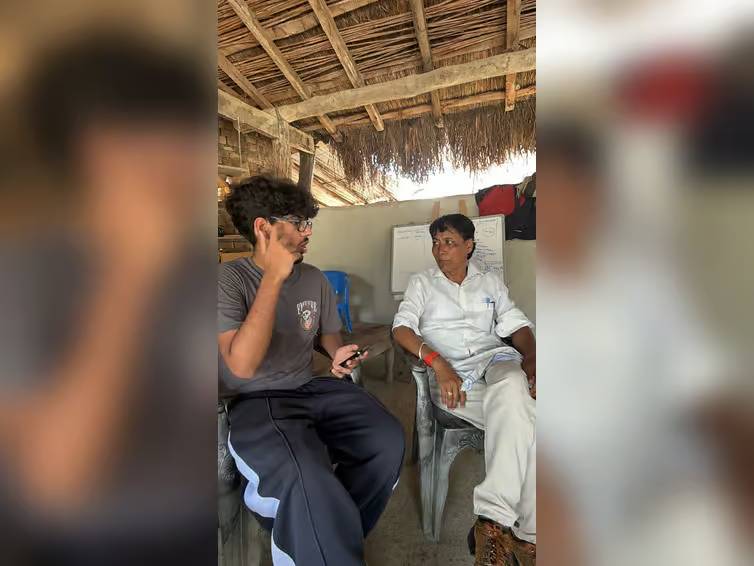
The project also required coordination with Uttar Pradesh Jal Nigam and local government authorities. Vehaan initially contacted the National Mission for Clean Ganga, which subsequently referred his proposal to Jal Nigam.
Authorities eventually selected Parsiya for the project and allocated government land for construction of the facility. Another location at Golbojhi had initially been considered but could not be used, leading the project to move to Parsiya.
For Vehaan, securing official support and a designated site represented a major milestone in turning Project ARUNA from a research and engineering concept into a functioning community initiative.
Keeping the plant running long term
The treatment facility is owned by the village under a Build, Operate, Transfer model, with local residents involved in its ongoing maintenance.
Rana has received training to carry out routine maintenance, while other members of the community have been taught how to clean the storage tanks and solar panels and perform filter backwashing.
Vehaan has also committed to conducting water tests annually and replacing treatment materials when required based on the results.
According to information provided about the project, the treatment media is expected to remain effective for approximately three to four years. Additional media is already being stored in the village for future replacement.
Vehaan said ensuring the plant could continue operating over the long term was one of his main priorities during the design process. His aim, he said, was to avoid creating a facility that worked only around the time of its inauguration before becoming unusable a year later.
Neighbouring villages show interest
What began as a single pilot project has already attracted attention from nearby communities.
Rana, who serves as Pradhan for four small villages, said there have been numerous enquiries from surrounding areas about establishing similar water treatment facilities.
The next proposed location for the project is Golbojhi, a remote hamlet where access is currently challenging because of rainfall. Chahmalpur, another village in Uttar Pradesh’s Lakhimpur Kheri district, has also requested a similar treatment facility.
Vehaan hopes to establish two additional plants by November, followed by at least 10 more during the next academic year.
Each new facility is expected to cost approximately $8,000. Funding is being sought through corporate social responsibility initiatives involving UAE companies, as well as contributions from donors in India and crowdfunding campaigns.
For Vehaan, growing interest from neighbouring communities has significantly expanded his original vision for Project ARUNA.
His initial objective was to construct a single pilot facility and demonstrate that the treatment model could work effectively. But conversations with residents prompted him to consider whether the project could be developed into a model that could be replicated across other villages facing similar water-quality problems.
The strongest indication of the project’s potential, he said, did not come from laboratory results or an engineering achievement, but directly from neighbouring communities.
After residents from nearby villages began asking whether similar facilities could be built in their communities, Vehaan said he realised that the Parsiya plant should mark the beginning of Project ARUNA rather than its conclusion.
Tomas Duckling, Headmaster of Dubai College, said Vehaan’s initiative reflects the proactive approach the school encourages among its students.
He said the project aligns closely with Dubai College’s whole-school “Service for All” approach, which encourages students to use their skills and abilities to make a positive contribution to wider communities.
Duckling described Vehaan’s clean-water initiative as a strong example of that philosophy being put into practice.

