

Dubai Taxi Company reported Dh551 million in first-quarter revenue as March disruptions affected taxi and limousine trip volumes.
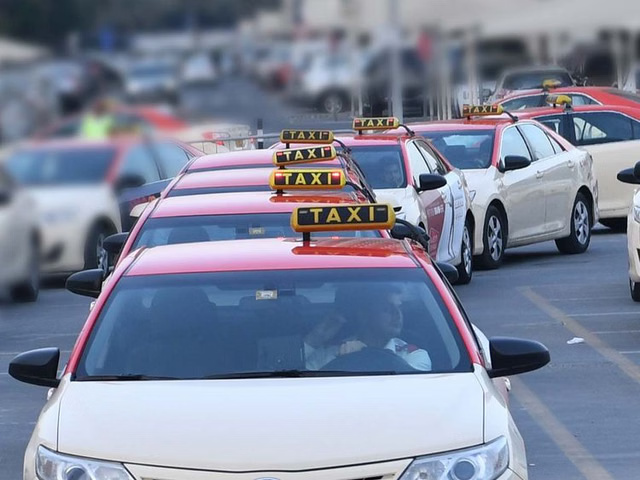
Dubai: Dubai Taxi Company reported lower first-quarter revenue and profit after regional uncertainty in March reduced trip volumes across its taxi and limousine operations, interrupting what had been a strong start to the year supported by fleet expansion and steady mobility demand.
The company said revenue declined 6% year-on-year to Dh551.1 million in the three months ending March 31, 2026, while EBITDA fell 22% to Dh120.7 million. Net profit dropped 39% to Dh50.7 million, with the profit margin narrowing to 9% from 14% a year earlier.
The slowdown in March followed a stronger performance in January and February, when revenue increased 10% year-on-year, EBITDA rose 17%, and net profit grew 25%. The contrast highlights how quickly transport demand in Dubai can respond to shifts in tourism activity, airport traffic, and working patterns during periods of regional uncertainty.
March disruption impacts core trips
Dubai Taxi Company said its core taxi business generated Dh455.3 million in revenue during the quarter, down 12% from a year earlier, mainly due to lower trip volumes in March. During January and February, however, taxi revenue had risen 5% year-on-year, supported by fleet expansion and strong vehicle utilisation.
The limousine segment was also affected, with revenue declining 15% to Dh29.2 million, mainly due to reduced airport operations. Meanwhile, the bus business delivered stronger performance, with revenue increasing 7% to Dh33.7 million.
The delivery bike segment remained the company’s fastest-growing division, with revenue surging 61% year-on-year to Dh26.6 million.
Across its taxi and limousine operations, Dubai Taxi Company completed 11 million trips in the first quarter, down 14% year-on-year. During January and February alone, trip volumes were broadly stable at 8.5 million, indicating that most of the weakness was concentrated in March.
Mansoor Rahma Alfalasi said the business continued operating throughout the disruption while maintaining services for customers across all its business segments.
“DTC delivered a resilient performance in the first quarter, building on the strong momentum achieved in 2025. We continued to expand our fleet, invest in digital capabilities and drive efficiencies through ongoing optimisation initiatives. Demand in January and February remained robust across our core segments, with positive revenue and EBITDA growth reflecting the strength of our market position and the structural drivers supporting our growth strategy,” said Mansoor Rahma Alfalasi.
“In March, our business was impacted by increased regional uncertainty, which led to a decline in tourist inflows and a shift toward remote working and learning. Throughout this period, we remained fully operational and continued serving customers across all our business verticals in the UAE,” he added.
Fleet expansion continues
Dubai Taxi Company said its operational fleet grew 16% year-on-year to 11,417 vehicles by the end of March. Its taxi fleet reached 6,217 vehicles, including 594 fully electric vehicles, as part of efforts to build a cleaner fleet following an EV charging agreement signed with Dubai Electricity and Water Authority in 2025.
Despite the weaker March performance, the company continued expanding capacity. After the quarter ended, Dubai Taxi acquired 600 new taxi licence plates through the latest Roads and Transport Authority auction, increasing its market share to 47%. The addition will expand its taxi fleet to 6,817 vehicles, with deployment scheduled to begin in July 2026.
The expansion comes as Dubai continues to benefit from population growth, rising tourism activity, and ongoing investment in transport infrastructure, all of which are expected to support long-term demand for mobility services.
E-hailing and driverless taxi plans advance
Dubai Taxi Company is also expanding its presence in app-based and autonomous mobility services. Taxi and limousine e-hailing trips rose 9% year-on-year to 5 million during the first quarter across all platforms, supported by the company’s partnership with Bolt.
During the quarter, Dubai Taxi and Bolt also partnered with National Taxi to add 1,823 National Taxi vehicles to the Bolt platform, expanding service coverage across Dubai. The agreement follows a separate alliance with Kabi in 2025.
The company has also launched fully driverless commercial ride-hailing services in Dubai through Apollo Go, the autonomous mobility platform developed by Baidu. The initial rollout includes 50 vehicles, with plans to expand to more than 1,000 autonomous vehicles in phases.
The launch supports Dubai’s goal of shifting 25% of all journeys to autonomous transport by 2030.
Balance sheet remains stable
Dubai Taxi Company ended March with cash and cash equivalents of Dh358 million, including wakala deposits, while its net debt-to-EBITDA ratio stood at 1.0x.
Shareholders also approved a final cash dividend of Dh142 million for the second half of 2025, equivalent to 5.68 fils per share. This brought total dividends for 2025 to Dh302.7 million, or 12.11 fils per share, marking a 7.5% increase compared to 2024. The payment was distributed in April.
Mansoor Rahma Alfalasi said the company continues to closely monitor regional developments while remaining optimistic about Dubai’s long-term economic outlook.
“Looking ahead, we continue to monitor the regional environment closely. However, we remain confident in Dubai’s strong long-term macroeconomic fundamentals, supported by ongoing urbanisation, population growth and continued investment in transport infrastructure across the emirate,” he said.

