

The family reflects on their life and experiences from a very different era in Dubai.
Passports witness every journey.
For Mohammad Zahid Khan and his family, two old passports have been carefully preserved as treasured heirlooms.
There is a quiet sense of reverence surrounding the two hardbound books resting on a polished table. Their pages are turned carefully, revealing inked names and visa stamps from different countries.
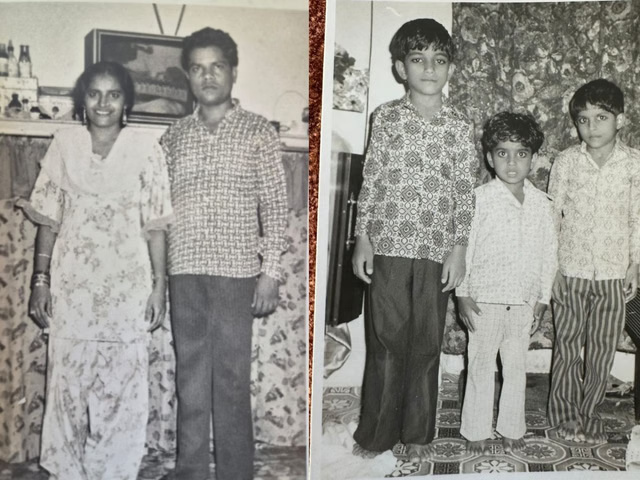
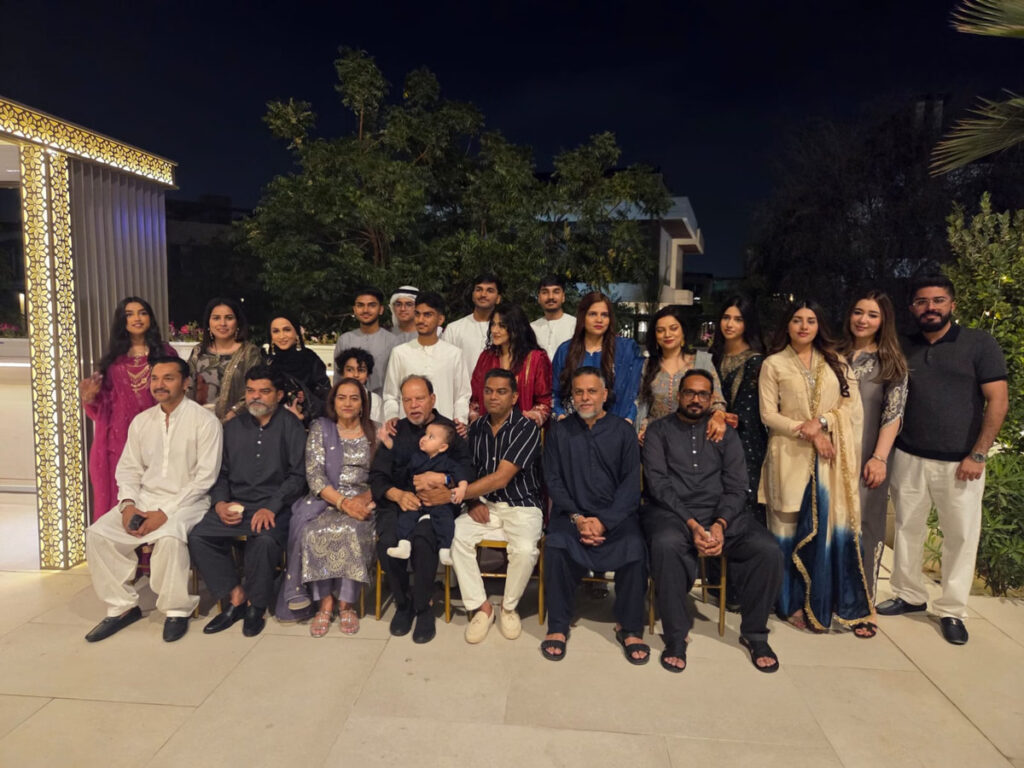
The passports belong to Mohammad Umer Khan and Badrun Nisa, both originally from Karachi. Their journey, beginning in 1963, now spans five generations—from a small flat in Murshid Bazaar beside a tailor shop to a logistics business and a spacious villa in Dubai Hills.
The legacy continues through their sons and grandchildren. “Five generations. That’s a true success story,” says Zahid, one of the sons, with evident pride.
We sit together in a brightly lit room as the family recounts layered stories within stories, often interrupted by laughter.
“We’ve seen Dubai grow in front of our eyes.”
Badrun Nisa recalls a very different Dubai—one without malls, cafés, sidewalks, or restaurants at every turn. For a few moments, the bright dining room fades as she is transported back to 1965, when she arrived by ship from Karachi.
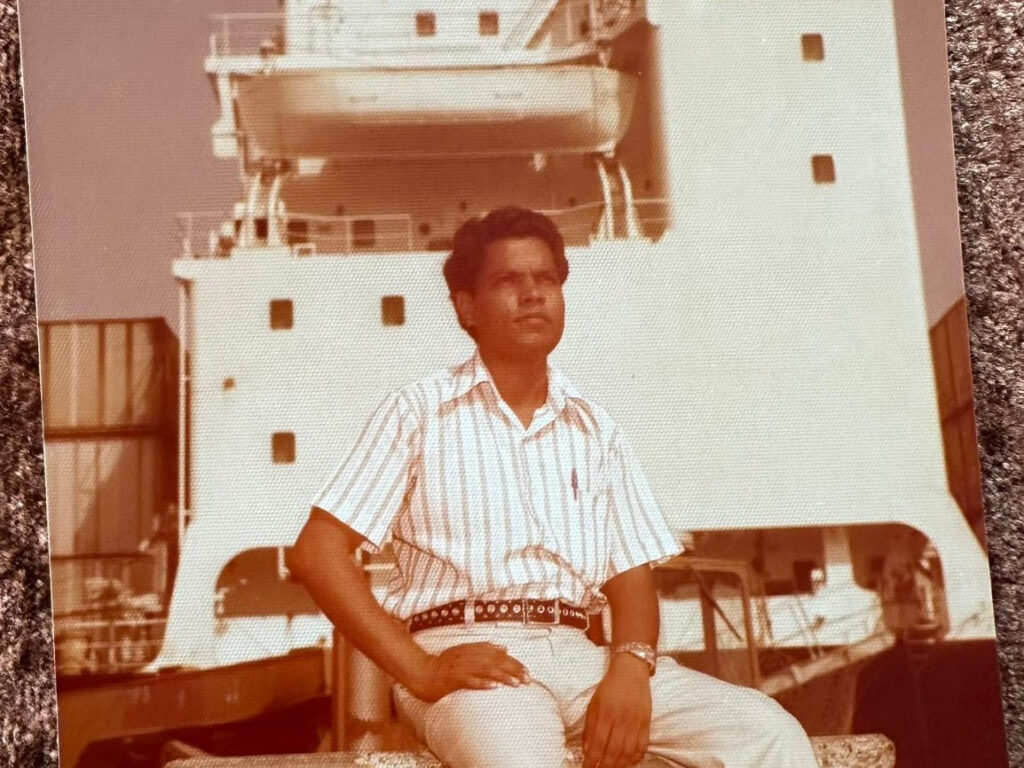
The vessel was anchored offshore, requiring a transfer to another boat before reaching shore. After a struggle with ropes and ladders, they finally landed in Deira, marking the beginning of a life that would unfold alongside the city’s transformation.
Her father was already working in the UAE as a tailor, having arrived in 1963. “Then my mother came, and we followed in 1965 from Karachi,” she says.
When asked why her father chose to come, she recalls simply: he was determined. He established himself as a tailor in Dubai and later called his family over, unwilling to remain separated from them for long.
On arrival, she stepped into the world of Murshid Bazaar. “There was nothing here back then,” she remembers, though she still vividly recalls the old shops, the fish market, and houses secured with wooden doors and simple locks. Their first home had just two bedrooms.
At 16, she briefly returned to Karachi, got married, and came back to Dubai with Mohammad Umer Khan. All her children were born at Rashid Hospital.
“My whole life has been here—childhood, adulthood, and now even old age,” she says.
A childhood shaped by an unfinished city
While her husband worked 12-hour shifts at a shipping logistics company, Badrun Nisa spent her time sewing at home. She never intended to sell her creations—she made them simply for her children and later her daughters-in-law.
Life, however, was not confined to home. Cinema outings were a source of joy. They would visit Nasir Chowk and watch films in an open-air theatre with no roof. “We saw Mughal-e-Azam and Ganga Jamuna here. My father loved films, so he would always take us,” she recalls.
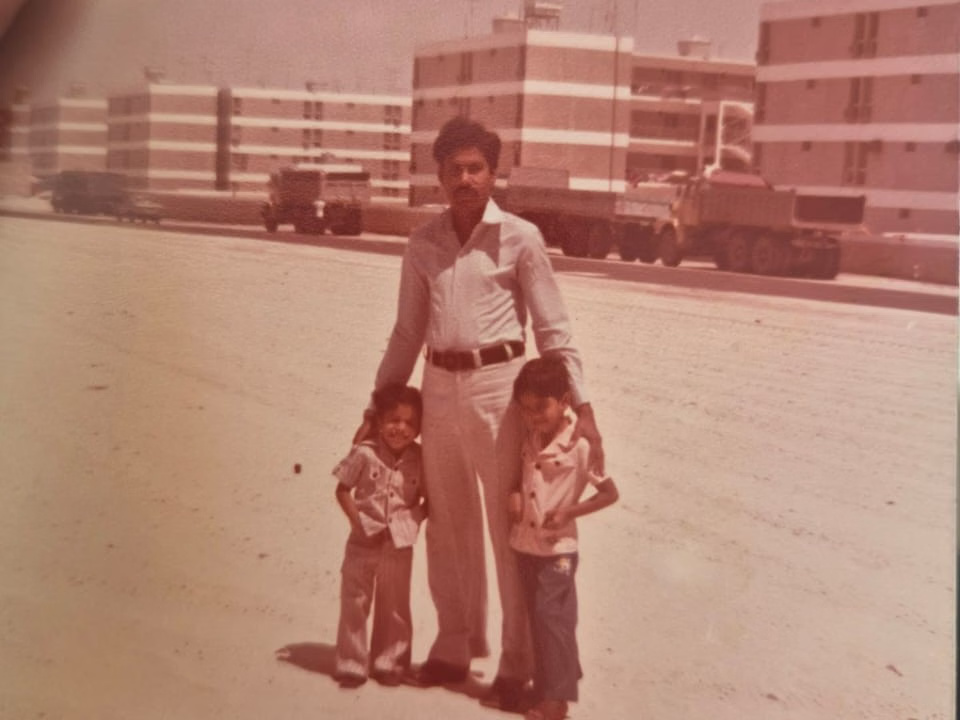
Malls were unheard of then; entertainment was far simpler for that generation. For Zahid Khan and his siblings, leisure later centred around a single community hub and nearby parks. They would wander through Deira and Bur Dubai, often taking abras for sightseeing. “Back then, around Dh10 would take two or three families on one abra,” he says.
“It was an amazing childhood. We were very naughty children,” agrees his brother, Mohammed Khalid. They watched Dubai rise from the ground up, including the development of the Trade Centre. “My father’s office was there. The first time I went up, it felt so high—I felt like I was in a plane,” he recalls.
Badrun Nisa rarely complains, not even about the heat in those early days when air-conditioning was absent—something unimaginable today. “It didn’t feel so hot back then,” she says gently. Her son Khalid laughs and adds, “If it did get hot, we just fanned ourselves.”
A life spent watching ships
Mohammad Umer Khan is soft-spoken. His granddaughter Haniya first shares a small anecdote before he speaks—how, after losing his parents early, he once played games to earn tuition fees in Pakistan. He smiles quietly at the memory.
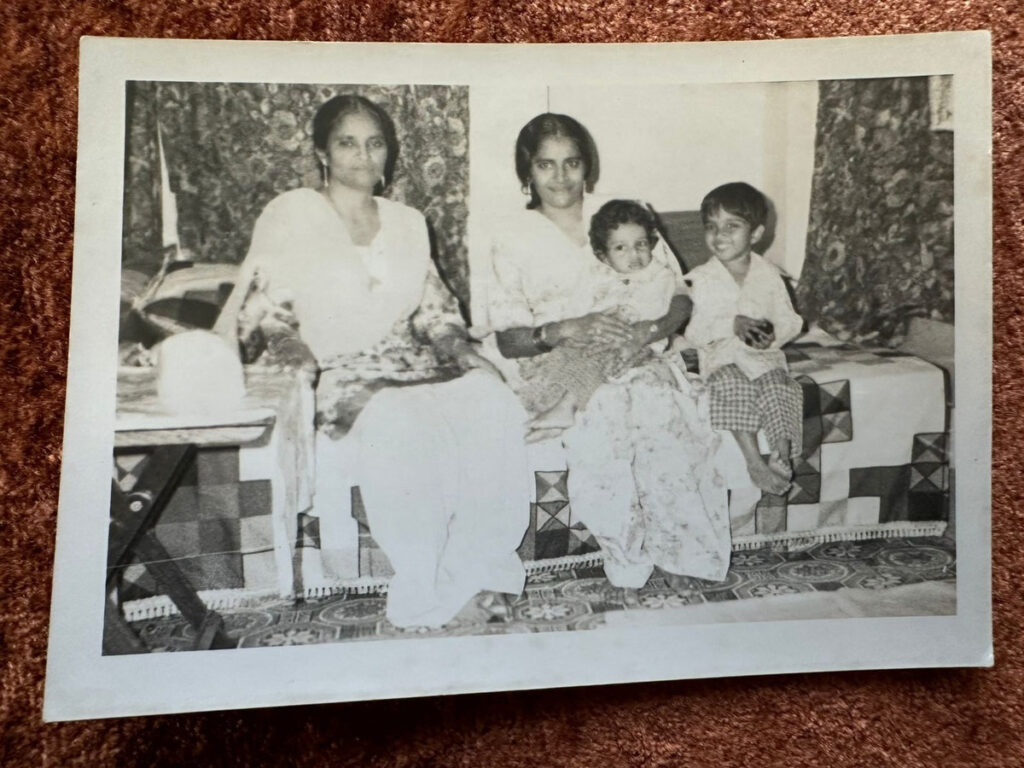
As more recollections surface, he begins speaking about Dubai and a life shaped around ships. After arriving, his father-in-law once called him to work at a tailor’s shop, but unfamiliar with stitching, he chose instead to continue his shipping career that began in Pakistan.
He eventually found work at Port Rashid. The journey itself was demanding, involving both an abra ride and a truck transfer. “I had to learn and note the sounds of the cranes and machinery. That was difficult,” he recalls.
He was away for nearly 12 hours each day—leaving early in the morning while the children were still asleep, and returning late at night by truck, only to find them asleep again.
Life, as he recalls, revolved entirely around work. “Just work, work and work—and then I got a job at Sea Land,” he says. Mohammad Umer Khan describes how that rhythm continued as he observed ships passing through the port: stepping out of his office in Ras Al Khor and watching vessels enter Port Rashid. From rooftops, they would even watch containers being unloaded.
Badrun Nisa recalls how hard he worked. “In every job he had, even if it rained, he would wake up at night and check if everything was okay,” she says.
From hardship to enterprise
He continued working until the 1990s, and in 1996 started his own logistics business, bringing the whole family into it. Over the years, they lived between Ajman and Dubai through the late 1990s and early 2000s, facing many difficulties along the way. At one point, the family had only one car and relied on a single driving licence shared among the brothers. With no mobile phones, only pagers, they depended on public telephones to call the office and arrange pick-ups.
Sometimes, they even walked to work in the heat—from Karama to Bur Dubai, a 25-minute journey on foot.
Yet despite those struggles—and because of them—the business grew. “All of us are into logistics and property now,” says Zahid Khan. “We also have a family home in Ajman where my parents used to live in a joint family setup. Later, all of us brothers moved here, and this villa was built last year. My elder brother asked them to move here too.”
The conversation shifts to Eid.
Eid was once a quiet occasion. In the 1960s, they would simply stay at home and share meals as on any other day, with hardly anyone around to celebrate with.
But today, their home is filled with love and laughter. Mohammed Khalid says his home now hosts large Eid gatherings with over 200 guests.
“That’s the beauty of Eid,” he explains. “Everyone comes, shares food, dresses in their best clothes. The house is filled with plates of dishes—biryani included.”
We exchange Eid Mubarak wishes and take our leave. The passports remain on the table, exactly as they were—quietly holding on to the story they continue to tell.

