

Dubai Unveils Landmark Projects, Including a 730-Metre Bridge Between Dubai Silicon Oasis and Liwan.
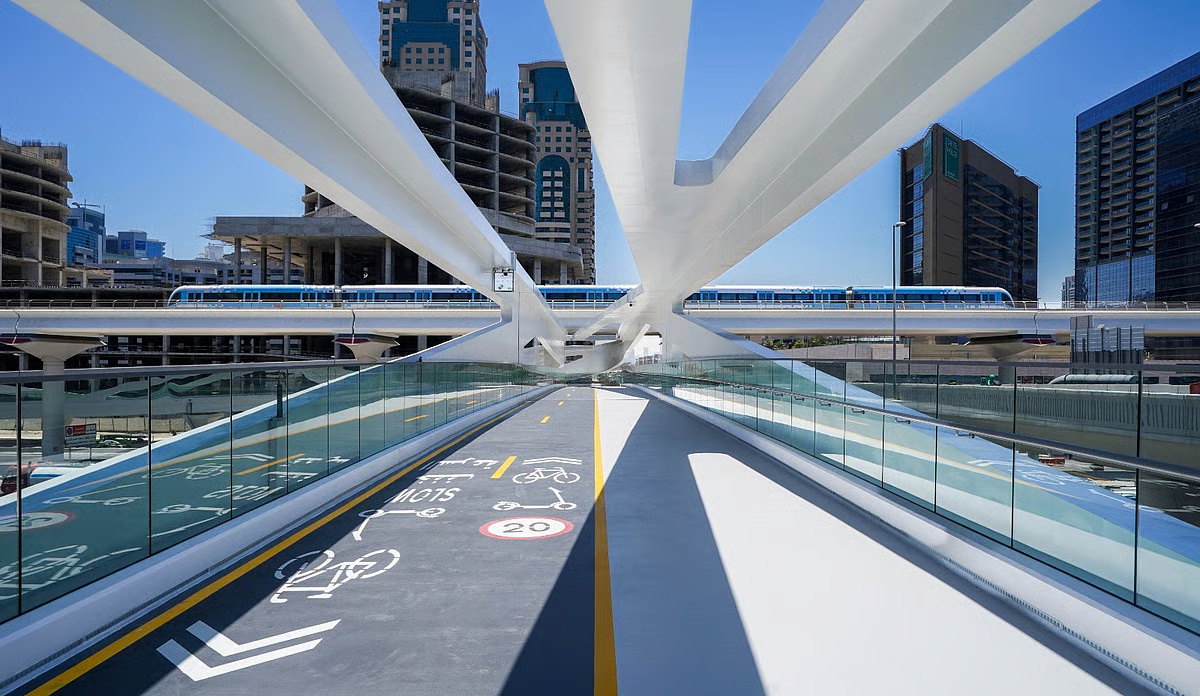
Dubai: Dubai is set to significantly expand its pedestrian infrastructure with plans to construct 31 new pedestrian bridges and tunnels by 2030, including one of the emirate’s largest pedestrian and cycling bridges, as authorities step up efforts to enhance road safety and promote sustainable mobility.
The Roads and Transport Authority (RTA) has approved a five-year development plan covering strategic locations across the city, including Sheikh Zayed Road, King Salman bin Abdulaziz Al Saud Street, Al Ittihad Road and Omar bin Al Khattab Street. The projects were identified following extensive studies that evaluated population density, connectivity to public transport, proximity to residential communities, and access to key economic and tourist destinations.
Pedestrian-Friendly City
Mattar Al Tayer said the expansion reflects Dubai’s commitment to becoming a safer and more pedestrian-friendly city. According to him, the new projects are designed to improve accessibility, enhance connectivity between communities and public transport networks, and support the emirate’s broader goals of sustainable urban mobility.
The initiative comes as Dubai’s pedestrian network has grown substantially over the past two decades. The number of pedestrian bridges and tunnels increased from just 26 in 2006 to 178 by the end of 2025 — a rise of 585 per cent — highlighting the emirate’s ongoing investment in safe and accessible mobility infrastructure.

Largest-Ever Pedestrian and Cycling Bridge
Among the most notable projects currently under construction is a 730-metre pedestrian and cycling bridge spanning Dubai–Al Ain Road. One of the largest structures of its kind in Dubai, the bridge will connect Liwan with Dubai Silicon Oasis, creating a vital link between two rapidly expanding communities.
Major Bridges Near Completion
Another key project approaching completion is a 554-metre pedestrian bridge on Sheikh Mohammed bin Zayed Road at the Tunis Street–Al Nahda Intersection. The bridge will connect Muhaisnah 1 with Al Twar and extend towards Al Mamzar Beach.
Mattar Al Tayer emphasized the role of pedestrian infrastructure in improving road safety, noting that existing and planned bridges form part of an integrated network linking residential communities with key destinations across Dubai. He said the network is designed to encourage residents to adopt sustainable mobility options, particularly for first- and last-mile journeys.
Pedestrian Fatalities Down 98%
Al Tayer said pedestrian bridges and tunnels have played a crucial role in improving road safety across Dubai.
“Pedestrian bridges and tunnels have played a significant role in enhancing traffic safety, with the pedestrian fatality rate falling from 9.5 deaths per 100,000 population in 2007 to 0.22 deaths in 2025, a decline of 98 per cent,” he said.
The improvements have also encouraged active mobility and boosted public satisfaction. According to the RTA, resident satisfaction with pedestrian infrastructure has reached 88 per cent, while the number of pedestrian trips increased from 307 million in 2023 to 326 million in 2025. Cycling trips rose by 23 per cent year-on-year, reaching 57.3 million in 2025.
Promoting Walking and Cycling
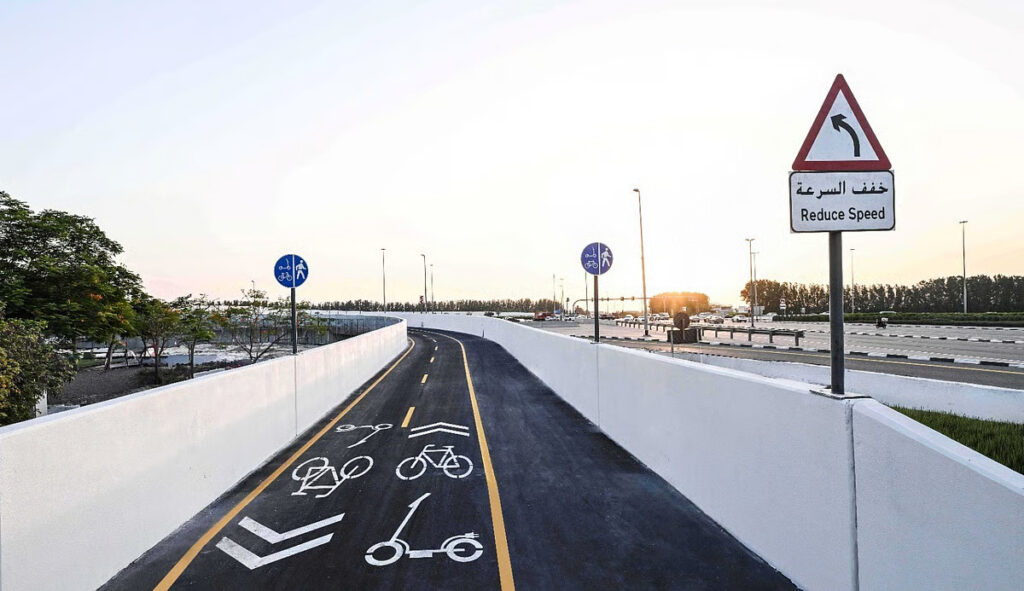
The authority has recently completed three pedestrian and cycling bridges, including landmark crossings on Sheikh Zayed Road and Al Khail Road measuring 528 metres and 501 metres respectively. Featuring dedicated lanes for bicycles and e-scooters, the bridges form part of Dubai’s broader strategy to encourage walking, cycling and other low-carbon transport options.
The RTA said the upcoming bridges will be equipped with advanced safety features, including firefighting systems, alarm networks, remote monitoring technology and dedicated cycling facilities. The projects support Dubai’s ambition of achieving zero traffic fatalities and strengthening its position among the world’s safest cities for road users.
Key Figures at a Glance
Growth in Pedestrian Infrastructure
- Pedestrian bridges and tunnels increased from 26 in 2006 to 178 in 2025.
- This represents a 585% increase.
- The RTA plans to add 31 more pedestrian bridges and tunnels by 2030.
Road Safety Improvements
- Pedestrian fatality rate fell from 9.5 deaths per 100,000 people in 2007 to 0.22 deaths per 100,000 people in 2025.
- Overall decline in pedestrian fatalities: 98%.
Walking and Cycling Trends
- Pedestrian trips rose from 307 million in 2023 to 326 million in 2025, an increase of about 6%.
- Cycling trips increased from 46.6 million in 2024 to 57.3 million in 2025, a 23% rise.
- Resident satisfaction with Dubai’s pedestrian infrastructure stands at 88%.
Largest Bridge Under Construction
Dubai–Al Ain Road Pedestrian and Cycling Bridge
- Length: 730 metres.
- Width: 5.6 metres.
- Location: Spans Dubai–Al Ain Road.
- Connectivity: Links Liwan with Nad Hessa in Dubai Silicon Oasis.
- Purpose: Improve connectivity between two rapidly growing residential communities while supporting walking, cycling and e-scooter use.

