

Indian Students Aim to Develop a Small-Scale Prototype After Completing Their Grade 12 Examinations.
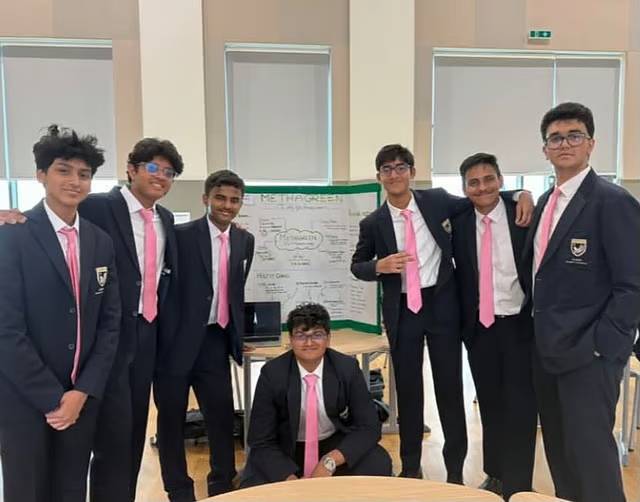
Dubai: A group of seven Indian high school students in Dubai is developing an innovative project that aims to transform discarded plastic into usable fuel, potentially offering a new approach to tackling plastic pollution and growing energy demands.
Named “Methagreen,” the student-led initiative focuses on converting high-density polyethylene (HDPE), a widely used plastic found in bottles, containers and packaging materials, into fuel that could potentially be used for cooking or electricity generation.
The project reflects the students’ ambition to explore practical solutions to two major global challenges: increasing plastic waste and the need for alternative energy sources.
Kiaan Bijin, a 17-year-old Indian Grade 12 student based in Dubai and one of the project’s co-founders, explained that the concept emerged from the team’s shared determination to develop something that could benefit society.
“Our journey started when all of us joined a group with one vision. Making a product that has a positive impact on society,” Bijin told Gulf News.
Rather than developing a conventional mobile application or website, the students wanted to work on a project that addressed pressing environmental and energy-related concerns.
During their initial discussions, the team explored several challenges they believed would become increasingly significant in the coming years, particularly the rapid accumulation of plastic waste, the finite availability of fossil fuels and the growing difficulty of meeting future energy requirements.
“After lots of brainstorming, the main issues we got on were how plastic waste increases exponentially every decade, how fossil fuels won’t last us forever, and how energy is going to be difficult to obtain in the future,” Bijin explained.
These concerns inspired the students to investigate whether commonly discarded plastic materials could be repurposed into a useful energy source.
Through Methagreen, the team hopes to demonstrate how innovative waste-conversion technologies could contribute to better plastic waste management while exploring alternative methods of fuel production.
From School Competition to Major Sustainability Platforms
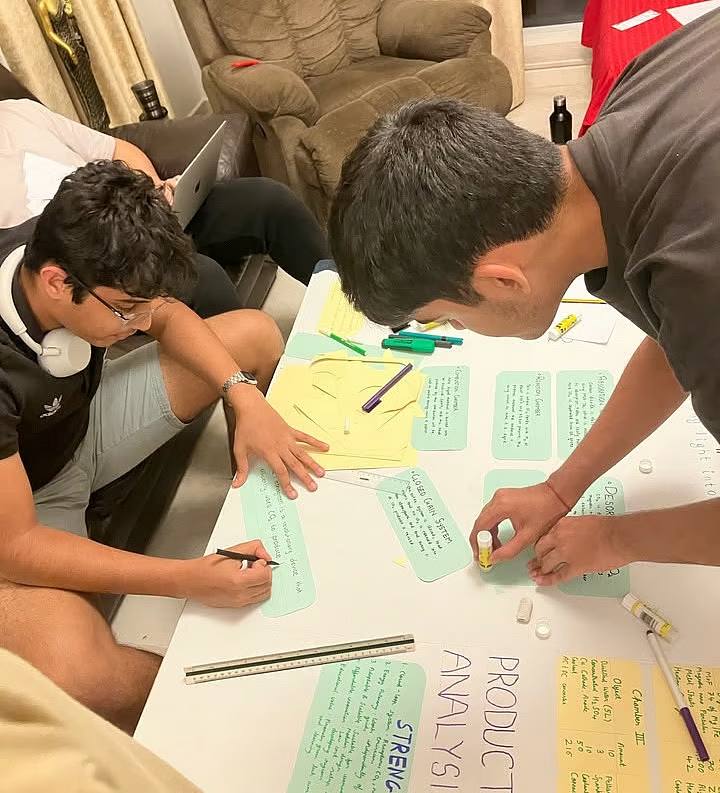
What began as a school-level competition entry has gradually developed into a sustainability-focused project, attracting attention beyond the classroom.
The Methagreen team initially collaborated to research the concept, develop its design and refine the proposed technology. Their efforts helped them secure victory in the school competition, creating opportunities to introduce their idea to a wider audience.
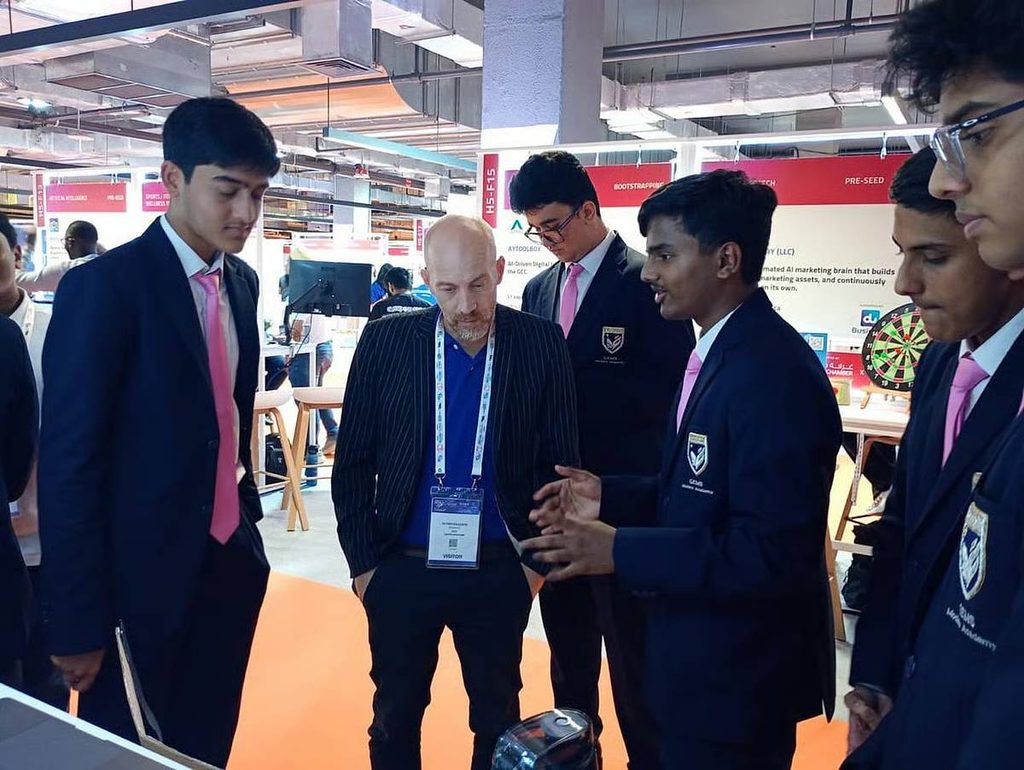
Following their initial success, the students presented Methagreen at several prominent innovation and sustainability platforms, including GITEX North Star 2025 and the Zayed Sustainability Prize.
The seven-member team consists of students with different areas of expertise, each contributing to the project’s development:
- Rushabh Yadav, 17: Founder of Methagreen.
- Kiaan Bijin, 17: Co-founder of the project.
- Advait Patil, 18: Lead developer and Chief Technology Officer.
- Vihaan Bhaskar, 16: Responsible for design and chemistry.
- Ibrahim Khan, 17: Works on design and chemistry.
- Vihaan Chatterjee, 17: Oversees economics and cost analysis.
- Rayyaan Hashmat, 17: Handles 3D simulations and marketing.
All seven students are Indian nationals who have been living in the UAE for more than a decade.
As the team participated in additional competitions and innovation events, they continued improving the project based on feedback from judges, industry professionals and other participants.
“After presenting at many competitions, we kept adding minor changes to the product based on what opinions other people had. Our main aim was to make it profitable, sustainable, and easily accessible,” Bijin explained.
The students hope these improvements will help them develop a practical solution that combines environmental benefits with commercial feasibility and accessibility.
How Methagreen Aims to Convert Plastic Waste into Fuel
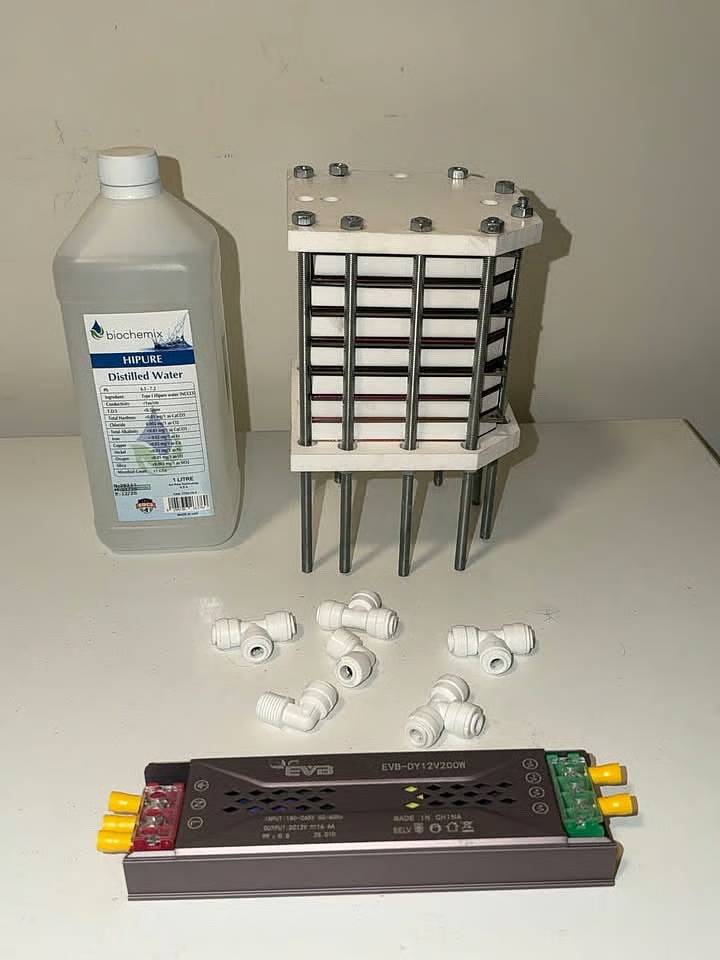
The Methagreen project proposes using heat and chemical conversion processes to transform discarded plastic into dimethyl ether (DME), a fuel that can potentially be used for cooking and electricity generation.
The students’ proposed method involves several stages of chemical processing.
Initially, high-density polyethylene (HDPE) plastic waste would undergo thermal treatment to produce methane.
The methane would then react with carbon dioxide to form synthesis gas, commonly known as syngas, a mixture containing hydrogen and carbon monoxide.
In the next stage, the syngas would undergo further chemical processing using catalysts to produce dimethyl ether.
According to the team, the resulting DME could potentially serve as a cooking fuel when used with appropriately modified equipment.
It could also be used to generate electricity through a compatible power generation system.
An important feature of the proposed process is its focus on incorporating carbon dioxide into fuel production rather than simply releasing it into the atmosphere.
By exploring ways to reuse carbon dioxide during chemical conversion, the students aim to improve the environmental sustainability of their proposed technology.
However, the project remains at the development stage, and its technical performance, fuel output and environmental benefits would need to be demonstrated through practical testing.
The team hopes Methagreen could eventually offer an alternative approach to managing plastic waste while contributing to the development of useful fuel sources.
Kiaan Bijin explained that one of Methagreen’s proposed features is the reuse of carbon dioxide generated during fuel combustion, allowing it to be incorporated into the chemical conversion process.
“The combustion will give carbon dioxide back, which we reuse in the reaction starting with methane. This loop makes our carbon footprint low with a high energy output,” Bijin said.
The students believe this approach could help reduce the project’s environmental impact while supporting energy production.
The team has also proposed a separate treatment process for other by-products, with the aim of converting them into solid carbon and metal oxides.
However, Methagreen remains in the development stage, and its proposed environmental and energy benefits have not yet been confirmed through practical testing.
Further experiments will be necessary to determine the system’s actual energy efficiency, emissions, technical feasibility and ability to operate as designed.
Converting Plastic Waste into a Potential Source of Electricity
The Methagreen team hopes its proposed technology could eventually provide an alternative way to manage discarded plastic while generating useful energy.
By processing high-density polyethylene waste, the students aim to reduce the amount of plastic entering landfills and waterways while exploring opportunities to produce fuel for electricity generation.
Based on their preliminary calculations, the team estimates that a facility capable of processing approximately one tonne of HDPE plastic daily could potentially generate a significant amount of electricity.
However, these projections remain theoretical and will require experimental validation to determine the actual energy output and overall efficiency of the proposed system.
“Our aim is to bring light into every home by making this electricity accessible and sustainable,” Bijin said.
The students envision Methagreen as a project that could address multiple environmental and energy challenges through a single integrated approach.
Their concept combines plastic waste conversion, carbon dioxide reuse and alternative fuel production, with the long-term goal of making energy more accessible while reducing waste.
Students Plan Small-Scale Prototype After Grade 12 Examinations
The next major milestone for the Methagreen team is the development of a smaller working prototype capable of processing approximately 100 kilograms of HDPE plastic per day.
The students plan to begin building the prototype after completing their Grade 12 examinations.
“After our exams we aim to build a small sized prototype that can process about 100kg of HDPE per day,” Bijin said.
The proposed prototype would allow the team to move beyond theoretical calculations and computer-based designs by collecting experimental data from a functioning system.
Through practical testing, the students hope to evaluate the conversion process, measure energy output, examine emissions and identify technical improvements that could increase efficiency.
The findings would also help determine whether the proposed technology could be developed into a larger-scale waste-to-energy solution.
In addition to building and testing the prototype, the students are planning to publish a research paper outlining their concept and findings.
They are also aiming to secure a patent for the proposed technology by mid-2027.
While the project is still at an early stage, the team hopes that continued research, testing and development will bring Methagreen closer to becoming a practical solution for plastic waste management and alternative energy production.
As the seven students prepare to begin their university education, they remain committed to advancing Methagreen and plan to continue working on different aspects of the project alongside their academic responsibilities.
Despite moving into the next stage of their education, the team hopes to maintain its collaboration and focus on transforming the proposed concept into a functioning system.
“Our next steps are to develop the prototype and gather more valuable data from its working to make minor tweaks to increase its efficiency,” Bijin explained.
The students intend to use the results of their initial experiments to identify potential improvements, refine the technology and evaluate whether the proposed process can operate effectively under practical conditions.
A Long-Term Vision for Sustainable Energy
For the young innovators, Methagreen represents more than a school project. It reflects their ambition to explore solutions to environmental challenges through scientific research, technological innovation and teamwork.
What began as an idea developed during a school competition has evolved into a long-term initiative focused on exploring the possibility of converting plastic waste into a valuable energy resource.
The team’s immediate priority is to determine whether the proposed technology can perform efficiently and reliably beyond theoretical calculations and initial designs.
“If this prototype works as intended it can change what the future of energy will look like,” Bijin said.
While the students recognise that further experimentation and development are necessary, they remain optimistic about the project’s potential.
Through continued research, prototype testing and technical improvements, the team hopes to establish whether Methagreen could eventually offer a practical approach to reducing plastic waste while producing alternative fuel.
Their long-term ambition is to contribute to a more sustainable energy future by exploring ways to transform discarded plastic into a useful resource, potentially addressing waste management and energy challenges together.

