

Dubai’s expanding hub sees the development of new ecosystems linking trade, technology, and finance.
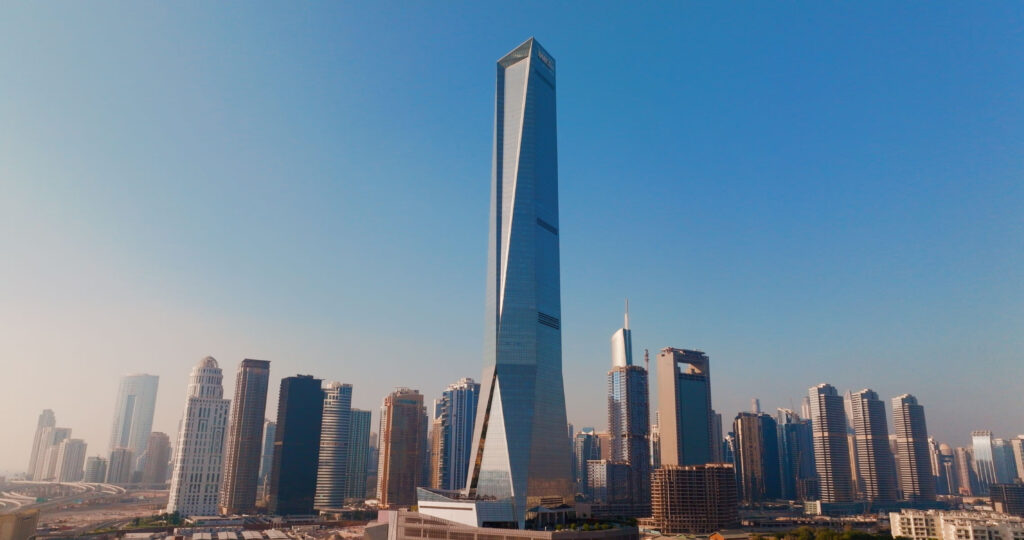
Dubai: The Dubai Multi Commodities Centre (DMCC) added more than 2,300 companies in 2025, taking its total membership to over 26,000.
Growth over the past year was driven by rising demand from global markets and the continued expansion of the Dubai Multi Commodities Centre’s sector-focused ecosystems, with technology emerging as the largest segment within the district.
The latest annual results point to a model that is attracting companies across commodities, finance, and digital industries into a unified platform.
Technology takes the lead
Technology has now become the largest ecosystem within the Dubai Multi Commodities Centre, with more than 4,000 companies operating in the sector. The expansion has been supported by new partnerships, along with steady growth in its crypto, AI, and gaming centres, which together host over 1,000 firms.
Industry players including Kraken and Crypto.com have joined the ecosystem, while Bitcoin.com has established its regional headquarters within the Dubai Multi Commodities Centre’s Crypto Centre, adding to the growing cluster of digital asset firms.
The emphasis on technology reflects a broader push to align trade with digital infrastructure and emerging forms of finance.
Ahmed Bin Sulayem, Executive Chairman and CEO of the Dubai Multi Commodities Centre, said: “2025 reinforced Dubai’s position as one of the world’s most dynamic and connected centres for global trade. With the UAE’s total trade reaching a new record of over $1.63 trillion, and Dubai achieving its highest-ever ranking in the Global Financial Centres Index at 7th place globally, the scale and momentum are clear.
”DMCC plays a central role in enabling and consolidating this growth. At the core of its strategy is a fully integrated platform that connects commodities, finance, and technology—a convergence that is actively reshaping how global trade is conducted. In 2025, the Dubai Multi Commodities Centre surpassed 26,000 member companies.
It is now home to over 4,000 technology companies, more than 3,600 firms in the energy sector, and a fast-growing base of nearly 2,000 companies across private capital and finance. This progress has been supported by the launch of new sector-focused platforms such as DMCC FinX and DMCC Wealth Hub, alongside targeted initiatives like its Intellectual Property Support Framework, designed to help businesses protect and commercialise innovation in an increasingly knowledge-driven economy.
Dubai’s resilience and long-term economic vision continue to reinforce its appeal as a destination for international business. As the centre moves into 2026, its focus is on deepening and expanding ecosystems, further developing its districts, and strengthening Dubai’s position as a leading global hub for trade and finance.
Global demand remains strong. New company registrations reflected sustained interest from key international markets, with strong inflows from India, the United Kingdom, and Türkiye. The fastest growth came from the United States, China, Germany, and Switzerland.
The scale of that demand highlights Dubai’s continued appeal as a base for companies seeking access to regional and global trade routes.
DMCC continued to strengthen its role across global commodities markets. The Dubai Diamond Exchange hosted 103 tenders and auctions during the year, while trade flows in gold and precious metals remained anchored within the ecosystem.
A record-setting 1,971 kg silver bar was unveiled and is being tokenised through Tradeflow, as part of a broader push to enhance transparency and digital infrastructure in commodities markets.
Islamic finance activity also expanded, with DMCC Tradeflow recording more than 296,000 transactions valued at over AED 1.32 trillion, marking a 47% year-on-year increase. Meanwhile, the Dubai Gold and Commodities Exchange recorded over 2 million contracts traded, with a total value exceeding $46.9 billion.
Real estate and infrastructure expand
Physical infrastructure continued to keep pace with rising demand across DMCC’s districts. Uptown Dubai moved into its next phase, with new commercial towers set to add 62,000 square metres of office and retail space.
The sell-out of branded residences in Uptown Tower Dubai, along with new residential and hospitality developments, points to continued demand for integrated live-work environments. Activity across Jumeirah Lakes Towers also remained steady, supported by ongoing upgrades and expansion.
Building the next phase
New platforms launched during the year aim to bring together capital, innovation, and trade flows. Dubai Multi Commodities Centre’s FinX and Wealth Hub are designed to connect financial markets with real economy activity, while the Luxury Innovation Centre focuses on transparency and technology within the global luxury sector.
Additional initiatives, including intellectual property support frameworks and specialised commodity centres, signal a push into emerging sectors where trade and technology increasingly overlap.

