

Mideast conflict continues to tighten global energy supplies amid risks in the Strait of Hormuz.
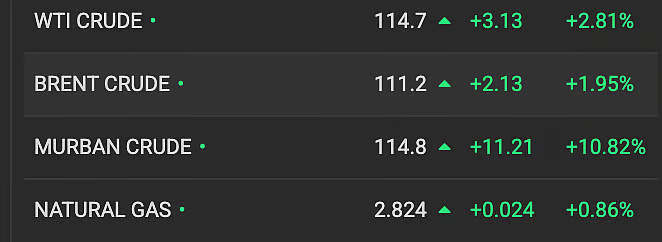
US crude (WTI) traded above $114 per barrel, surpassing Brent crude—an unusual inversion highlighting deepening market stress.
Brent, the global benchmark, was above $111, while UAE Murban crude climbed past $114.8, reflecting strong demand for barrels that can bypass chokepoints such as the Strait of Hormuz.
Russian Urals crude remained elevated at $121.17, up $15.44 or 14.6%, as of 7:38 am Tokyo time on Monday, April 6, 2026 (10:38 pm GMT, April 5, 2026).
Natural gas prices also rose modestly, reflecting broader tightness across energy markets.
These moves are occurring amid heightened geopolitical uncertainty linked to ongoing tensions in the Middle East, particularly involving Iran and broader regional conflict dynamics, which have put additional pressure on global energy supplies and markets.
A price inversion between WTI and Brent is unusual, signaling that the market is concerned not only with oil supply levels but also with delivery logistics.
WTI vs Brent
Normally, Brent trades at a premium over WTI.
- West Texas Intermediate (WTI): US light, “sweet” crude priced at Cushing, Oklahoma; serves as the benchmark for North America.
- Brent Crude (Brent): North Sea “blend” priced for seaborne delivery; serves as the global benchmark for most of the world.
Brent crude is waterborne and easily shipped worldwide, while WTI is landlocked in the US midcontinent and relies on pipelines and export terminals to reach global buyers.
Why Prices Are So High
- Geopolitical tensions and supply risk: Fears of disruptions through the Strait of Hormuz—a vital artery for global oil flows—have led traders to price in a significant “war-risk premium,” sharply lifting oil prices.
- Risk premium on deliverable barrels: WTI, normally cheaper than Brent, has risen above Brent because US barrels are considered more “deliverable” amid potential sea-route bottlenecks.
- Recent political rhetoric: Statements from the Trump administration about continued military pressure on Iran have heightened concerns over a protracted conflict and possible supply disruptions.
Impact
- Oil markets remain volatile, with prices at multi-year highs, and benchmarks are trading in unusual relationships as traders reassess supply risks.
- Elevated oil prices are feeding inflationary pressures, impacting gasoline, diesel, and broader energy costs.
- Energy-importing economies face growing inflation risks, which could weigh on global economic growth if high prices persist.
Recent equity rallies were partly reversed as rising oil risk premiums weighed on markets. Brief optimism over a potential de-escalation has sparked short-lived gains, but underlying energy risks remain elevated.

