

The 10.5-second warning residents receive on their phones is the final step in a national alert system designed to deliver critical information quickly during emergencies.
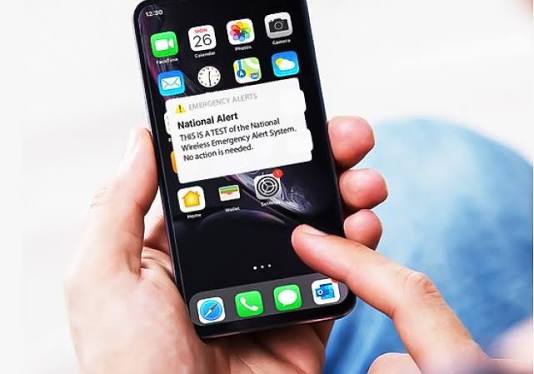
After 37 days without a similar incident, UAE residents heard the emergency alarm again on Tuesday.
The warning instructed residents to immediately seek shelter in the nearest secure building, stay away from windows, doors and open areas, and await official instructions as air defence systems responded to the missile threat.
The alert was lifted about 10 minutes later, with authorities confirming that the situation was safe. It was the first such emergency warning since July 12, marking a 37-day gap between alerts.
For someone holding a phone, the sequence can seem straightforward: an alarm, a message, instructions and eventually an all-clear. But the notification on the screen is only the final visible stage of a broader national early-warning system designed to move urgent information from authorities to people in the areas where it is needed.
Not a normal text
The technology behind the mobile warning is known as Cell Brodcast.
Unlike an SMS, which is sent to individual telephone numbers, Cell Broadcast allows a warning to be transmitted simultaneously through selected mobile-network cells to compatible devices within a specific area.
Under standards set by the Telecommunications and Digital Government Regulatory Authority (TDRA), a UAE-Alert can target an area ranging from a single mobile-network cell to the entire network.
This geographic targeting is crucial during an emergency. Authorities do not need to identify every person in an affected area or send individual messages to thousands of phone numbers. Instead, the network broadcasts the warning to compatible devices within the selected coverage area.
The National Emergency Crisis and Disasters Management Authority (Ncema) began activating mobile warnings as part of the National Early Warning System in 2018. The system was designed to deliver alerts based on users’ geographic locations within seconds without affecting normal network performance.
Why the alarm sounds like that
The distinctive alarm is not simply a feature designed by Apple, Samsung or another handset manufacturer.
UAE technical standards specify how devices should respond when different categories of public warnings are received.
An Emergency Alert is enabled by default and cannot be disabled by users. It appears on screen, triggers vibration and emits an emergency attention signal lasting 10.5 seconds. TDRA’s published UAE-Alert requirements state that the signal operates even when a phone is in silent mode.
The system also has separate categories for warnings, exercises and tests, which can behave differently. This allows the same infrastructure to distinguish between an immediate emergency and a lower-level public warning or drill.
The specification is designed to operate across successive generations of mobile networks, including GSM, UMTS, LTE and 5G, rather than being tied to a single technology.
What happens before the phone sounds?
This is the less visible part of the chain.
The Ministry of Defence has said the UAE operates integrated, multi-layered air-defence systems alongside early-warning and monitoring capabilities, with national systems continuously tracking developments and maintaining high levels of readiness.
Ncema, meanwhile, operates the national framework through which public warnings and emergency instructions are coordinated with relevant authorities.
Following the July 12 incident, authorities said national monitoring systems operate around the clock and that precautionary alerts may be issued proactively, even when the likelihood of a threat affecting the country is limited.
That highlights an important distinction: receiving an alert does not necessarily mean an incoming threat is certain to strike the area where the phone is located.
The warning system is designed to act before that certainty exists, giving residents instructions while authorities continue to monitor and assess the situation.
The precise operational handoff between military detection, threat assessment, the decision to issue a civilian warning and its transmission through telecommunications networks has not been publicly disclosed.
The available information also does not indicate that a radar system automatically sends an alert directly to mobile phones.
Instead, the process can be understood as a chain of distinct layers: national monitoring and detection, threat assessment and emergency coordination, an authorised public warning, and finally the telecommunications network distributing that warning geographically.
For residents, the national warning system may only become visible when a phone suddenly vibrates and sounds.
But by the time the 10.5-second alarm begins, the warning has already travelled through a much larger system. The phone is simply the last mile.

