

Easing Gulf tensions could support trade, travel, banking and property sectors.

Dubai: A US–Iran deal could provide a fresh boost to the UAE economy by easing pressure on key trade routes and restoring confidence in travel.
Investors, tourists, airlines, shipping companies and developers adopted a more defensive stance during the conflict, particularly as the Strait of Hormuz emerged as a key risk for energy and cargo flows. A sustained de-escalation would help unwind this risk premium and allow companies to resume expansion planning.
Early signs of optimism are already visible in parts of the market. ADNOC Logistics & Services on Monday upgraded its full-year 2026 guidance, citing stronger performance in its Shipping segment and improved material handling volumes in offshore contracting.
The Abu Dhabi-listed company now expects net profit to grow in the high-60% range this year, compared with an earlier forecast of mid-to-high teens growth. EBITDA is also projected to rise in the high-20% range, up from previous guidance for mid-to-high single-digit growth, while revenue is now expected to post low single-digit growth instead of a low-to-mid single-digit decline.
Trade routes matter first
According to industry experts, the most immediate gains would come from sectors directly tied to the movement of goods and people. Shipping, ports, logistics and aviation are expected to benefit first, as they rely on stable trade routes, predictable insurance costs and open airspace.
Madhur Kakkar, Founder and CEO of Elevate Financial Services, said the UAE’s most exposed sectors are “primarily trade-flow industries such as shipping, ports, logistics, and aviation,” followed by banking, insurance, real estate and tourism.
He added that a reduction in geopolitical risk and a reopening of the Strait of Hormuz would restore confidence across shipping networks, lower elevated war-risk insurance premiums, and allow aviation operators to shift focus from disruption management back to growth and capacity expansion.
The UAE’s growth model, he noted, is built around connectivity. Jebel Ali, Fujairah, Dubai International Airport, Al Maktoum International Airport, Etihad’s Abu Dhabi hub, and the country’s logistics zones all stand to benefit when regional risk declines and trade flows more freely.
Trade recovery may take time
The reopening and sustained security of the Strait of Hormuz would be particularly significant. Even if cargo movement resumes quickly, shipping costs may take longer to normalise, as war-risk insurance premiums surged during the conflict.
Kakkar noted that elevated war-risk insurance premiums, which had risen to between 5% and 10% of hull value, could take months to fully ease. As a result, the initial phase of recovery is likely to be confidence-driven, while the full cost benefits for companies and consumers may emerge more gradually.
Travel and spending could recover
Hospitality, aviation and retail are expected to be the next major beneficiaries, as they are closely tied to consumer and business confidence. Tourists tend to delay travel during periods of regional tension, airlines face higher operational risk, and residents often curb discretionary spending amid uncertainty.
Hospitality, aviation and retail could respond quickly to improved stability, potentially boosting tourism flows and consumer sentiment. Easing regional tensions may support higher passenger traffic, stronger hotel occupancy and increased discretionary spending, while banking and real estate could see additional gains through improved investor sentiment.
Banks and property move with sentiment
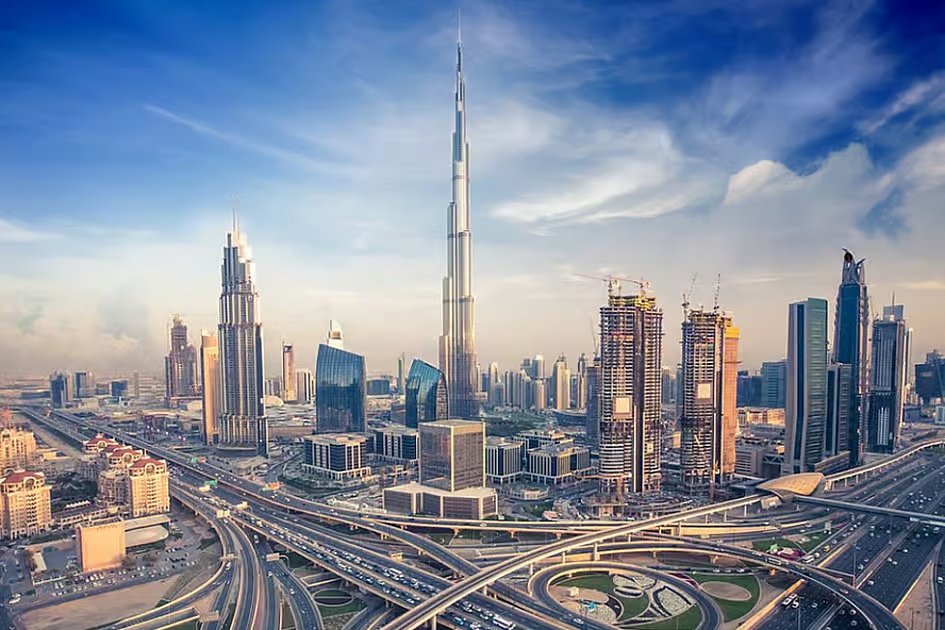
Financial markets typically recover ahead of physical economic activity, as capital can move more quickly than cargo flows, hotel bookings, or property transactions. As a result, banks, listed developers, and local equities are often among the first to price in a lower-risk environment.
The energy and logistics sectors are also expected to see relatively immediate benefits as the Strait of Hormuz reopens and maritime traffic returns to normal levels. In this scenario, the UAE could resume energy exports at full capacity while trade flows gradually recover.
Roxane El Mawla, Group CEO at UEXO.com, said the return of foreign capital would support banks through stronger lending growth, increased trade finance demand, and higher deal activity. Property developers would also benefit if overseas investors regain confidence and buyers who delayed decisions during the conflict return to the market.
Kakkar noted that banks and real estate are already showing a shift in sentiment, with Emirates NBD and Emaar among those gaining during the recent relief rally. The moves suggest investors are treating de-escalation as a positive trigger for UAE assets, particularly those linked to credit growth, property sales, and domestic demand.
Pavel said lower geopolitical uncertainty could accelerate foreign direct investment, family office allocations and institutional interest in local assets, while also supporting lending activity and corporate expansion plans.
He added that while the property market recovery may lag behind the initial stock market reaction, the overall direction would remain positive if a deal holds. Investors typically take time to rebuild confidence after regional shocks, particularly in long-duration assets such as homes, offices and development land.
Non-oil economy is the bigger story
The broader economic impact would flow through the UAE’s non-oil economy, which now accounts for the bulk of growth. Lower regional risk would support trade, tourism, aviation, construction, finance, professional services and consumption, even if softer oil prices weigh on some hydrocarbon revenues.
Kakkar said this is one reason the UAE is better positioned than in previous cycles.
“What is reassuring for the UAE is that its economy is no longer a one-variable oil story. The non-oil sector has become the real backbone of growth,” he said.
Official UAE data showed that non-oil activities contributed 77.3% of GDP in Q1 2025, while Reuters reported that UAE real GDP grew 6.2% in 2025, with non-oil GDP rising at a faster pace, according to Kakkar.
Diversification gives the UAE multiple channels to benefit from lower regional risk. Trade flows can improve through ports and free zones, tourism receipts can rise through hotels and airlines, and investment can return to banks, equities and real estate.
El Mawla said reduced geopolitical risk would lower the cost of doing business and strengthen the UAE’s role as a regional commercial and financial hub connecting the Middle East, Asia and global markets.
Deal still needs to be tested
Analysts noted that the agreement remains a framework, and its impact will depend on whether the ceasefire and negotiation process holds.
“The key point is that this is still a framework, not yet a fully settled peace,” Kakkar said.
If the deal remains on track, the UAE could benefit from stronger investor confidence, improved trade visibility, higher travel demand and a faster return to expansion planning. However, if talks stall or security risks resurface, insurance costs, shipping delays and investor caution could return quickly.
The initial gains are likely to appear in equities, banks and developers, as sentiment tends to shift quickly in liquid markets. Broader benefits would take longer to materialise in sectors such as tourism, logistics, real estate and insurance, where companies need more time to normalise costs and resume project activity.

