

Oil prices continued to post strong gains for both the day and the month as the US–Israel–Iran conflict entered its fifth day, keeping energy markets on edge over potential supply disruptions.
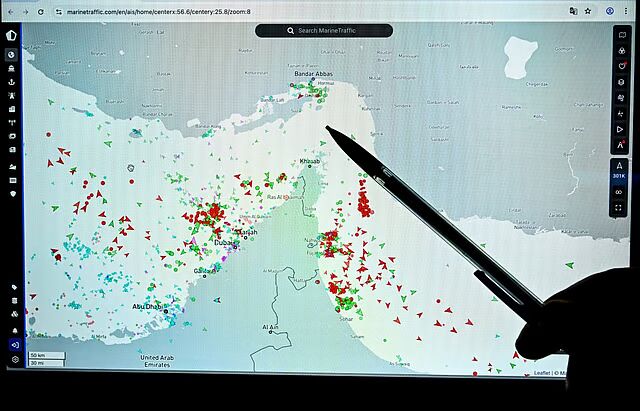
Amid the ongoing tanker squeeze in the Strait of Hormuz, oil prices continued to edge higher as global crude markets were buffeted by the widening conflict involving the United States, Israel and Iran. As news emerged that a U.S. strike sank an Iranian warship, tankers remained stranded for a fifth day due to threats from Iran, further tightening supply flows through the critical shipping chokepoint that handles roughly one‑fifth of the world’s oil exports. Markets have responded with elevated crude benchmarks and heightened volatility amid fears of prolonged disruptions to global energy supplies.
As of the latest session, West Texas Intermediate (WTI) crude was trading around $76.56 per barrel, while Brent crude hovered near $83.19 per barrel.
Both benchmarks posted strong gains for the day and the month, with generic crude up 2.54% on the day and 20.70% for the month, while Brent rose 2.20% daily and 22.57% monthly.
Over the past year, the benchmarks have climbed 15.59% (WTI crude) and 20.08% (Brent), reflecting clearly bullish sentiment in the market.
Other energy products have seen mixed performance: Heating Oil is up 54.54% year-on-year, and Gasoline has risen 21.89% YoY, while Natural Gas remains sharply negative at -31.04% YoY, underscoring the varied demand fundamentals across different energy markets.
Coal has risen moderately over the year, up 27.67%, despite a short-term daily decline of 3.7%.
Urals oil and Ethanol show mixed performance, but overall, the major crude benchmarks continue to lead the gains across energy markets.
Iran–US War Impact
US and allied strikes on Iranian military and infrastructure targets have prompted Iranian retaliation, including disruptions to tanker traffic and attacks near the Strait of Hormuz, a critical chokepoint responsible for roughly 20–30% of global seaborne oil.
Risk Premium
The escalating conflict has added a substantial geopolitical risk premium to oil prices, as traders factor in potential supply shocks and shipping disruptions.
Recent reports show Brent and WTI crude reaching multi-month highs near or above $80 per barrel, with some analysts warning that a sustained blockade could push prices toward $100–$150 per barrel in a worst-case scenario.
Oil flows through the Strait of Hormuz have been partially disrupted, insurance costs for tankers have surged, and major producers such as Iraq have reduced exports due to logistical challenges stemming from the conflict.
However, early indications of possible diplomatic engagement between Iran and US intermediaries have temporarily restrained further price gains.
Price Volatility
Energy markets remain highly volatile, driven by war risks, shipping insecurity, and potential supply bottlenecks.
The near-term trajectory of oil prices will depend largely on the duration and intensity of the conflict, as well as the success of diplomatic efforts to alleviate supply threats.

