

More Than 100 AI Use Cases Are Already Transforming How Abu Dhabi Government Services Are Delivered.

Dubai: Abu Dhabi is working towards a future where residents may no longer need to request certain government services, as artificial intelligence is increasingly being used to anticipate their needs, reduce administrative procedures and connect services across government entities.
The emirate has passed the halfway mark in its drive to become what it describes as the world’s first AI-native government by 2027. More than 100 AI use cases are already being deployed to support government services and operations.
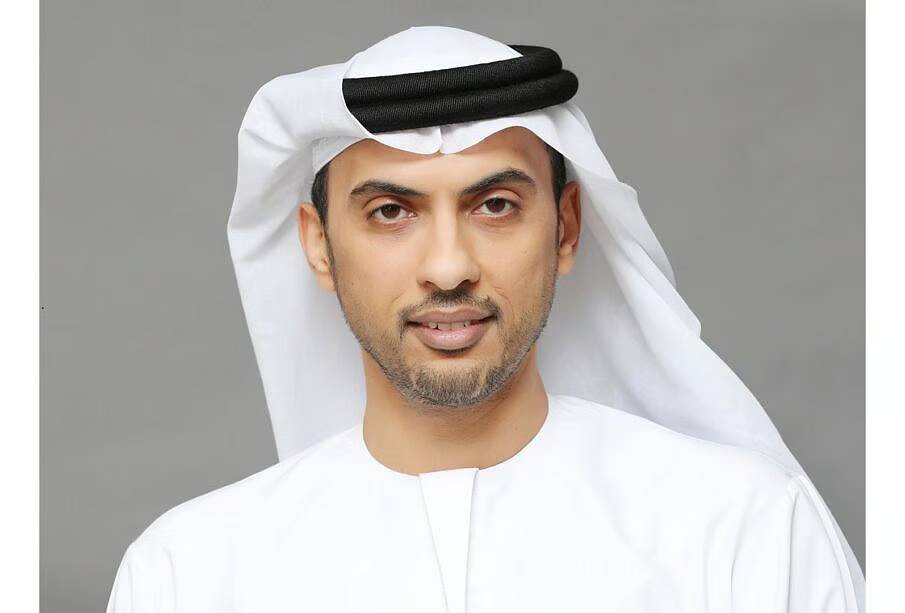
Wesam Lootah, Director General of GovDigital at the Department of Government Enablement – Abu Dhabi, said the broader goal is to make interactions with government simpler and reduce the time residents spend navigating administrative processes.
“We are now past the halfway point of our journey to becoming the world’s first AI-native government, and people are already beginning to experience the difference in practical ways. For us, this ambition has always been about improving everyday life. Government should be easier to navigate, services should be simpler to access, and people should spend less time dealing with processes and more time focused on their families, careers and businesses,” Lootah said.
The initiative comes ahead of Ai Everything Abu Dhabi, which will bring together government officials, technology companies, researchers and investors at ADNEC Centre on October 6 and 7.
Ahead of the event, Lootah spoke about Abu Dhabi’s efforts to move artificial intelligence beyond pilot projects and integrate it into everyday government services. He also discussed the areas where human judgement remains essential and what residents can expect as the emirate moves towards its 2027 target.
Government services that anticipate residents’ needs
A key part of Abu Dhabi’s AI transformation is the shift towards government services that can anticipate residents’ requirements instead of waiting for them to initiate a request.
Lootah said the emirate is working towards a government that “understands people’s needs earlier, acts without waiting to be asked and removes complexity wherever possible.”
This approach is already being integrated into Abu Dhabi Government’s digital infrastructure, which includes sovereign cloud capabilities, shared platforms, secure data environments and AI systems deployed across multiple government entities.
“Across Abu Dhabi Government, more than 100 AI use cases are already supporting how services are delivered and how operations are managed,” Lootah said.
He added that residents and businesses are increasingly seeing the practical impact of these technologies, with services that previously required several documents, steps or interactions becoming more streamlined and intuitive.
“Entrepreneurs can start and grow businesses through just one app, TAMM, citizens and residents can benefit agentic AI-powered services without needing to ask, and government employees are spending less time on administrative tasks and more time supporting communities,” Lootah said.
TAMM currently brings together more than 1,170 government and private-sector services on a single platform, making it one of the main channels through which Abu Dhabi is integrating services across government.
Lootah said developing the platform required more than simply bringing services into one place. It involved aligning processes, connecting systems and establishing common standards that allow emerging technologies to be deployed across government rather than remaining confined to individual entities.

AI will not replace human judgement in every process
Abu Dhabi’s AI strategy does not envisage fully automating every government process.
Lootah said artificial intelligence is being deployed in areas where it can reduce repetitive tasks, process large volumes of information and shorten waiting times. However, human oversight will continue to play an important role in decisions with more significant consequences.
“Where accountability, fairness or public confidence are paramount, human oversight remains an essential part of the process,” he said.
According to Lootah, each potential AI use case is evaluated based on factors including customer benefit, security, governance and operational readiness.
“Some processes are well suited to a high degree of automation, while others are strengthened by AI supporting professionals with better information and insights,” he said.
The distinction is becoming increasingly important as governments around the world integrate AI more deeply into public services while determining which decisions can be automated and which should continue to involve human judgement.
Dh13 billion strategy puts trust at the centre
Abu Dhabi’s AI ambitions form part of the Dh13 billion Abu Dhabi Government Digital Strategy, which includes investment in sovereign digital infrastructure, cybersecurity, governance and the responsible adoption of artificial intelligence.
As AI becomes increasingly integrated into public services, Lootah said maintaining residents’ trust remains a central priority.
“People need confidence that their information is protected, that services are secure and that decisions affecting their lives are subject to appropriate oversight,” he said.
According to Lootah, every AI system deployed across Abu Dhabi Government operates within governance frameworks that define ownership, oversight and monitoring responsibilities. Decisions with greater potential consequences are also subject to additional safeguards and human review.
Trust, he added, is also shaped by residents’ everyday experience of government services.
“When people can access a service more quickly, receive support more easily and complete tasks with less friction while knowing their information remains protected, confidence grows naturally,” Lootah said.
Moving beyond AI pilots
For governments, the challenge is increasingly shifting from testing individual AI applications to deploying the technology effectively across multiple departments, systems and services.
Lootah said Abu Dhabi’s experience has demonstrated that AI cannot be scaled successfully unless infrastructure, trusted data, workforce capabilities, governance and coordination develop together.
“Many organisations can point to successful pilots. The greater challenge lies in creating the conditions that allow successful ideas to scale across institutions, across teams and across everyday operations,” he said.
This approach is also reshaping how government entities collaborate and deliver services.
“People do not distinguish between government entities when they need a service; they simply expect government to work. Shared foundations, connected systems and common platforms help create that experience while allowing successful innovations to be adopted at scale,” Lootah said.
What could government services look like three years from now?
Lootah expects the way people measure an advanced government to increasingly focus on the simplicity and effectiveness of services rather than the technology operating behind them.
“Three years from now, I believe people will judge governments less by the technology they use and more by how easy they are to interact with,” he said.
That shift could affect a wide range of interactions, from setting up a business and buying a home to navigating major life events. Instead of requiring residents to deal separately with multiple government entities, services could increasingly respond to an individual’s circumstances and needs.
“Whether someone is opening a business, navigating a major life moment – a birth, buying a home, starting a business – or accessing an important service, their expectation will be straightforward: they will want government to understand their context, respond quickly and help them achieve an outcome with minimal effort,” Lootah said.
Lootah said this remains at the heart of Abu Dhabi’s broader AI ambitions.
“The governments that stand out in the years ahead will be those that give people back their time, remove friction from everyday interactions and create services that feel intuitive, responsive and consistently reliable,” he said.
Ai Everything Abu Dhabi will also provide the emirate with a platform to demonstrate how its AI ambitions extend beyond government services, with initiatives spanning digital infrastructure, research, talent development, investment and entrepreneurship.
Lootah said he hopes the event will help generate new partnerships and strengthen collaboration between government, technology companies, academic institutions, investors and industry.
“Perhaps most importantly, I would like people to leave Abu Dhabi with a clearer understanding of what large-scale transformation looks like in practice,” he said.
Ai Everything Abu Dhabi will bring together more than 350 AI companies, unicorns and startups at ADNEC Centre on October 6 and 7.
The event will feature companies specialising in AI infrastructure, advanced models and applications, alongside government entities, investors, academics and technology experts. Research initiatives, pilot projects, emerging technologies and real-world business applications are also expected to be showcased during the two-day event.

