

It marks a major leap forward in emergency medical response.
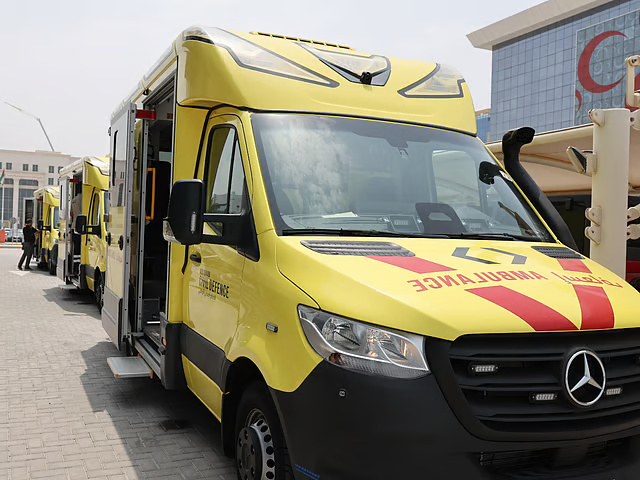
The Department of Health – Abu Dhabi and the Abu Dhabi Civil Defence Authority yesterday held a ceremony at the Department’s headquarters to launch a new generation of smart and specialised ambulances and integrate them into the Unified Medical Operations Centre system.
The initiative is aimed at improving the speed and efficiency of emergency responses while ensuring patients receive specialised medical care from the earliest stages of an emergency.
The new fleet comprises 18 ambulances across three categories, with six vehicles in each. These include mobile units equipped to provide advanced care for critically ill patients, specialised ambulances designed to handle cases involving mothers and newborns, and vehicles equipped to transport and treat patients with severe obesity.
Each ambulance is fitted with specialised medical equipment and capabilities tailored to the specific needs of patients during emergency response operations.
Readiness and proactive response

In his keynote address, Dr Rashed Al Suwaidi, Director-General of the Abu Dhabi Public Health Centre, said preparedness, proactive action and coordination among the various components of the emergency response system are essential to protecting the health and safety of the community.
He said the effectiveness of an emergency response system goes beyond the speed at which an ambulance arrives. It also depends on close coordination among relevant authorities, timely decision-making and taking the right action when it matters most.
“Developing the emergency response system means empowering response teams to reach patients with care tailored to their conditions from the earliest minutes, enabling faster intervention and reducing the risk of complications,” he said.
He added that the new ambulances are a key outcome of this approach, equipped with specialised tools and capabilities to address the needs of different patient groups and medical conditions.
“The launch of these ambulances is part of an integrated vision to build a connected emergency response system that brings together infrastructure, expertise, capabilities and technology, while strengthening coordination among partners through the Unified Medical Operations Centre,” he said.
“This ensures resources are efficiently directed towards providing patients with timely care and giving them the best possible chance of recovery and a return to normal life.”
Emergency response

Major General Salem Abdullah bin Barak Al Dhaheri, Director-General of the Abu Dhabi Civil Defence Authority, said effective emergency response goes beyond simply reaching the scene of an incident and involves providing the appropriate medical capabilities based on the nature and needs of each case.
He stressed that integrating emergency services, healthcare, advanced technology and specialised personnel strengthens the ability of field teams to provide appropriate care from the moment a response is initiated until the patient is transferred to a healthcare facility.
He said the Abu Dhabi Civil Defence Authority is continuing to work closely with the Department of Health – Abu Dhabi to strengthen emergency response capabilities and harness innovation and technology to improve operational efficiency. The efforts support the emirate’s preparedness for a range of emergency situations while enhancing community safety and protecting lives.
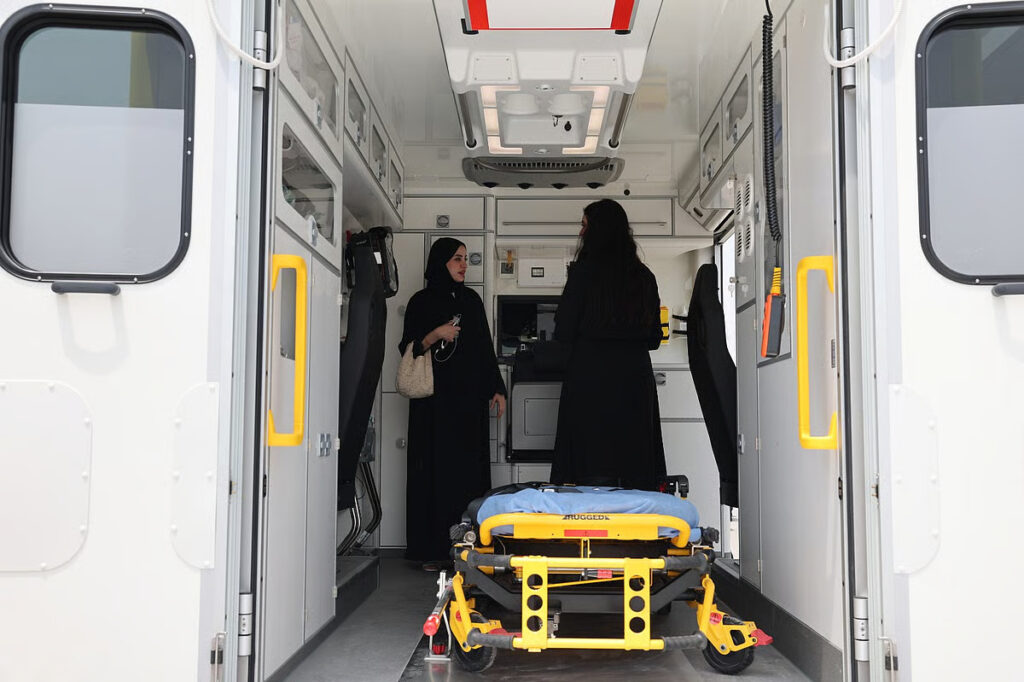
Major Dr Mohammed Salem Al Kaabi, an emergency medicine specialist at the Abu Dhabi Civil Defence Authority, said intensive care ambulances are advanced medical units equipped with technologies including ultrasound devices, intravenous medication pumps and ventilators. These capabilities allow ambulance crews to deliver critical and comprehensive care to patients requiring intensive medical attention during transport.
He added that maternal and neonatal ambulances are equipped with fully integrated incubators and ventilators, along with specialised medical equipment to ensure the safe transport of mothers and newborns.
Ambulances designated for patients with severe obesity have been specially designed to meet their needs. They feature a loading platform and a specialised stretcher with a maximum capacity of 350 kilogrammes, enabling safe transportation while helping medical teams manage challenges related to weight and mobility.
Major Dr Al Kaabi said the design and equipment of each ambulance category were developed to address specific and complex emergency needs. This enhances the flexibility of ambulance services and their ability to provide specialised care to different groups in the community, while strengthening the readiness of emergency teams to efficiently manage cases requiring advanced medical support during transport.
The new generation of smart and specialised ambulances
Abu Dhabi’s emergency medical services are undergoing a rapid transformation driven by smart technologies and specialised medical equipment. These advancements are enhancing the ability of emergency teams to provide critical care from the moment a call is received through to the patient’s arrival at the most appropriate healthcare facility.
The new generation of smart and specialised ambulances marks a major step in this transformation. No longer limited to transporting patients, these vehicles have evolved into mobile extensions of the healthcare system, enabling advanced medical care and interventions throughout the journey to hospital.
From “Ambulance” to “Mobile Care Unit”
Modern ambulances are built around an integrated model that combines patient transport, clinical care, smart connectivity and decision-support systems. Equipped as compact medical environments, they allow paramedics to assess patients, monitor vital signs and deliver essential treatment while en route to a healthcare facility.
These capabilities are particularly valuable in time-critical situations, including severe injuries, cardiac arrests, strokes, respiratory emergencies and mass-casualty incidents, as well as other conditions that require immediate medical intervention before the patient reaches hospital.

AI and data at the heart of the system
Smart emergency medical services are built around the collection and transmission of medical data from ambulances and their onboard equipment through the unified medical operations system. This connectivity provides a more comprehensive view of a patient’s condition while enabling faster information sharing between emergency response teams and hospital staff.
Digital systems help paramedics record patient information, monitor vital signs and transmit key medical data in real time, allowing the receiving healthcare facility to prepare for the patient’s arrival in advance.
Artificial intelligence is not intended to replace medical professionals. Instead, it serves as a decision-support tool, helping teams access critical information more quickly and make informed decisions, while patient assessment and treatment remain under the supervision of qualified medical specialists.
Specialised ambulances for different cases
A key feature of the new generation of ambulances is their specialisation based on the nature of each medical mission. The requirements for transporting a critically ill patient can differ significantly from those involved in treating an accident victim or responding to a case that requires advanced medical equipment.
Specialised ambulances are designed to address these varying needs. They can be fitted with medical devices and equipment tailored to specific emergencies, improving response efficiency and giving medical teams greater flexibility when handling different situations.
Modern emergency systems typically include equipment for vital-sign monitoring, resuscitation, respiratory support, patient transport, trauma management and critical care, alongside advanced communication and tracking technologies.
Why are the first few minutes critical?
In emergency medicine, every minute matters. The speed of intervention can influence a patient’s chances of survival and the severity of potential complications, particularly in cases involving cardiac arrest, stroke and severe trauma.
For this reason, the role of emergency medical services has evolved from simply reaching the scene quickly and transporting patients to hospital to providing “care during transport”. Treatment now begins at the scene of an incident and continues throughout the journey until the patient reaches the hospital.
Modern ambulances support this approach by providing fully equipped medical environments where paramedics can perform advanced procedures during transport, continuously monitor patients and update their medical records in real time.
Connecting ambulances with hospitals
A key element of the modern emergency response system is the seamless integration of ambulances with command and operations centres and healthcare facilities.
Rather than waiting until a patient reaches the emergency department to begin the assessment process, medical information can be shared in advance, allowing hospitals to prepare the appropriate medical teams and equipment before the patient arrives.
This integration creates a continuous chain of care that starts at the scene, continues inside the ambulance and extends to the emergency department or specialised medical unit. It helps maintain the flow of medical information and reduce delays in providing treatment.
Safety and readiness
The effectiveness of smart ambulances depends not only on advanced medical technology but also on operational safety and continuous readiness.
These vehicles are designed to give paramedics easy access to medical equipment, optimise the use of available space and securely store devices and supplies while the ambulance is in motion. They must also ensure that all essential medical equipment remains operational and ready for use under varying conditions.
Continuous training for ambulance crews is another essential component of modern emergency medical services. The effectiveness of any smart system ultimately depends on healthcare professionals being able to use the technology efficiently, interpret the information available and make the right decisions at the right time.
Supporting major incident response
The value of specialised ambulances becomes even more apparent during major incidents, disasters and mass-casualty emergencies, when the number of casualties can exceed the capacity of conventional systems to manage patients individually.
In such situations, modern emergency systems enable medical resources to be allocated more efficiently, treatment priorities to be established, patient transport to be coordinated and field teams to remain connected with command centres and healthcare facilities.
The ambulance therefore becomes more than a standalone vehicle. It forms part of an integrated emergency response network powered by real-time communication, data sharing and coordination among multiple agencies.
Towards a more proactive future
The new generation of ambulances reflects a global shift towards more proactive and data-driven emergency medical services. As artificial intelligence, the Internet of Things and advanced communications continue to evolve, ambulances could become increasingly capable of analysing medical data in real time, supporting risk assessment, predicting patient needs and improving the deployment of resources in critical situations.
In Abu Dhabi, this approach is aligned with efforts to develop an integrated emergency medical operations system, with technology helping to shorten the time between a request for assistance and the delivery of specialised medical care.
The new generation of smart and specialised ambulances therefore represents far more than an upgrade to traditional vehicles. It reflects a broader transformation in emergency medicine — from simply transporting patients quickly to delivering advanced, connected and data-driven medical care from the earliest stages of an emergency response.

