

Report Strengthens UAE’s Standing Among the World’s Most Competitive Urban Destinations.
Competition among global cities to attract investment, businesses and skilled talent is increasingly being shaped by factors beyond economic scale and infrastructure.
Cities are now being assessed on the opportunities and experiences they provide residents, including access to economic opportunities, quality of life, social connections, digital government services and their ability to respond quickly to changing conditions.
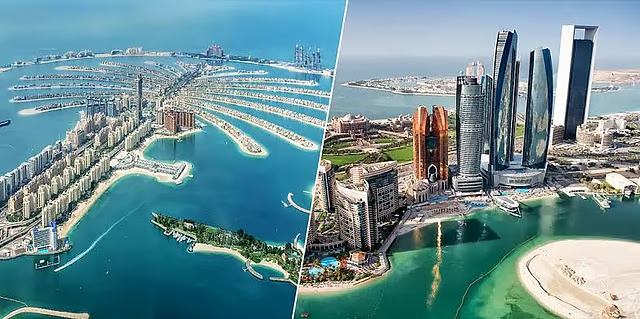
Against this backdrop, Abu Dhabi and Dubai have performed strongly in the latest global study by Boston Consulting Group (BCG), placing the two UAE cities among notable performers across five key dimensions of urban competitiveness: economic opportunity, livability, social capital, government interaction and pace of change.
The findings are particularly significant because the study looks beyond traditional measures such as economic performance and investment potential. It combines objective data with residents’ perceptions and everyday experiences, offering a broader assessment of how effectively cities can attract and retain people and skilled talent over the long term.
The study covered 80 cities worldwide and assessed their performance across five key dimensions: economic opportunity, livability, social capital, government interaction and pace of change.
The findings further highlight the UAE’s position among competitive global urban destinations, with Abu Dhabi and Dubai performing strongly in areas including social capital, economic opportunity, quality of life and digital government, according to Boston Consulting Group’s Cities of Choice 4.0 report.
Drawing on both objective indicators and resident surveys, the report found that the two UAE cities performed above the global average across most measures related to residents’ overall urban experience.
Built to Change: How Cities Compete for the Future, produced by Boston Consulting Group in collaboration with the BCG Institute, is the fourth edition of the firm’s comprehensive global study on urban competitiveness. The research examines the factors most closely linked to residents’ willingness to recommend their cities and their ability to remain competitive over the long term.
From infrastructure to the ‘city experience’
The BCG report highlights a shift in how urban competitiveness is defined. Airports, extensive road networks, modern buildings and advanced digital infrastructure remain important, but are no longer enough on their own to determine a city’s attractiveness.
Increasingly, competitiveness depends on how effectively cities translate these assets into tangible benefits that residents experience in their everyday lives.
The study also links a city’s capacity to continually adapt and evolve with its ability to attract talent and investment. Residents and investors are considering not only what a city offers today, but also how effectively it can respond to changing circumstances and generate new opportunities in the years ahead.
Against this backdrop, Abu Dhabi and Dubai offer distinct but complementary models of urban development within the UAE. Both cities combine significant infrastructure investment with economic expansion, digital transformation, improved public services and urban development designed to accommodate continued population and economic growth.
Dubai: Economic opportunity takes centre stage
Dubai ranked fifth globally for economic opportunity, according to the study, making it the only Middle Eastern city to place among the top five in this category.
BCG linked Dubai’s strong performance to factors including rising household incomes, positive perceptions of its business environment and the global presence of companies operating in the city.
Residents also reported above-average confidence in their career development prospects, as well as access to services and financial resources, further supporting Dubai’s performance in the economic opportunity dimension.
The findings reflect the evolution of Dubai’s urban economy, which has transformed over recent decades from a regional hub for trade and services into a global centre for business, tourism, aviation, financial services and the digital economy.
Dubai also ranked ninth globally for government interaction, highlighting the role of digital government services and platforms in making transactions more efficient and responsive to the needs of residents and businesses.
The result reflects Dubai’s broader push towards becoming a smarter and more digitally connected city. A separate BCG study published in 2026 ranked Dubai second globally in its smart cities index, which examined how artificial intelligence and digital technologies are being used to improve urban services and outcomes for residents.
Social capital: An invisible economic asset
One of the notable aspects of the report is its focus on “social capital”, which broadly assesses the strength of relationships and connections among residents, including their sense of belonging, participation in community life and levels of social interaction.
Dubai ranked 12th globally for social capital, placing it ahead of other Middle Eastern cities. It also ranked first globally in the specific measure related to social connections.
The study highlighted higher levels of interaction with friends, community participation and social generosity among UAE residents compared with those in many of the other cities covered by the research. Abu Dhabi also performed strongly across indicators measuring social connectedness.
The significance of these findings extends beyond quality of life. Strong social connections can also contribute to a city’s economic attractiveness by helping residents build networks and a sense of belonging — factors that can support the attraction and retention of international talent, particularly in economies that depend heavily on a globally diverse workforce.
For the UAE, social capital is particularly significant given the highly international character of Dubai and Abu Dhabi, where people from a diverse range of nationalities and cultural backgrounds live and work within the same urban environment.
The ability to build social connections and a sense of community across such a diverse population can play an important role in strengthening residents’ overall experience and supporting the cities’ attractiveness to international talent.
Abu Dhabi: The power of change and adaptability
Abu Dhabi, meanwhile, recorded strong results in the pace-of-change dimension and in advocacy indicators, which measure factors associated with residents’ willingness to recommend and speak positively about their city.
BCG identified the pace of change as one of the factors closely associated with city advocacy, noting that cities across the Middle East and Asia have made notable progress in this area.
The study placed Abu Dhabi among the stronger performers for pace of change, indicating that its ability to evolve and adapt could contribute to its position in future assessments.
This is particularly relevant given Abu Dhabi’s expansion in recent years across sectors including technology, artificial intelligence, clean energy, advanced industries, tourism, culture and financial services.
The transformation extends beyond the development of individual projects. It reflects a broader effort to diversify the emirate’s economic base, develop new sources of growth and invest in increasingly integrated digital ecosystems and public services.
Quality of life becomes a competitive advantage
Quality of life is also emerging as an increasingly important element of urban competitiveness, influencing how residents experience a city and how attractive it is to potential talent.
Among the report’s notable findings, Abu Dhabi and Dubai were the two cities highlighted in BCG’s global summary for the amount of time residents spend at entertainment and leisure venues, averaging between nine and 10 hours per week.
The finding illustrates how access to leisure and recreational opportunities can form part of the wider urban experience, alongside economic opportunities, public services and infrastructure.
Both Abu Dhabi and Dubai also performed above the global average on certain indicators related to healthcare and housing affordability.
The findings highlight how quality of life is increasingly becoming an economic advantage rather than simply a social consideration. When global companies evaluate potential locations for regional headquarters, factors such as taxation, operating costs and ease of doing business are only part of the equation.
Companies also consider whether a city can attract international professionals and their families — and, importantly, encourage them to stay over the longer term.
Investment in parks, cultural and entertainment facilities, healthcare, digital services and transport can therefore be viewed as part of the wider infrastructure needed to attract and retain human capital, rather than as urban spending separate from economic development.
Positive indicators — but challenges remain
Despite the strong results, the report also identifies areas where further progress could strengthen the UAE cities’ overall urban experience.
For Abu Dhabi and Dubai, the study points to public transport, walkability and education as areas with scope for improvement. Commute times also increased by 6.5% compared with the previous edition of the study, while dependence on private vehicles remains relatively high.
These findings are particularly relevant as both cities continue to experience population and economic growth. Success in attracting more residents, businesses and investment brings an accompanying challenge: ensuring that transport networks, public services and infrastructure continue to operate efficiently as demand increases.
From an urban-planning perspective, the next phase of development is likely to involve more than simply expanding road networks or adding new buildings. Greater emphasis will be placed on improving the efficiency of existing infrastructure, expanding mobility options and integrating urban development more closely with digital technologies, artificial intelligence and data-driven systems.
Towards a new model of urban competitiveness
The BCG findings point to a broader shift in how global cities compete. Urban competitiveness is increasingly shaped by a combination of economic strength, technology, quality of life, public trust, government services, social connections and the capacity to adapt to change.
According to BCG, cities that make progress across these areas can strengthen their appeal to residents and skilled talent not only because of what they offer today, but also because of the opportunities they are capable of creating in the future.
Within this context, Abu Dhabi and Dubai show similarities across some indicators while following distinct development paths in others. Both, however, demonstrate an ability to translate investment in infrastructure, technology and digital government into services and experiences that directly affect residents’ daily lives.
For the UAE, the significance of the findings extends beyond the position of Abu Dhabi and Dubai in a global study. They highlight how competition in the global economy is increasingly also a competition for people — where they choose to live, develop their careers, build social connections and access services, as well as their confidence in a city’s ability to evolve with changing needs.
The findings suggest that cities capable of adapting to change while translating economic growth into tangible improvements in quality of life can strengthen their ability to attract and retain talent, capital and innovation over the long term.
Five dimensions of urban competitiveness
Boston Consulting Group assessed cities across five main dimensions of urban competitiveness:
- Economic opportunity
- Livability
- Social capital
- Government interaction
- Pace of change
Abu Dhabi and Dubai recorded strong results across these dimensions and performed above the global average on most indicators related to residents’ urban experience.
Suresh Subudhi, Managing Director and Senior Partner at Boston Consulting Group, said the findings highlight the direction in which urban competitiveness is evolving globally.
He noted that cities combining advanced digital infrastructure, resident-focused governance and a high quality of life are better positioned to achieve sustainable long-term success.

