

AI-powered growth drives sustainable data centre expansion in Abu Dhabi.
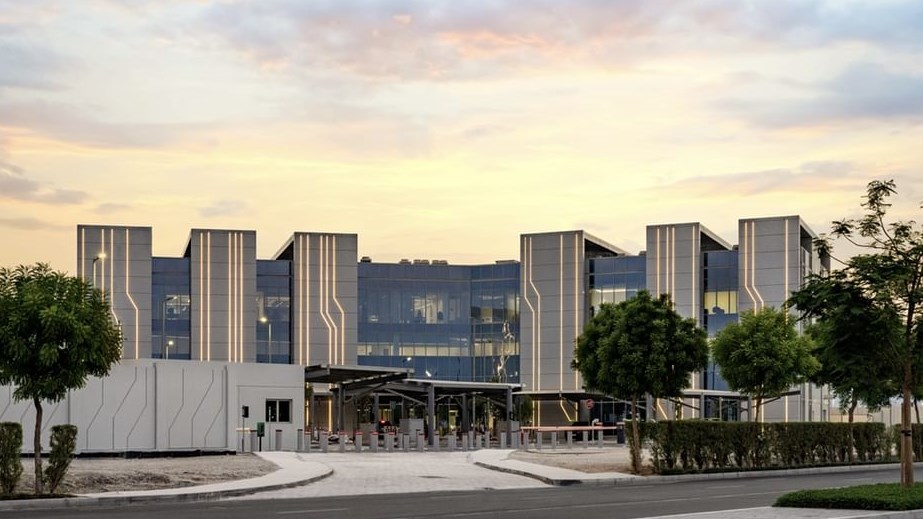
Abu Dhabi: Abu Dhabi’s data-centre sector is witnessing rapid expansion, driven by growing demand for artificial intelligence (AI) infrastructure. The surge is also increasing pressure on operators to reduce energy consumption, water usage and carbon emissions as facilities become more power-intensive.
Elisabetta Baronio, ESG Director at Khazna Data Centers, said the company aims to achieve 50% carbon-free electricity coverage for its mechanical cooling load by 2030, increasing to 100% by 2035.
“Our 2035 ambition specifically covers mechanical cooling load, rather than total electricity consumption including compute load,” she clarified.
Abu Dhabi advances digital transformation
Abu Dhabi’s rapidly expanding data-centre sector is playing an increasingly important role in supporting the emirate’s ambitions to become a leading hub for artificial intelligence (AI) and digital infrastructure.
“Demand for data centre capacity is accelerating, driven by unprecedented growth in AI. That growth brings opportunity, but it also brings expectations,” said Hassan Alnaqbi, CEO of Khazna Data Centers.
The expansion aligns with Abu Dhabi’s broader efforts to digitise government services and strengthen sovereign cloud infrastructure.
Under its 2025–2027 Government Digital Strategy, the emirate has committed AED13 billion to accelerating AI adoption and transforming government operations. Led by the Department of Government Enablement, the initiative aims to make Abu Dhabi the world’s first fully AI-native government by 2027.
As demand for AI-powered services increases, data centres are becoming essential to supporting the emirate’s digital transformation.
Khazna Data Centers said the growing need for AI computing capabilities is driving demand for additional infrastructure across the UAE and international markets.
In its first standalone environmental, social and governance (ESG) report, the company outlined its strategy to balance infrastructure expansion with environmental sustainability and efficient resource management.
Energy efficiency takes centre stage
With Abu Dhabi’s high temperatures requiring significant energy for cooling, data-centre operators are placing greater emphasis on energy-efficient technologies, renewable electricity and responsible water consumption.
Elisabetta Baronio, ESG Director at Khazna Data Centers, highlighted the scale of electricity required to maintain cooling operations.
“In our 2025 ESG Report, we disclosed 246,468 MWh of grid electricity consumption associated with mechanical cooling across our fully owned facilities,” she said.
According to Baronio, the company achieved 27% carbon-free electricity coverage for its mechanical cooling load in 2025 through onsite solar generation and certified clean-energy instruments.
“Approximately 20% of that reported carbon-free coverage came from on-site solar generation, with the remaining 80% covered through certified clean-energy instruments,” she explained.
Alnaqbi also stressed that the rapid growth of AI infrastructure is increasing expectations for operators to minimise their environmental footprint and maintain greater transparency in sustainability reporting.
Future plans focus on cleaner energy and water conservation
As part of its long-term sustainability goals, Khazna aims to achieve 50% carbon-free electricity coverage for mechanical cooling by 2030, increasing to 100% by 2035.
The target specifically applies to electricity used for mechanical cooling and does not include the power required for computing operations.
The company’s upcoming data centres across the Gulf are being designed to operate with greater energy efficiency, targeting a power usage effectiveness (PUE) rating of 1.5 or lower.
These facilities will incorporate modular construction methods, advanced cooling technologies and real-time energy monitoring systems to improve operational efficiency.
Water conservation also remains a key priority. According to Khazna’s ESG report, recycled water represented 19.8% of the total water used for cooling in 2025.
As Abu Dhabi continues to expand its AI and digital infrastructure capabilities, the sector’s long-term growth will depend not only on increasing data-centre capacity but also on adopting cleaner energy sources, improving cooling efficiency and reducing water consumption.

