

UAE educators reflect on the academic impact and challenges of reducing homework.
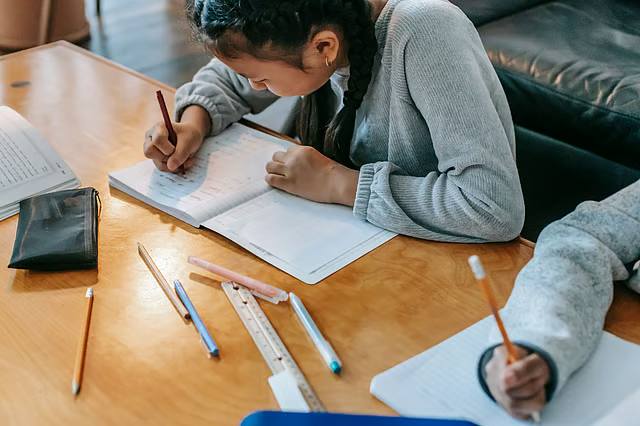
Dubai: Can children achieve better academic results without having to spend their evenings completing homework?
In August, the UAE Ministry of Education (MoE) announced the removal of traditional homework for pupils from Kindergarten to Grade 2, beginning in the 2026–27 academic year. The policy covers public schools and private institutions following the ministry’s curriculum.
For some private schools in the UAE, however, this approach is not new. Several have been rethinking traditional homework practices for years, with some choosing to reduce or eliminate assignments for younger pupils altogether.
Research published by the UK’s Education Endowment Foundation (EEF) in 2021 found that homework can have a positive impact on academic achievement, with greater benefits for secondary school students than for those in primary education. It also highlighted that the quality of assignments is more important than the quantity.
Educators, however, argue that the discussion goes beyond whether homework is beneficial or detrimental. The key considerations are the appropriate age to introduce it, the amount children should be expected to complete and whether assignments contribute meaningfully to their learning.
A decade without homework in primary school
At Arcadia British School in Dubai, the decision to move away from traditional homework for primary pupils dates back to the school’s opening in 2016.
Giles Pruett, Executive Principal at Arcadia British School, says the school has seen continued improvements in students’ academic attainment and progress since adopting the approach, although he acknowledges that several other factors have contributed to these outcomes.
“Since then, academic attainment and progress have continued to improve, with approximately 80% of primary students now making better-than-expected progress in English, Mathematics and Science. While our no-homework approach supports this success, improvements in teaching quality, assessment and the monitoring of student progress have also played a significant role,” he says.
According to Pruett, removing homework during the primary years gives children more opportunities to spend time with their families, participate in sports and outdoor activities, and enjoy their formative years without additional academic pressure.
Giles Pruett, Executive Principal at Arcadia British School
However, the school gradually introduces homework as pupils move into secondary education. The aim is to help students develop independence, self-discipline and effective study habits, particularly as they approach external examinations.
The transition is not without its challenges.
Pruett points out that the school’s wellbeing data has shown increasing levels of learning-related anxiety among students in Years 7 to 10, underlining the need to balance academic expectations with appropriate pastoral care and counselling support.
He also stresses that homework requirements should reflect students’ ages, abilities and individual circumstances.
“Importantly, we recognise that every child is different, and our approach must remain flexible enough to support individual needs,” he says.
Learning beyond worksheets and assignments
David Williams, Principal at Regent International School, says the school’s approach goes beyond simply replacing traditional homework with different assignments. Instead, the focus is on reinforcing classroom learning through activities such as retrieval practice, hands-on investigations, group collaboration and applying knowledge to real-life situations.

Learning opportunities outside school also play an important role. Activities such as sports, music, drama, cooking, financial literacy and taking on household responsibilities can help children develop practical skills and broaden their understanding.
“Ultimately, our approach is about creating opportunities rather than placing unnecessary expectations on children. We want to work in partnership with parents and recognise that there is no one-size-fits-all approach for every child or family,” he says.
Williams adds that removing compulsory homework should not prevent pupils who enjoy academic challenges from pursuing additional learning opportunities.
“We must also recognise that some children and families actively want additional academic work, and we should support that enthusiasm. For me, the most important principle is choice. Schools should provide opportunities, parents should have a voice, and children should benefit from a balance that works for them.”
David Williams, Principal at Regent International School
Homework expectations rise with age
While reducing homework can give younger pupils more time to explore other interests, schools acknowledge that independent learning becomes increasingly important as students progress through secondary education and approach examinations.
At GEMS Wellington Academy – Silicon Oasis, families are offered optional home-learning activities that reinforce classroom lessons, encourage creativity and help children develop broader skills without adding unnecessary academic pressure.
Hannah Tylee, Vice Principal at the academy, identifies reading as the most effective way parents can support their children’s learning outside school.
“If families wish to support learning at home, our recommendation is simple – read. Read frequently, read widely, read together, read aloud, read in your home language, and read for enjoyment. Reading is the single most powerful way to develop vocabulary, knowledge and a lifelong love of learning,” she says.
As pupils progress into the senior years, the nature of home learning changes. Tylee explains that students in Years 9 to 11 increasingly focus on examination preparation, independent study, research and wider reading.
By Years 12 and 13, students are expected to take greater responsibility for managing their learning independently. This helps prepare them for university and future careers, equipping them with the skills and confidence to become world-ready graduates.
This approach continues into secondary education, with homework expectations increasing progressively as students grow older.
In Years 7 and 8, pupils receive a limited amount of homework in core subjects, while many enrichment activities remain optional. As they move into Years 9 to 11, home learning becomes more structured, with a greater emphasis on examination preparation, research, wider reading and independent study.
“By Years 9 to 11, home learning increasingly focuses on examination preparation, independent study, research and wider reading. In Years 12 and 13, students are expected to take greater ownership of their learning through independent study, helping them prepare for the demands of university and future careers so they can graduate world-ready,” says Tylee.

