

From high-speed rail links to remote check-in, Dubai is transforming how passengers travel to DWC.
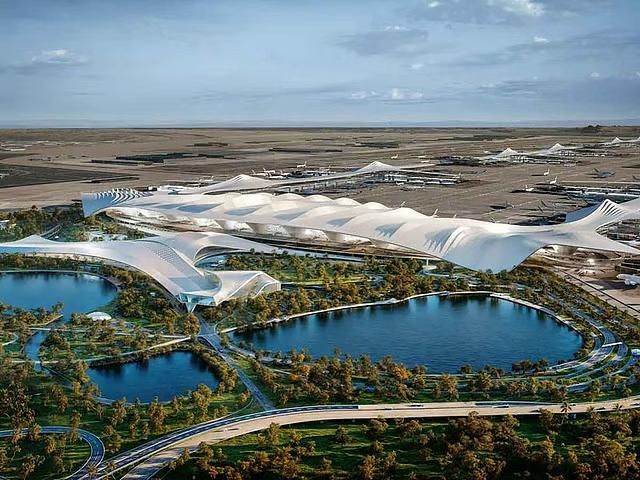
Dubai: Travelling to the airport in Dubai could undergo a major transformation by 2032, as high-speed rail services, Metro extensions and a proposed dedicated airport railway promise to change how millions of passengers access Al Maktoum International Airport (DWC).
With Dubai moving forward with its $35 billion (Dh128.5 billion) airport expansion, several major railway projects are being planned or evaluated to link the facility with residential neighbourhoods, business hubs and other emirates.
Dubai Airports CEO Paul Griffiths has repeatedly highlighted the importance of connecting the national railway network with DWC. He has also shared a vision of passengers checking in their luggage at railway stations before travelling almost directly to their aircraft.
“The Etihad Rail project is a very important part of connectivity for us, as are the new lines that have been announced,” Griffiths told reporters during a media roundtable in August.
“We look forward to working with the RTA and Etihad Rail and our partners to make sure there’s a proper integrated transport solution for surface-based transport that connects properly with the airport.”
The scale of the task is considerable. Once expanded, Al Maktoum International Airport is expected to initially handle 150 million passengers a year, with capacity eventually rising to 260 million.
Shifting flight operations from Dubai International Airport (DXB) to Dubai South will also demand a major overhaul of Dubai’s existing ground transportation network.
“If you think about it, we’re taking the entire top left corner of Dubai, where we’re sitting now, and we’re transplanting it in the bottom right-hand corner, 70 kilometres away,” Griffiths said at a subsequent media roundtable.
When will the projects be ready?
Although some transport developments have announced completion schedules, others are still undergoing assessment or planning.
- Etihad Rail high-speed airport connection: Opening date not yet announced.
- Dubai Metro airport extension: Expected to begin operations in 2031.
- Airport Express Line: Feasibility study in progress.
- Dubai Metro Gold Line: Scheduled to open on September 9, 2032.
- DWC automated people mover: Completion targeted for December 2031.
- Al Maktoum International Airport expansion: Targeted for 2032.
Here’s a closer look at the key rail developments expected to transform airport connectivity in Dubai.
Etihad Rail
A major development for inter-emirate travel is the proposed high-speed railway linking Abu Dhabi and Dubai.
Unveiled in January 2025, the fully electric railway is designed to reach speeds of up to 350km/h, potentially cutting the journey between the two emirates to around 30 minutes.
Mattar Al Tayer, Director-General and Chairman of the Board of Executive Directors of Dubai’s Roads and Transport Authority (RTA), confirmed in September, as reported by, that the high-speed railway would serve two locations in Dubai: Al Maktoum International Airport and Al Jaddaf.
The proposed stations in Abu Dhabi include Reem Island, Saadiyat Island, Yas Island and Zayed International Airport.
The connection could offer Abu Dhabi residents a faster and more convenient way to access international flights from Dubai, while also providing Dubai travellers with improved rail access to Abu Dhabi’s airport.
It is important to distinguish this high-speed service from Etihad Rail’s existing national passenger network. An official opening date for the high-speed airport connection has not yet been announced.
Dubai Metro
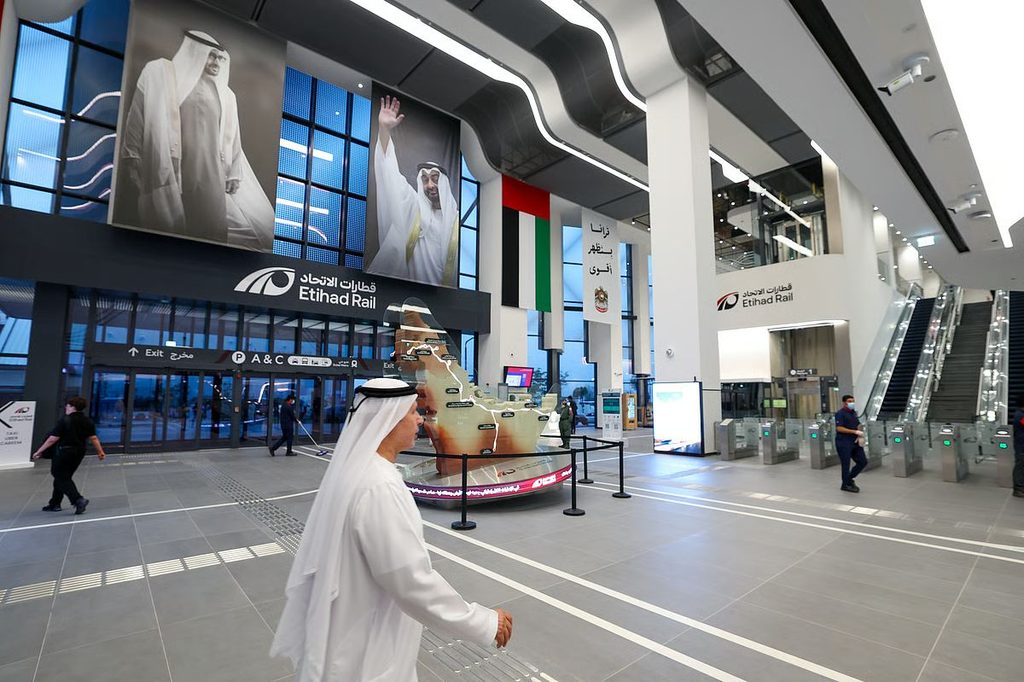
Earlier this month, Sheikh Hamdan bin Mohammed bin Rashid Al Maktoum, Crown Prince of Dubai, Deputy Prime Minister and Minister of Defence of the UAE, and Chairman of the Executive Council of Dubai, approved a Dh2 billion Metro extension to Al Maktoum International Airport City.
Spanning three kilometres, the extension will include two additional stations and link the existing Route 2020 with the airport’s West Terminal. Passenger services are expected to commence in 2031.
The new section is planned to connect the existing Metro network with the proposed Airport Express Line and Etihad Rail’s high-speed service, establishing a major public transport interchange at DWC.
Airport Express
A separate proposal being explored is a dedicated 55km Airport Express railway connecting Dubai International Airport with Al Maktoum International Airport.
The proposed route would have five stations, passing through Al Jaddaf and along Al Khail Road, including a stop serving Jumeirah Village Circle (JVC).
Possible additional branches towards Business Bay and Al Fardan Exchange Metro station have also been suggested.
Griffiths has previously stressed the value of the proposed service in linking densely populated parts of Dubai with the new airport.
However, the project has not yet received final approval. In September, the RTA said the feasibility assessment would require at least a year to complete.
Gold Line
Dubai’s planned Dh34 billion Metro Gold Line is expected to further strengthen public transport connectivity across the emirate.
The 42km route is scheduled to open on September 9, 2032, and will comprise 18 stations serving 15 key areas of Dubai.
It will offer interchange connections with Etihad Rail at Meydan and the Jumeirah Golf Estates area, alongside links to the existing Dubai Metro network.
Griffiths has previously described the Gold Line as an important development for everyday commuters, with its improved connectivity also expected to benefit airport staff and passengers.
Although the line will not directly serve as an airport railway, its integration with other transport services could make DWC more accessible to residents across Dubai.
Inside the airport
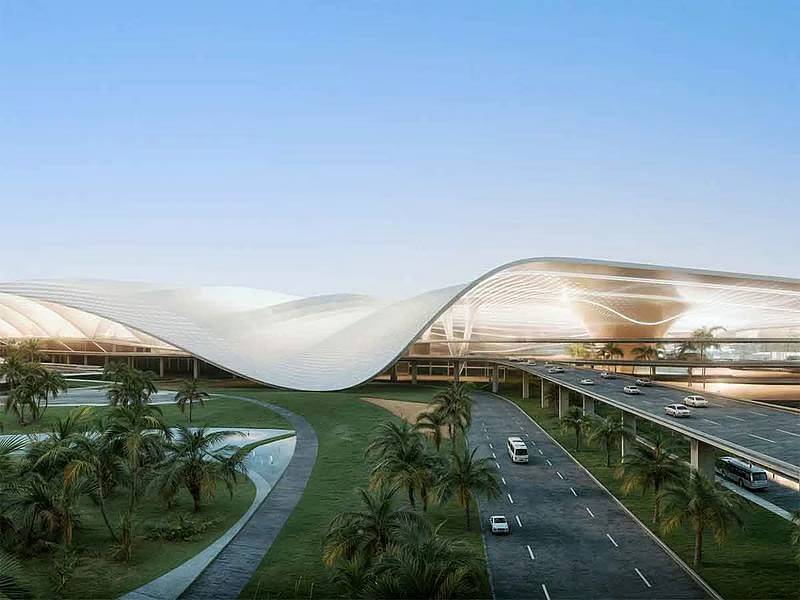
Improving access to DWC is only one aspect of the transformation. Ensuring passengers can move efficiently across the airport’s extensive facilities will be equally important.
As reported by in August, DWC is set to feature a 50km automated people mover (APM). Its developer, Mitsubishi Heavy Industries (MHI), describes it as the world’s largest airport system of its kind.
The driverless transport network will comprise nine stations and 165 automated vehicles, with completion scheduled for December 2031.
Unlike Etihad Rail and Dubai Metro, which will bring passengers to the airport, the automated people mover will operate within the airport premises, connecting different terminals and facilities.
Griffiths has also indicated an interest in linking the airport’s internal transport system directly with external railway services, although he noted that the concept would require detailed technical discussions.
“It would be fantastic if you could just literally get out of an Etihad Rail or a Gold Line carriage, and your aircraft is just a few metres away. I’d love that to be the case,” he said in August. “That requires a properly integrated, full transport solution, which we need to discuss and agree.”
Check-in anywhere
Alongside its railway expansion, Dubai Airports is exploring ways to use technology to simplify the passenger experience from the moment travellers begin their journey.
In November 2025, reported on Dubai’s vision of allowing passengers to complete airport check-in and hand over their luggage at Etihad Rail stations before boarding a train to Al Maktoum International Airport.
“One thing I’d love to see is the ability to get on a train anywhere, having previously been regarded as properly checked in, and then go directly to very close to where the aircraft is, so there’s no significant walking distances,” Griffiths said earlier this month.
The concept could also benefit passengers arriving in Dubai. Instead of collecting their bags at the airport, travellers could potentially retrieve their luggage at designated railway stations in the city.
“Similarly, on arrival, if you could check your bag and yourself to a downtown city terminal, get off the train and collect your bag at the station, that would be amazing,” he said.
Griffiths said these possibilities were being discussed, but no implementation schedule had been established.
“The whole idea is to give the choice to the customer and make it incredibly convenient for them and very simple, very few processes.”