

Dubai Municipality invites DFW visitors to experience ‘The City That Never Sleeps’, imagining a day in Dubai in 2040, from 3am to 8.30pm.
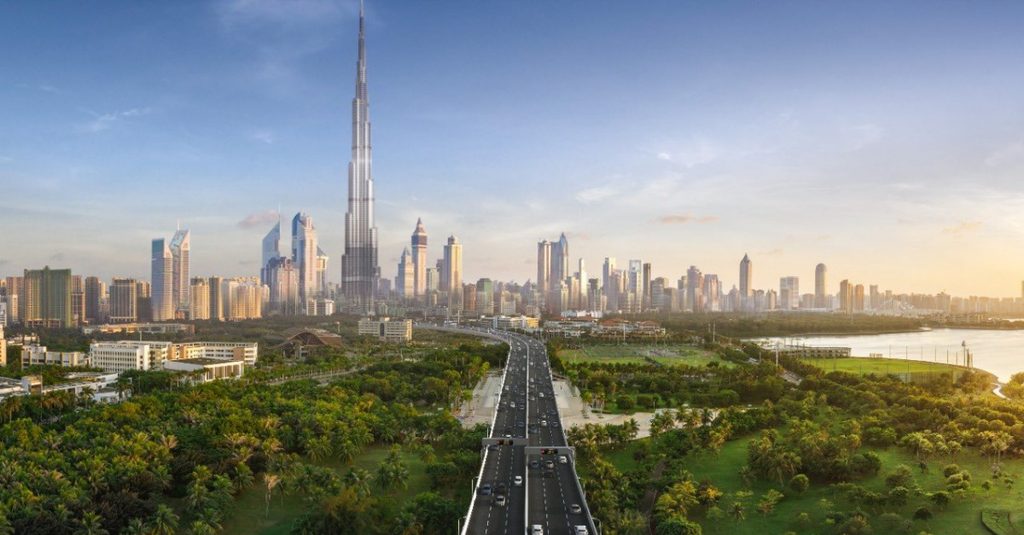
At 3am in Dubai in 2040, what you threw away the night before could help generate electricity or become raw material for a new building. By 10am, you could design a home on a screen and watch how it might evolve as your family grows.
That was the future six Dubai Municipality employees invited visitors to imagine at Dubai Future Week. Their interactive session, ‘The City That Never Sleeps’, took the audience on a journey from 3am to 8.30pm, exploring how everyday life in the city could change by 2040.
The municipality also showcased its Health and Safety Radar, a live platform that helps inspectors prioritise establishments for checks, and launched DM Disrupt, an accelerator offering innovators the opportunity to test their solutions in the city.
Six moments in Dubai in 2040
At 3am, ‘rubbish’ became a ‘gift’. The presenters imagined a city where discarded materials from homes and buildings could be reused to generate energy or provide raw materials for the construction industry.
By 6.30am, ‘visiting hours’ had given way to ‘hospitality’, with parks and other public spaces designed to become part of the daily routines of residents and visitors of all ages.
At 10am, a building ‘transaction’ became a ‘dream’. The presenters imagined residents designing their homes digitally and seeing their plans take shape. These homes could then be adapted over time to meet changing needs and passed down through generations.
At 1pm, the focus shifted to the lunch table. ‘Beware’ became ‘peace of mind’, with food tracked from farm to table, allowing teams to identify and address safety concerns before they affect consumers. The scenario also explored how municipal teams could apply a similar approach to monitoring the cleanliness of public spaces.
At 4.30pm, ‘breakdown’ gave way to ‘twin’. The presenters imagined teams using digital replicas of real-world facilities to simulate faults, rehearse responses and test repairs before carrying them out on site.
At 8.30pm, the final stop replaced ‘spectator’ with ‘mark’. Visitors were invited to consider how they could leave their mark on Dubai by sharing ideas and helping shape the services they use.
Why Dubai Municipality phased out around 45 services and procedures
Opening the session, Dubai Municipality Director General Marwan bin Ghalita highlighted the work that often goes unnoticed by residents. A clean park, a beach ready to welcome visitors or a public facility that opens as expected depends on teams working around the clock to keep the city running.
He said the municipality was moving towards using data to anticipate residents’ needs and identify problems earlier. It was also reviewing which services people continued to use.
Over the previous two to three months, the municipality had phased out around 45 services and procedures after analysing usage data and finding little or no demand for them, he said.
Live map helps inspectors decide where to focus checks
Complaints, inspection findings and laboratory results can come from different systems. Dubai Municipality’s Health and Safety Radar brings these records together, allowing inspectors to identify emerging health and environmental risks.
Speaking to Dubai Future Week, Amna Abdulrahman from Dubai Municipality’s Health and Safety Department said HS Radar brings information from several municipal systems onto a live map.
“HS Radar is a live mapping platform that lets us bring a huge amount of data together in one place,” she said. “We link several systems, including our smart inspection system, complaints and incident reports, and results from the Central Laboratory.”
Launched at WETEX 2026, the platform uses artificial intelligence and geographic information systems to analyse location-based risks. It also draws on licensing records, lab tests and samples collected in the field.
Through interactive maps, inspectors can identify higher-risk locations and decide where to prioritise their checks.