

Tanker attacks surge in Strait of Hormuz as US-Iran tensions escalate.
The US-Israel-Iran conflict continues to shape daily life across the Gulf, with diplomacy stalled and no agreement in sight to end the war or reopen the Strait of Hormuz.
Tanker fires and missile interceptions are keeping regional tensions high, while airlines have extended cancellations on several Saudi routes and oil prices remain elevated.
UAE residents are being urged to follow official advisories, confirm flight schedules before travelling and prepare for possible disruption.
Here are the latest developments:
Jordanian sailor missing after tanker attack
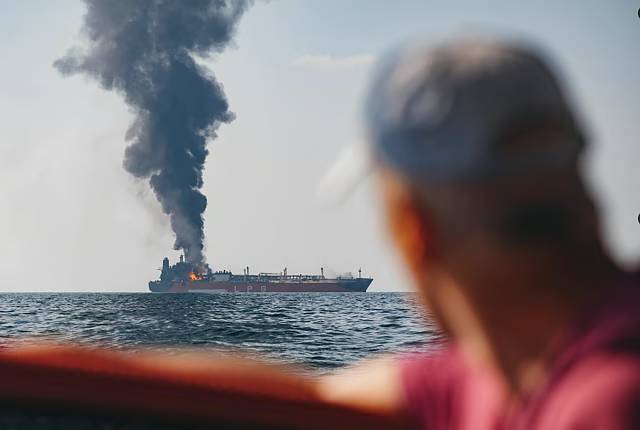
The UAE and Oman are continuing their search for a Jordanian sailor who went missing after an oil tanker was attacked in the Strait of Hormuz, as maritime security risks in the area remain high.
The search follows a series of attacks on commercial vessels in the strait since November 16.
The Joint Maritime Information Centre (JMIC) said Iran’s Islamic Revolutionary Guard Corps (IRGC) continued activities involving drone overflights, surveillance of commercial ships and occasional radio warnings.
It added that Iranian claims that tankers had “struck naval mines” remained unconfirmed.
No further details have been released about the missing sailor’s identity, the tanker involved or the progress of the search.
The UK Maritime Trade Operations (UKMTO) also reported an incident involving an “oil tanker and military forces in the Gulf of Oman”. It said authorities were aware of the incident and investigations were under way.
Seven oil tankers hit since November 16
The JMIC said seven oil tankers had been hit since November 16, including three vessels attacked off Oman’s coast between November 20 and 21.
The latest attacks targeted outbound tankers between 8 and 17 nautical miles from Khasab, Oman. Two of the vessels were hit about 50 minutes apart.
Iran showcases dual launchers inside ‘missile city’
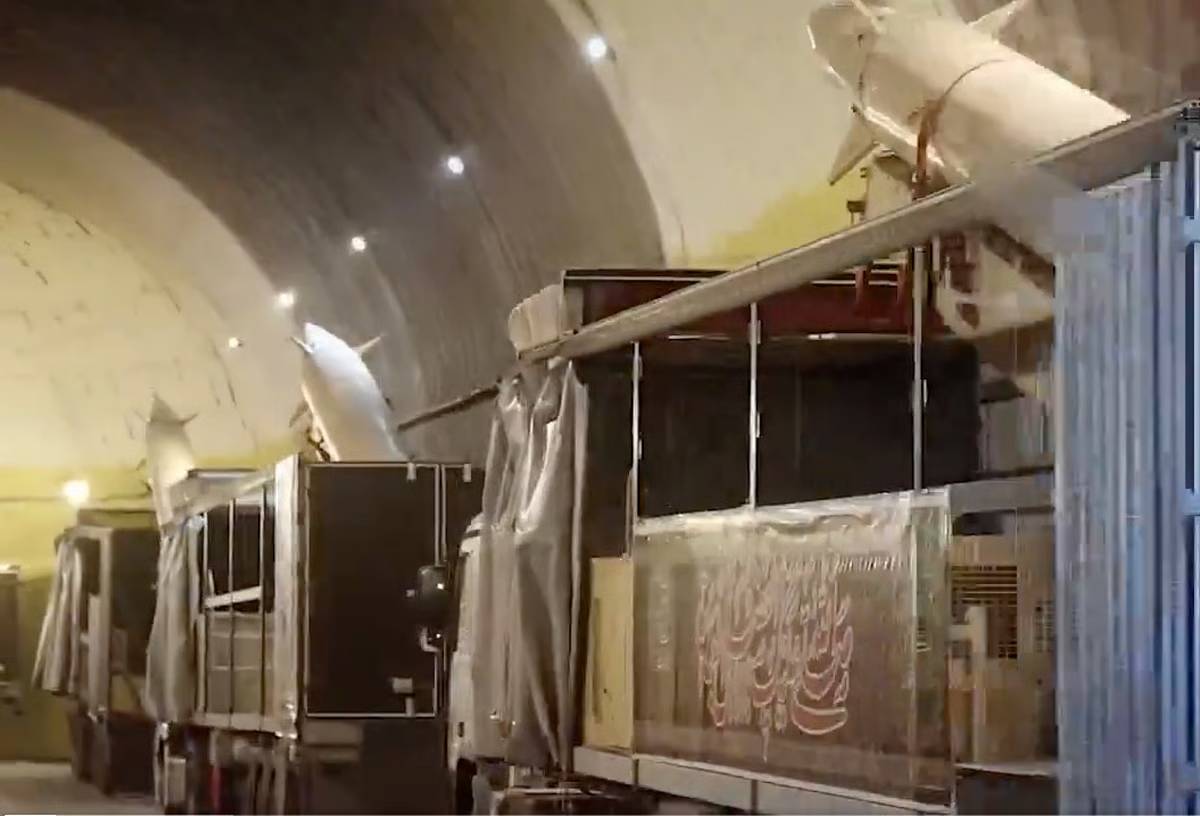
Iranian state media has shown what it claims is a launcher capable of firing two missiles simultaneously, displayed inside an underground base described as a “missile city”.
The footage was shared by state-controlled IRIB and PressTV, a Tehran-based state-funded broadcaster. The system’s claimed capabilities have not been independently verified.
Where Iran’s ‘missile cities’ are located: Multi-billion-dollar underground tunnels and bases key to Tehran’s regional power grip over Hormuz
Yemen: Saudi strike on Hodeida
Houthi-affiliated media said a Saudi attack on the port city of Hodeida killed at least four people and injured 18. The strike reportedly hit a building belonging to Yemen’s Public Telecommunications Corporation.
Riyadh has not commented on the reported attack, and the casualty figures have not been independently verified.
The Iran-backed Houthis control parts of Yemen, including Hodeida, and have been fighting a Saudi-led coalition that supports the internationally recognised government.
An informal truce had held for four years, marking the longest lull in fighting since the coalition intervened in 2015. It unravelled in July.
The UN says hostilities since then have killed more than 1,600 people and displaced more than 300,000.
Attacks on Saudi Arabia and Bahrain
A day earlier, the Saudi-led coalition said it had intercepted a ballistic missile aimed at the kingdom’s western Red Sea coast.
The Houthis claimed to have carried out two operations on Sunday, including a direct strike on the Rabigh oil refinery. The western region is home to key energy infrastructure, including the Yanbu export terminal. The claims have not been independently verified.
Bahrain, meanwhile, said an Iranian attack had hit a civilian industrial facility, causing a fire and damage.
Two people were injured, including a Pakistani resident who was in critical condition. The UAE, Qatar and Saudi Arabia condemned the attack and expressed solidarity with Bahrain.
Tanker attacks reach highest level since war began
Attacks on tankers have reached their highest level since the war began. The US has rejected Iran’s claim that it hit an American fighter jet.
Maritime monitors, meanwhile, say no Iranian tanker has so far been seen attempting to break the US blockade.
Tankers waiting offshore, ship-to-ship transfers and proposals for convoys do not in themselves indicate an attempt to breach the blockade.
The episode also highlights how unverified tracking data can shape the narrative in a conflict where information often travels faster than it can be confirmed.
Any convoy confronting the blockade, alongside threats against Gulf energy facilities, could raise the stakes for regional shipping, fuel prices and security.
Diplomacy
- US President Donald Trump says Iran wants a deal, but its proposed terms are unacceptable.
- Ynet, citing US officials, reports that a possible US strike on Iran has been postponed by at least a week, despite pressure from Israeli Prime Minister Benjamin Netanyahu. The US has warned its citizens in Bahrain about potential attacks by Iran and the Houthis.
- Iran’s Foreign Minister Abbas Araqchi says Tehran remains committed to pursuing a diplomatic settlement, with messages being exchanged through mediators. However, no agreement to end the conflict or lift restrictions on the Strait of Hormuz has been announced.
- Iran’s Parliament Speaker Mohammed Ghalibaf says Tehran will not accept a prolonged state of “neither war nor peace”, adding that the conflict must be resolved on the battlefield or the US must accept Iran’s conditions.
Flights and travel
- Etihad Airways has extended the suspension of Abu Dhabi–Riyadh and Abu Dhabi–Dammam flights until November 30.
- Emirates, flydubai and Air Arabia are operating varying schedules on Saudi routes.
- flydubai has extended cancellations on Riyadh and Abha services until November 27, while flights to Dammam have resumed on a reduced schedule.
- Flights operated by Iranian airlines to and from the UAE remain suspended.
- The UK Foreign Office has described the regional situation as “deeply unpredictable”, warning that further flight cancellations and airspace closures are possible.
- The US State Department has also warned of risks to civil aviation near the Arabian Gulf and Gulf of Oman, including in the UAE.
- Oil prices remained above $92 a barrel on Monday, November 23, as diplomatic efforts between Washington and Tehran remained stalled.
- UAE petrol prices fell in November. A sustained decline in crude prices could eventually reduce transport and logistics costs, although UAE fuel rates are reviewed monthly.
- Passengers should check their flight status directly with their airline before setting off for the airport.
What UAE residents should do
For UAE residents, a key concern is the possibility of Iran attempting to breach a blockade, which could further escalate tensions and threaten regional shipping and energy security.
Residents should avoid relying on viral tracking screenshots or unverified claims circulating online. Instead, follow official UAE advisories and updates from verified sources.
Keep travel plans flexible, monitor airline announcements and confirm flight details before leaving for the airport.