

Saudi Arabia downs three Houthi missiles as tanker catches fire near the Strait of Hormuz.
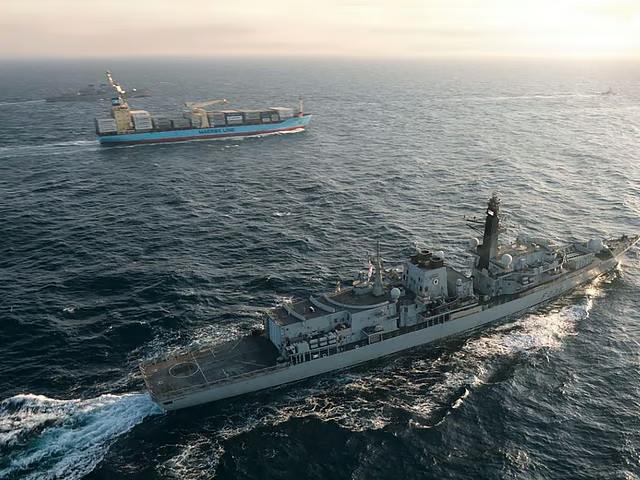
The Middle East conflict escalated overnight, with Saudi Arabia intercepting missiles targeting Riyadh and a commercial tanker catching fire near the Strait of Hormuz. The worsening conflict in Yemen and stalled US-Iran negotiations continue to threaten regional security, aviation and shipping, although oil prices remain below their October peaks.
Here are five key developments UAE residents need to know this morning.
1. Saudi Arabia intercepts three missiles targeting Riyadh
The Saudi-led military coalition said early on Saturday that it had intercepted and destroyed three ballistic missiles launched by Yemen’s Iran-aligned Houthi movement towards Riyadh.
Reuters reported that a witness saw a projectile streak across the capital’s sky before hearing a loud explosion.
The interceptions came a day after Saudi-led strikes targeted Houthi positions in Sanaa and the Red Sea port city of Hodeidah.
The Houthis subsequently threatened retaliatory attacks on Saudi ports along the Red Sea and claimed to have targeted infrastructure in southern Saudi Arabia.
The latest escalation has raised fresh concerns about regional security and the potential impact on civilian aviation.
2. Tanker catches fire near Strait of Hormuz
A commercial tanker caught fire after being struck by an unidentified projectile while sailing out of the Strait of Hormuz on Friday, Reuters reported.
The United Kingdom Maritime Trade Operations agency said the incident occurred about eight nautical miles north of Khasab in Oman.
No casualties or environmental damage were reported.
Iran’s Revolutionary Guards later claimed that a tanker had struck a naval mine near Khasab.
For UAE businesses, further attacks could push up shipping insurance premiums and freight charges while causing delivery delays, particularly for goods transported through Gulf ports.
3. Houthi warnings raise concerns for Saudi-bound travellers
Yemen’s Houthi movement warned airlines on Friday to avoid Saudi airspace as it threatened further attacks on the kingdom’s infrastructure.
The warning followed a series of attacks targeting Saudi airports and other facilities in recent weeks.
However, the Houthi statement does not amount to an official closure of Saudi airspace.
For UAE residents travelling to Saudi Arabia for Umrah, business or family visits, checking flight updates remains important.
Passengers should confirm their bookings and connecting flights directly with airlines, including Emirates, Etihad, flydubai and Air Arabia, before heading to the airport rather than relying on previously announced cancellation dates.
4. Fighting in Yemen threatens Bab Al Mandab shipping route
Saudi-backed Yemeni forces are strengthening their defences around Aden as Houthi fighters advance towards the southern port city.
Reuters reported on Friday that government forces had established checkpoints, trenches and defensive positions amid concerns about a wider Houthi offensive.
The Houthis have made significant gains along Yemen’s Red Sea coast, raising concerns about security around the Bab Al Mandab Strait.
The strategic waterway links the Red Sea with the Gulf of Aden and serves as a major trade route between Asia and Europe.
Any further disruption could force shipping companies to take longer alternative routes, increasing transportation costs for UAE importers and exporters.
5. Oil closes above $92 as US-Iran talks remain stalled
Brent crude settled at $92.57 a barrel on Friday, up 0.64 per cent, while US West Texas Intermediate closed at $83.98, Reuters reported.
Despite Friday’s gains, Brent recorded a weekly decline as improving Middle East oil exports eased concerns over supply disruptions.
Meanwhile, US President Donald Trump said on Friday that Iran wanted an agreement but had yet to present terms acceptable to Washington.
Iranian Foreign Minister Abbas Araqchi said Tehran remained interested in a diplomatic settlement, with messages continuing to be exchanged through mediators.
However, no agreement to end the conflict or lift restrictions affecting the Strait of Hormuz has been announced.
For UAE residents, lower crude prices could eventually help ease transportation and logistics costs, although domestic petrol prices are reviewed and adjusted monthly.

