

African nations show strong interest in UAE’s AI-driven development strategy.
Abu Dhabi: Demand from UAE exporters under the UAE’s AI for Development Initiative in Africa has already exceeded the $1 billion allocated to the programme, according to the Abu Dhabi Exports Office (ADEX).
Stefaniya Ilina, Senior Officer, Export and Structured Finance at ADEX, said at the AI for Development Forum that the office had received inquiries worth more than $1 billion, with over 10 per cent of the funding already being deployed.
The initiative combines state-backed export finance with homegrown AI companies to help them enter African markets. ADEX works alongside development finance institutions and political risk insurers to reduce the risks associated with these deals.
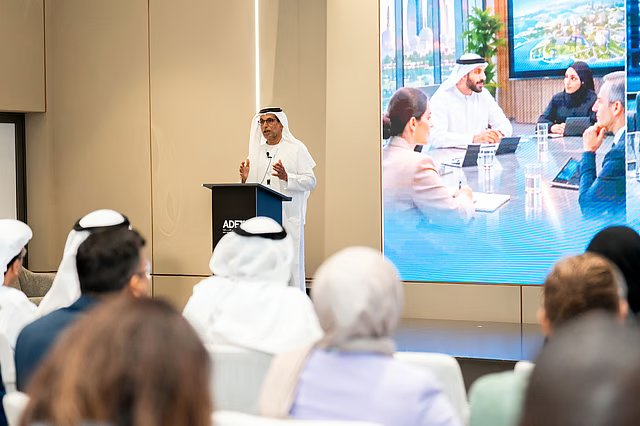
The approach was outlined at the AI for Development Forum in Abu Dhabi, hosted by ADEX. The event also featured a video illustrating how such initiatives could shape Africa’s future across sectors including agriculture, education and infrastructure.
ADEX offers African governments a combined technology and financing package rather than separate contracts.
“We go into the African countries with a package, a technology package and a financing package,” Ilina said. “This allows the African countries to borrow and get all of the services at once, rather than in separate parts.”
ADEX’s main financing tool is buyer’s credit. When a UAE exporter signs a commercial contract with a buyer in an African country, the buyer involves its government, and ADEX lends directly to that government.
Ilina said that when a deal falls outside ADEX’s own limits, the office works with insurers and development finance institutions to make it “bankable”.
Insurers see a shift away from the US and Europe
Private insurers say demand for cover on AI-related projects is growing.
Navid Shahidinejad, Senior Underwriter, Political Risk and Credit at MSIG USA, the US arm of Japan’s MSIG, said demand for insurance was showing no signs of slowing.
“I don’t see an end in sight. Honestly, the demand seems insatiable,” he said, adding that financing requests now extend beyond data centres to telecom towers, fibre networks and, more recently, GPUs.
“I think we’re only at the beginning stage of this AI development and the computing demand that it requires,” he added.
Shahidinejad said data centre markets in the US and Europe were showing signs of saturation, with constraints related to power, water and land. By contrast, some African countries have surplus power and available land.
African projects still account for a small share of the overall market, he said, but the shift is under way.
Alastair McLeod, Political Risk and Structured Credit Leader for India, the Middle East and Africa at Marsh, said political risk and credit insurance could make projects “more bankable” by covering risks such as expropriation and non-payment.
“Developing AI infrastructure requires more than technology and capital,” he said.
Demand, not just capital
Afreximbank has made AI infrastructure a priority in its next five-year strategy, said Emeka Oniya, the bank’s Director of Digital Business and Innovation.
“Digital infrastructure is now as important, or even more important, than normal roads and ports,” Oniya said.
He said the bigger challenge was often generating demand rather than securing funding. As an example, he cited a recent Central Bank of Nigeria rule requiring regulated payment data to be stored within the country. The regulation triggered a rush for local data centre capacity and, he said, investment worth hundreds of millions of dollars.
“Once there’s demand, then investment usually follows demand,” he said.
Oniya said Afreximbank was advocating regional data policies rather than country-by-country rules, allowing smaller markets to share data centre infrastructure. The approach is supported by the African Continental Free Trade Agreement.
Export opportunities in space
Ilina and Orbitworks Vice President Salim Al Alawi identified AI-enabled satellites as a key UAE export strength. Al Alawi said the technology could give governments faster insights into infrastructure, environmental monitoring and natural resource management.
Ilina said near-real-time satellite imagery could help detect wildfires, oil spills and flash floods, with applications in sectors such as agriculture and healthcare.
The initiative spans several sectors, including education, agriculture, healthcare, energy, the environment and digital infrastructure.
Mohammed Saif Al Suwaidi, Director General of the Abu Dhabi Fund for Development and Chairman of ADEX’s Export Executive Committee, said combining innovation with development finance and the capabilities of UAE exporters could deliver “practical solutions” for partner countries.

