

Educators highlight emotional intelligence and teamwork as essential skills in an AI-driven world.
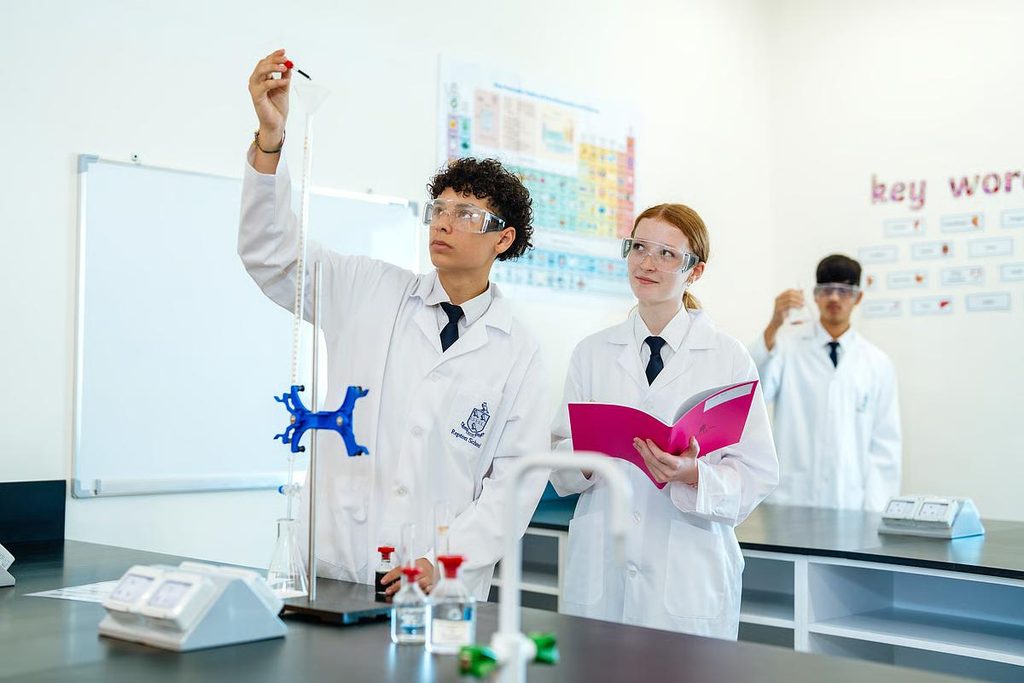
In one Abu Dhabi school, fourth-graders run a souq. A year later, the same children take on a Formula 1 project that combines engineering and business in a single assignment. Neither activity appears on the timetable as entrepreneurship or systems thinking. That is precisely the point.
Across the emirate, educators are grappling with a question that has no easy answer: How do you prepare a child for a career that has not yet been invented, in an economy being reshaped by artificial intelligence while that child is still learning to read?
The answers emerging from Abu Dhabi’s classrooms are less about gadgets and technology than you might expect.
The skills that outlast the job title
Jan Stipek, principal of a school in Al Raha Gardens, Khalifa City A, starts with a premise increasingly reflected in reports by the World Economic Forum and the OECD: schools are preparing students for jobs that may not yet exist.
His response is to focus on skills that can be applied across industries and professions: research and interpersonal skills, the ability to consider perspectives different from one’s own, systems thinking and data analysis. Underpinning these, he says, is the ability to tolerate ambiguity, adapt to change and pivot when necessary.
Perhaps that is why he is cautious about placing too much emphasis on the technologies currently dominating discussions about the future of education. Asked about coding and robotics, he brings the focus back to the bigger picture.
“But the focus should be on the transferable skills; coding and robotics are not those.”
The distinction between teaching specific tools and nurturing the ability to adapt is echoed by Tracy Crowder-Cloe, principal of Repton Abu Dhabi. She argues that preparing children for an unpredictable future does not necessarily mean reinventing education. Many of the qualities they will need, she says, have long been central to a good education.
“One of the interesting aspects of preparing children for a rapidly changing world is that many of the skills they will need are those that have always underpinned an excellent education.”
Alongside curiosity, creativity and resilience, Crowder-Cloe places particular emphasis on emotional intelligence, empathy and the ability to build relationships. As technology takes on an increasingly prominent role in education and working life, she believes distinctly human qualities matter more than ever.
“In an age of artificial intelligence, developing human intelligence has never been more important.”
At Repton Abu Dhabi, this philosophy is summed up in a three-word motto: Grounded, Rounded and Unbounded. Students should be grounded in knowledge, values and identity, broadened through experience and interpersonal growth, and encouraged to explore possibilities that may not yet have a name.
The ambition, ultimately, is not to predict the careers they will pursue, but to give them the confidence and adaptability to navigate whatever comes next.
“We cannot predict every job our children will do, but we can equip them with the intellectual confidence, curiosity and adaptability to shape the world in which they will work.”
Shahina Ahmad, executive principal and chief executive of GEMS World Academy – Abu Dhabi, offers a reminder that can sometimes get lost in the enthusiasm for soft skills: they need a solid foundation of knowledge.
“Children need knowledge and understanding before they can meaningfully question existing ideas, make connections or develop new solutions.”
What about AI?
Brian Ó Súilleabháin, head of digital and AI at GEMS World Academy, makes a similar case. Much of his work centres on helping children understand the technology: knowing when to use AI and when not to, questioning the information it provides and considering its impact on others.
Yet he believes interpersonal abilities are becoming even more important.
“But as Head of Digital and AI, I believe people skills are now more important than ever. That might sound surprising coming from me!”
His reasoning is as much economic as educational.
“AI can already do a lot of the everyday tasks, so the real question is: who are going to be the thinkers and the innovators?”
In his view, those who thrive will be people who can work with others, bring different perspectives together and use technology wisely. Digital fluency, therefore, needs to develop alongside social and organisational skills, not at their expense.
Still, the machines are in the room
None of this means technology has been pushed out of the classroom. At GEMS World Academy, students in the Middle Years Programme study robotics, computer science and coding, alongside a new AI curriculum.
“Everyone gets the basics they need for today’s world, and anyone who catches the bug can take it much further,” Ó Súilleabháin said.
Younger pupils learn coding and robotics in an Innovation Hub, where they work through the design cycle.
Crowder-Cloe welcomes the forward-looking approach to AI literacy adopted by ADEK, Abu Dhabi’s education regulator, but draws a clear distinction between using technology to support learning and allowing it to replace independent thought.
“Technology should extend children’s intellectual capabilities, not replace them. Knowing when to use it and when to think independently will be just as important as knowing how to use it.”
Start at three – without a screen
On when these skills should be introduced, the educators largely agree: the earlier, the better.
“Honestly, the earlier the better,” Ó Súilleabháin said. Under his school’s new AI curriculum, even the youngest children are introduced to what artificial intelligence is and how people use it.
Starting early, however, does not mean putting children in front of screens. At Repton’s Rose Campus, Crowder-Cloe said, the foundations are developed through play: building something together, negotiating roles in a make-believe game or working out why a structure has collapsed.
Computational thinking can begin with something as simple as arranging instructions in the correct order or recognising a pattern, long before a child touches a keyboard.
Stipek similarly sees the early years as an opportunity to develop these abilities through play, particularly as children learn to negotiate, collaborate and solve problems with one another.
As pupils grow older, the emphasis shifts from exploration to greater independence and accountability. At Repton, Crowder-Cloe explained, Junior School pupils move beyond following instructions to making decisions and evaluating their own solutions.
By Sixth Form, they are expected to demonstrate deeper subject knowledge, ethical reasoning and the ability to conduct independent research. The approach, she stressed, must evolve with the child.
“Preparing a three-year-old for the future should look very different from preparing a seventeen-year-old.”
Ó Súilleabháin describes a similar progression as a spiral, with broad concepts such as “change” revisited across subjects and year groups, each time at a greater level of complexity.
“The approach doesn’t really change. The depth does.”
For parents, this gradual development is just as important. Yulia Conti, whose children are in Years 6 and 9 at GEMS World Academy, believes these abilities should be woven into the school journey rather than treated as additional subjects introduced only when children reach their teenage years.
“The important thing is that these skills should develop progressively throughout the school journey, rather than being introduced as separate subjects only at a later stage.”
Learning by doing
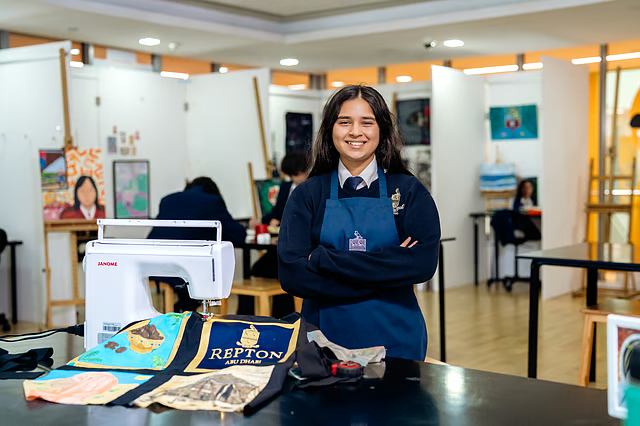
If one conviction unites these schools, it is that skills are best developed when students have opportunities to put them into practice.
At GEMS World Academy, the primary years build towards a Grade 5 Exhibition, while the Middle Years Programme culminates in a Personal Project. IB Diploma students also take Theory of Knowledge, a course that explores how we know what we think we know.
In Term 2, the school’s Young Scientists programme gives students the freedom to choose a subject from the social, physical or digital sciences, research it, develop their ideas and take ownership of the project.
“When you give young people that kind of freedom, the critical thinking takes care of itself,” Ó Súilleabháin said.
Repton focuses on robotics challenges, dedicated innovation sessions and digital summits. Its Digital Challenge has brought together students from schools across the UAE to collaborate on app concepts, while a Student Digital Team and an Innovation Scholarship programme allow pupils to develop specialist knowledge and share it with others.
Even roles such as prefects, student council members and participants in the school’s sustainability group, Eco Warriors, are seen as opportunities to practise responsibility and leadership.
Shahina Ahmad, executive principal and chief executive of GEMS World Academy – Abu Dhabi, believes the real value lies in giving children opportunities to apply what they learn.
“What matters most to me is that children have opportunities to use their knowledge for something meaningful. We want them to understand not only how technology works, but what they might create with it, whose needs they might address and what impact their decisions could have.”
For Conti, the benefits are evident in group projects and presentations. Her children regularly work with classmates on projects before presenting them to the wider school community. Through these activities, they learn to divide responsibilities, manage their time and defend their ideas when questioned.
“These are important skills that they will need in almost any future professional environment.”
Crowder-Cloe believes Abu Dhabi’s rapid development offers another advantage. The emirate’s growing investment in artificial intelligence, renewable energy, sustainability, space exploration and culture provides a living classroom for teachers looking to connect lessons with the world beyond school.
However, knowledge must also be put to work for the benefit of others, Ahmad says. Service learning is the aspect of school life she is particularly passionate about.
Her students have taken part in beach clean-ups and ecosystem preservation projects with SeaWorld Abu Dhabi, worked with Volunteer UAE and organised care packages during Ramadan. These activities help them understand community needs and take responsibility for addressing them.
“They encourage children to see themselves not simply as learners, but as contributors.”
Talking about money
Entrepreneurship and financial literacy are areas where ambition still outpaces practice.
Crowder-Cloe takes a broad view of entrepreneurship, arguing that it involves much more than setting up a business.
“Entrepreneurship, too, is about much more than starting a business.”
It is also about recognising opportunities, taking initiative and understanding risk. Repton wants students to develop an understanding of budgeting, saving, investing and making sound financial decisions, pointing to OECD research on the value of building these habits before adulthood.
Parents would like to see more opportunities in these areas, and at an earlier age.
Hend Al Ali, whose children are in Years 1 and 4 at GEMS World Academy, values the school’s combination of a British curriculum and IB-style inquiry-based learning. However, she also has a wish list.
“I would also love to see more opportunities for students to develop business ideas, create apps, participate in innovation competitions and work on community-based projects. These experiences build confidence, teamwork and the ability to turn ideas into reality.”
Can you grade curiosity?
Then comes perhaps the hardest question: How do schools know whether these approaches are working?
For Stipek, the answer begins with tracking progress, although not necessarily reducing it to a number. His school maps a defined set of learning skills from one year to the next, allowing teachers to monitor how pupils develop.
However, he is wary of assuming that every quality can, or should, be measured. The ultimate goal is to nurture lifelong learners and creative thinkers, something he believes may not lend itself to a conventional scorecard.
“I question whether it actually should even be evaluated,” he said.
Crowder-Cloe takes a more evidence-based approach, bringing together teacher assessments, classroom observations, student feedback and the quality of completed projects.
Even so, she argues that the most meaningful evidence often lies in how children approach a challenge rather than simply in the final outcome.
Can they apply what they know to an unfamiliar problem, work effectively with others and explain the decisions they have made? These are the questions that help reveal whether learning is translating into practical skills.
From the classroom, the perspective shifts to the home. Al Ali believes academic results are only one part of the picture. Parents can also recognise progress in how children approach everyday situations and interact with others.
“From a parent’s perspective, success should be measured not only through academic results but also through children’s ability to think independently, communicate confidently, collaborate and solve problems.”
The wall that still needs to come down
One area where the educators agree is that the divide between school and the workplace remains too wide.
Crowder-Cloe believes schools need to build stronger partnerships with industry, universities and the wider community, giving young people a glimpse of professional life and emerging sectors well before they enter the workforce.
Conti takes the idea further, arguing that exposure should translate into practical experience.
“Students should have more opportunities to engage with professionals, businesses and entrepreneurs, participate in practical challenges and develop their own ideas into real projects.”
For her, this engagement must also include digital literacy that goes beyond knowing how to use new tools. Children need to understand their “limitations, risks and ethical implications” as well.
Preparing students for a changing workplace also means preparing the people who teach them. Ó Súilleabháin turns the spotlight on educators, pointing out how quickly the professional landscape is evolving.
“Work is changing every single day, and fast.”
Keeping pace, he argues, requires continuous teacher training and a curriculum that can evolve without compromising academic rigour.
That does not mean schools should rush to adopt every new technology. Crowder-Cloe cautions against confusing innovation with progress or assuming that every emerging tool belongs in the classroom.
“Just because something is technologically possible does not necessarily mean it is appropriate.”
Perhaps that is the larger lesson. In a city that has placed so much emphasis on its future in artificial intelligence, one of the most important messages emerging from its classrooms is that preparing children for a world filled with machines also means nurturing the qualities that make us human: empathy, collaboration, curiosity and the ability to connect with others.

