

Mandatory passport system set for 2027 aims to boost Dubai’s circular economy.
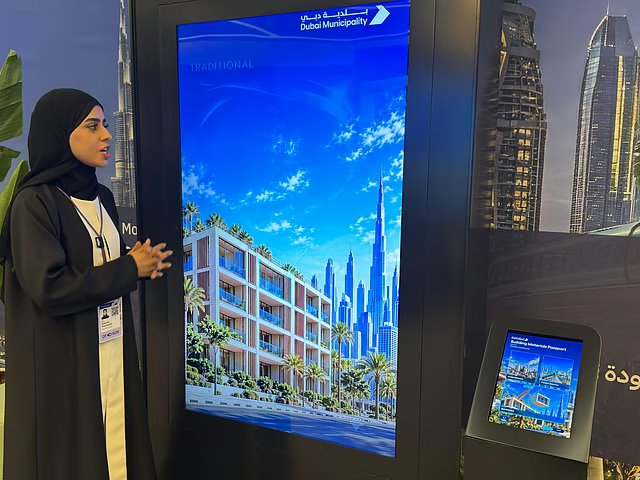
Dubai: Passports are no longer just for people. Dubai is preparing to issue them to the materials used to build the city, starting with steel, aluminium and cement, in a move aimed at extending their lifespan and supporting a circular economy.
At Dubai Future Week 2026, which opened on Wednesday, Dubai Municipality told Gulf News that its Building Materials Passport system would be launched in early 2027.
Compliance will be mandatory for everyone in the emirate’s construction industry, including manufacturers and suppliers, said Salama Al Suwaidi, architectural engineer at Dubai Municipality’s Building Permits Department, who presented the project at Emirates Towers.
How the passport works
Every batch of material leaving a laboratory will be assigned a unique identification number, with its specifications and technical details recorded in a central system managed by Dubai Municipality.
Manufacturers and suppliers will have to apply through the system and submit the relevant technical information. The municipality will then issue a passport based on the submitted details. Materials that fail to meet the required standards will not be approved.
For instance, cement produced by different companies will each have a separate passport, allowing authorities to identify and track individual materials.
A life cycle that does not end
Until now, the construction industry has largely followed a linear model: materials are purchased, used in buildings and eventually sent to landfill when structures are demolished.
The new passport system aims to replace this approach with a circular model in which materials are recovered, tested and reused.
After demolition, materials will be sent to laboratories for testing to determine whether they can be used again. Al Suwaidi cited the example of steel that retains 50 per cent of its original strength. It could be reinforced and treated for reuse as a material in new buildings, a process known as upcycling.
“It’s a life cycle that does not end,” she said.
A material would reach the end of its life only when it could no longer be safely reused, such as a steel column that had become unsuitable for further construction and had to be sent to landfill.
Nowhere to hide
The passport system will also allow authorities to track what happens to materials after a building is demolished.
Those responsible for a building will be required to account for the materials listed in its passports, including explaining why any material was not recycled after demolition. All recyclable materials recovered from demolition sites will have to be recycled.
The initiative aims to reduce reliance on imported materials, lower construction costs, cut carbon emissions and make the industry more sustainable.
The initial phase will cover steel, aluminium and cement, but Al Suwaidi said the longer-term ambition was to extend the system to all building materials.
Dubai Future Week 2026, organised by the Dubai Future Foundation, runs until November 21 at Emirates Towers and the Museum of the Future. Under the theme ‘For the Future Human’, the event brings together more than 10,000 participants, including experts, decision-makers, policymakers and innovators.

