

Simon Long, a passionate astrophotographer, shares his fascination with the cosmos.
Roald Dahl once wrote about the witching hour, when the night falls silent, the world grows still and the universe becomes a stage.
Last month, that hour arrived early.
We had driven out to Al Qua’a to catch a glimpse of the Milky Way, joining Simon Long and a group of UAE residents equally captivated by the night sky. It was pitch black, with stars all around us.
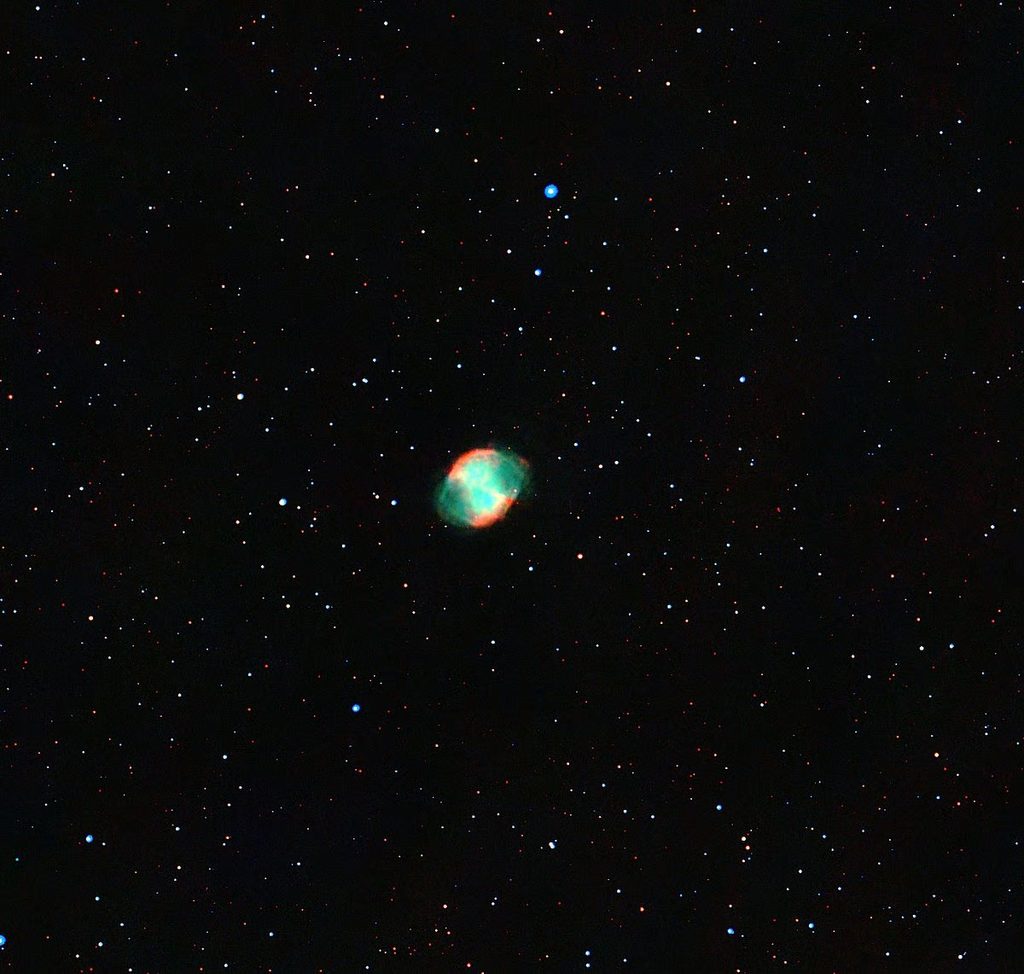
There, we found Simon setting up his telescope to photograph the Butterfly Nebula, the Milky Way and whatever else the night sky had to offer.
Later, we went through the photographs: vivid splashes of red, shifting hues and countless stars. They had never seemed so close, yet so impossibly far away.
The images looked almost as though they had been captured by someone drifting among the stars.
We wanted to know how Simon managed to bring the cosmos a little closer and capture its secrets.
A resident of Abu Dhabi, Simon works as a director of operations and maintenance in facilities management — a job that, as he puts it, has “nothing to do with astronomy”.
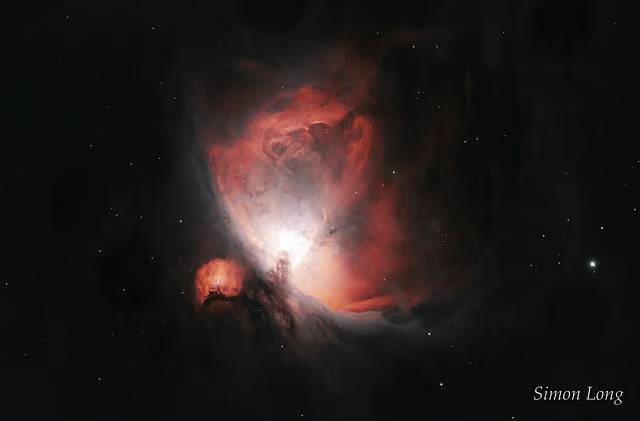
Away from work, however, he is one of the UAE’s dedicated astrophotographers, turning his telescopes towards the Orion Nebula, the California Nebula and galaxies millions of light-years away. He then shares his images with anyone keen to see what lies beyond our world.
The sky at night
Simon’s fascination with the cosmos began in Britain, in front of a television. As a young boy, he watched The Sky at Night, the long-running programme presented by Sir Patrick Moore, the bow-tied, monocled astronomer who brought the wonders of the universe into British living rooms for more than half a century.
The telescopes featured on the show were professional instruments costing thousands of pounds. The images they produced left a lasting impression on him.
“Most people, we look up at the sky and say, oh yeah, there’s some stars there,” he said. “It’s seeing past that, which is, to me, the real interest.”
As a child, he owned a small telescope, good enough to observe the Moon and, during the day, look at trees. Today, he points out, amateur astronomers can access equipment with capabilities comparable to those of the instruments once used in television studios, at a similar cost.
From the ocean floor to the night sky
Before turning his camera towards the stars, Simon spent years photographing beneath the sea. A former diving instructor, he developed his skills as an underwater photographer — experience that proved valuable when he took up astrophotography.
“The theory and the principles behind photography don’t change,” he said. “It’s still to do with your aperture size, your exposure, ISOs.” The only real difference, he added, is: “Instead of looking down now underwater, I’m looking up at the sky.”
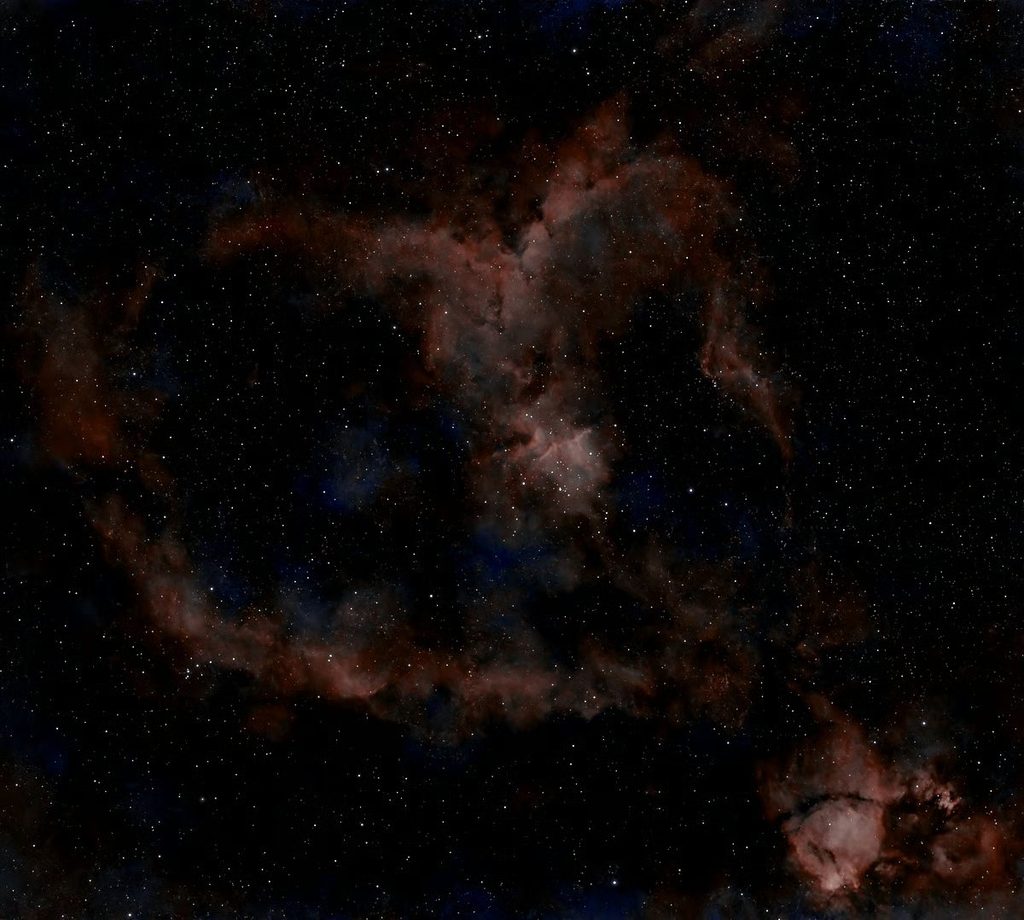
His first purchase was a compact smart telescope, a relatively small, largely automated instrument that combines a lens with a built-in camera. Its modest aperture gathers light slowly, meaning each photograph requires patience and longer exposure times.
“To be fair, it produces really good images,” he said. “It just takes a lot longer.”
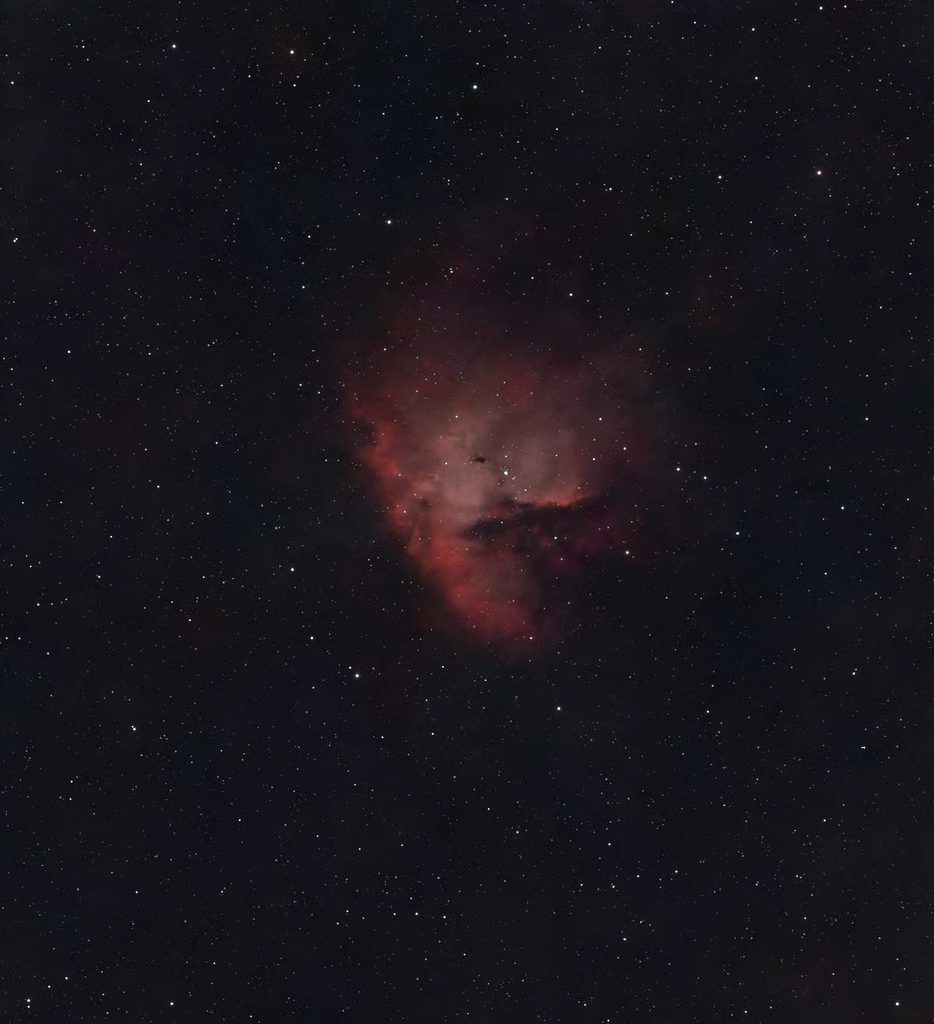
His photograph of the Heart Nebula, for instance, took 13 hours to capture. He took hundreds of 30-second exposures over several nights before combining them into a single image.
How to photograph something 1,300 light-years away
The process begins with what astrophotographers call polar alignment. In the Northern Hemisphere, the North Star remains almost stationary while the rest of the sky appears to rotate around it. Simon first points his telescope towards the star, taking three photographs that help the instrument determine its precise location and orientation.
Next comes plate solving, a process in which software matches the stars in the telescope’s field of view with a map of the sky.
Once that is done, locating a target is relatively straightforward. Every celestial object has a catalogue number. The Orion Nebula, for example, is listed as Messier 42.
“I just type in M42, enter, and the telescope points and centres on the Orion Nebula,” he said. “I can do that night after night after night for as many times as I want.”
That ability to return to precisely the same patch of sky is key. Simon can gather exposures over several nights and stack them together, revealing faint details that a single photograph would miss. His larger telescope setup, operated through a separate controller, follows the same process.
Orion, California and the Horsehead: A winter menu
The night sky changes with the seasons, and Simon plans his photography around it. The Orion Nebula, a stellar nursery about 1,300 light-years away, has recently reappeared above the horizon after months out of view. It will remain visible to stargazers in the UAE until around March. The summer Milky Way, which he photographed in the desert, will not return in its full glory until around the same time.
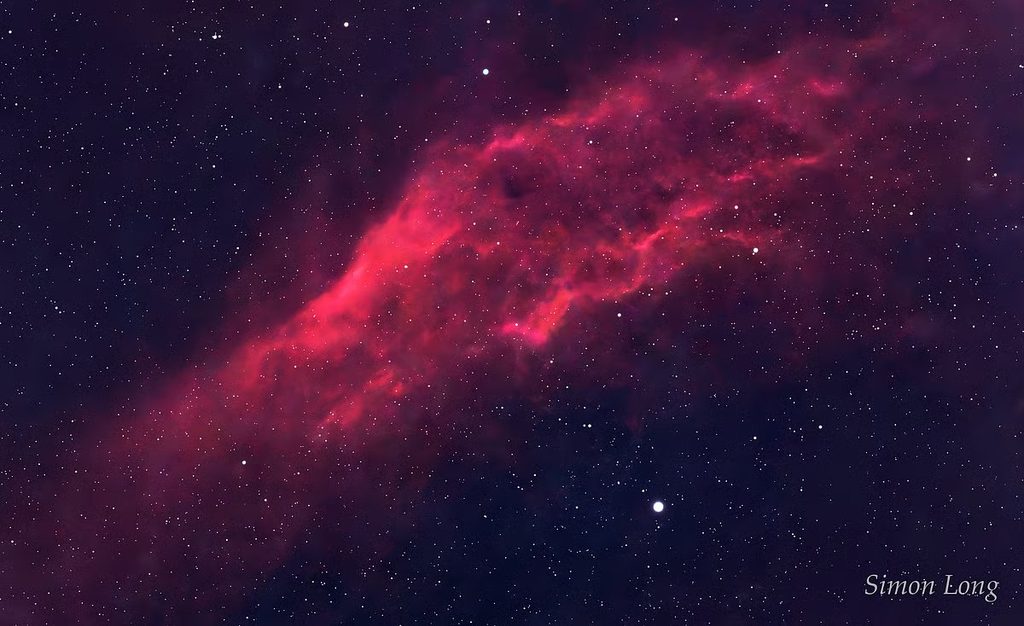
Winter brings some of the most striking celestial sights. The California Nebula, a long stretch of glowing hydrogen in the constellation Perseus, takes its name from its remarkable resemblance to the outline of the US state. It is difficult to see with the naked eye but rewards the long, patient exposures Simon favours.
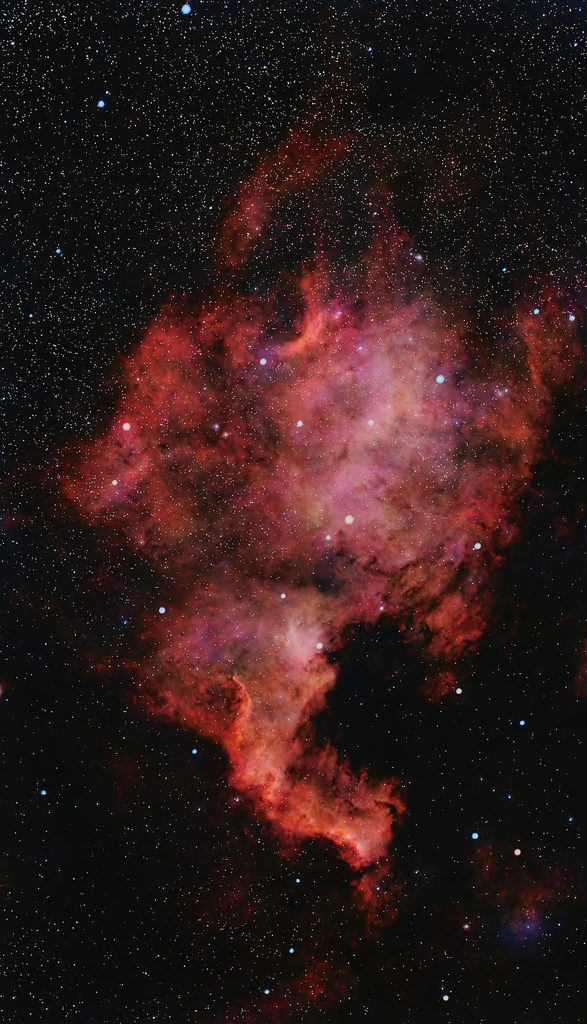
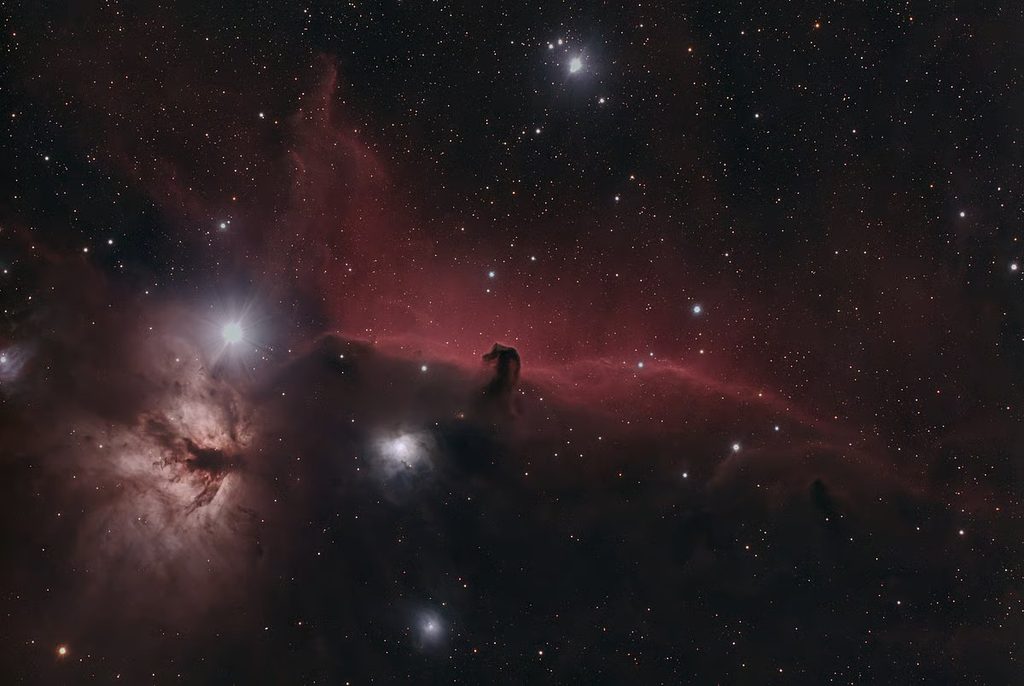
One of his particular favourites is the Horsehead Nebula, whose dark silhouette stands out against a glowing background.
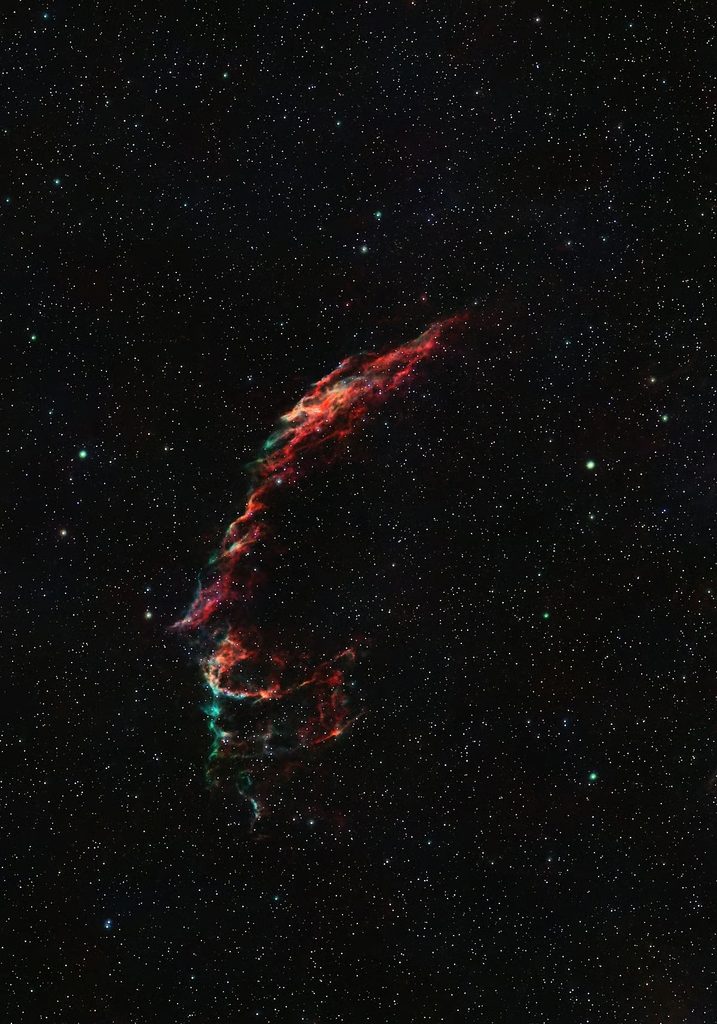
“That’s got three different types of nebula in it,” he said, referring to dark, emission and reflection nebulae.
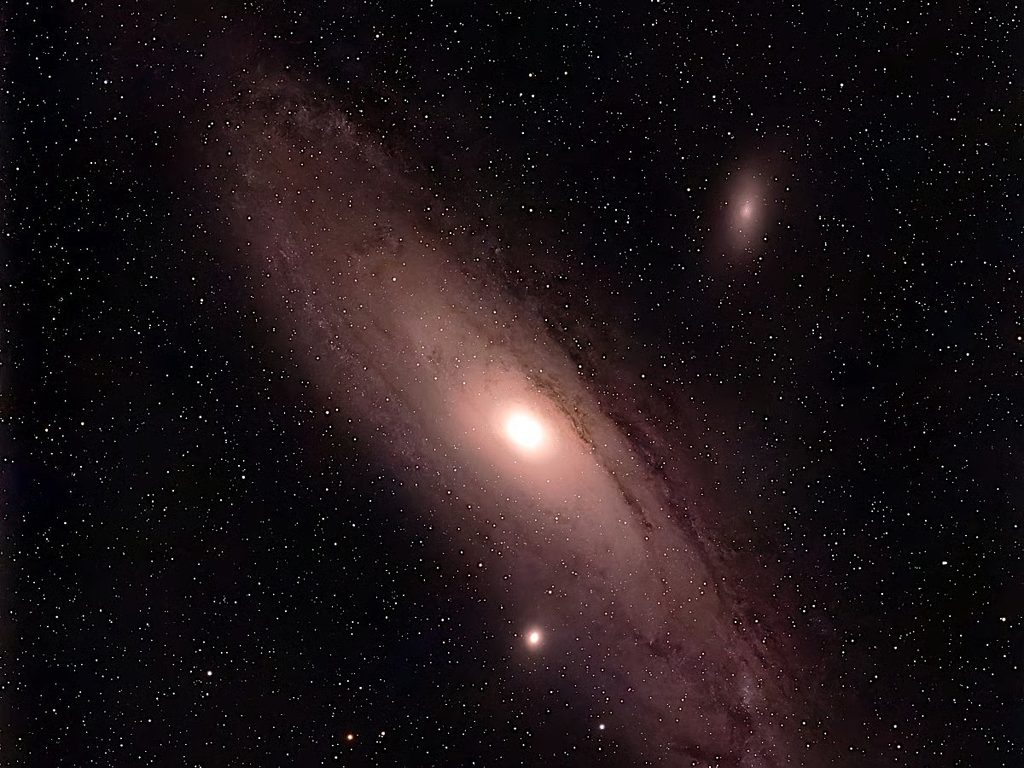
Then there is Andromeda, the nearest major galaxy to the Milky Way, located about 2.5 million light-years away. Through a good pair of binoculars, it appears as a large, hazy patch of light. If someone in Andromeda were looking towards our galaxy, Simon explained, they would see something much like their own: a bright core surrounded by spiral arms and dust lanes.
A telescope in the carry-on
The compact telescope has another advantage: portability. Paired with a small tripod, the entire setup fits into his hand luggage. During Eid, Simon took it to Zanzibar, where the island’s location near the Equator gave him access to a different section of the night sky.
“When you go to different places, you see different sections of the sky,” he said. “There’s always going to be something new you can photograph.”
That, he added, is part of the appeal.
Dipping a toe in: Where UAE beginners can start
For residents interested in exploring the night sky, Simon’s first recommendation is to make the most of winter. Darkness sets in by around 7pm and lasts until approximately 5am, offering about 10 hours of night, including perhaps seven hours of true astronomical darkness. During summer, that window can shrink to around four hours.
A telescope is not essential for getting started. With a good pair of binoculars, he said, beginners can spot both Andromeda and the Orion Nebula. To locate Orion, look for the three stars that form Orion’s Belt. Starting from the bottom star, look slightly across and down to find the nebula.
He also recommends joining people familiar with the terrain. Simon is a member of the Dubai Astronomy Group, which organises regular public events. His first trip to the desert stargazing site at Al Qua’a was with the group, partly because he was unsure about the condition of the tracks and whether a four-wheel-drive vehicle would be necessary.
“Am I going to get stuck? Do I need a four-by-four?” he recalled wondering.
That night, he and his wife arrived to find five telescopes set up, each pointing towards a different celestial object.
Another place he recommends is Al Sadeem, a private observatory in Abu Dhabi, about a 40-minute drive from his home. A visit costs around Dh300 and lasts a couple of hours. It includes live viewing, a tour of the dome and its retractable roof, as well as an immersive cube where images captured by telescopes are rendered in 3D.
“You’re literally travelling through space,” he said.
The staff, he added, have also welcomed him back with his own equipment and helped him troubleshoot technical issues.
Passing on the view
Simon has lived in the UAE since 2008 and moved to Abu Dhabi three years ago. His work has taken him to Riyadh, Doha and Muscat, but the Emirates has remained his family’s home.
More recently, his hobby has taken on a community dimension. A parent in his neighbourhood invited him to give a presentation at a school, where the children were quick to fire questions at him. That was followed by a request to organise a stargazing session for children in his own community.
One evening, he set up two telescopes for astrophotography, capturing images of Andromeda and Orion. A neighbour brought along another telescope for live viewing, allowing the children to see Saturn and its rings. Between them, the two enthusiasts offered the youngsters a glimpse of three very different sights in the universe in a single evening. Another school has since invited Simon back.
It is a long way from the young boy in Britain who watched Patrick Moore on television. Yet the fascination remains much the same: looking beyond the scattering of stars visible to everyone and showing others what lies beyond.
“I love it,” he said, “because it’s something I really enjoy.”

