

Six-minute evacuation showcases Dubai’s readiness to respond to threats against critical infrastructure.
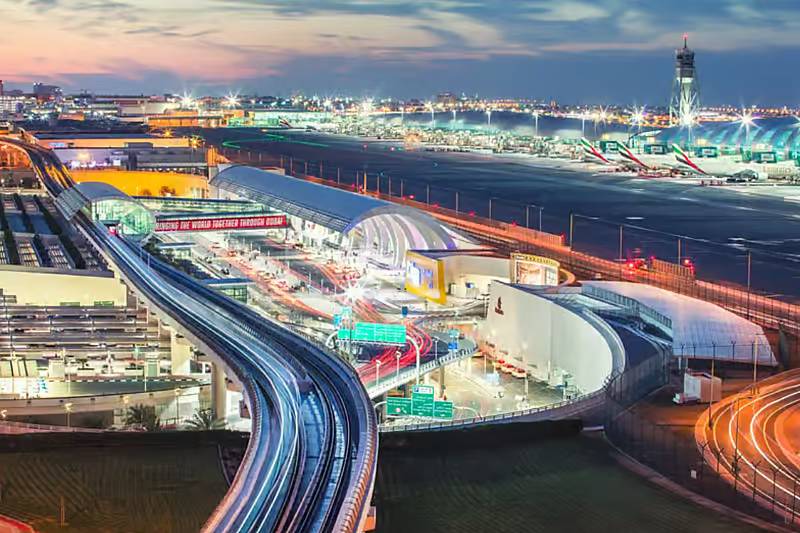
Dubai: More than seven aircraft were running low on fuel, while five others were waiting on the runway for take-off when an emergency disrupted operations at Dubai airport on March 7 this year, prompting an urgent effort to protect around 6,000 passengers.
Each aircraft was carrying approximately 500 passengers, a senior Dubai Police official revealed at the World Police Summit.
A coordinated response involving airport authorities, Dubai Police, the Armed Forces and other government entities helped prevent fatalities and injuries, said Brigadier Hussain Ahmad Buhussain Alfalasi, Assistant Director for Operations at the General Department of Airport Security at Dubai Police.
“One of our biggest challenges was how to come out from this crisis with zero fatalities,” Alfalasi said.
“Facilities can be damaged, but human lives cannot be replaced.”
He attributed the successful response to directives from the UAE leadership, established emergency plans, trained personnel and the preparedness of second-line leadership teams.
Speaking during a panel discussion titled Keeping the Arteries Open: Protecting Critical Infrastructure and Airspace Under Attack at the World Police Summit at Dubai World Trade Centre on Monday, November 16, Alfalasi said airport teams moved passengers and employees to designated shelters within six to seven minutes of receiving an alert.
The emergency underscored the importance of having shelter arrangements alongside conventional evacuation procedures. Dozens of designated shelters had been set up across the airport, while 114,000 staff members had received training in shelter procedures.
Six-minute response and unified command
Alfalasi said direct communication between airport teams, the Armed Forces and air traffic controllers enabled authorities to respond swiftly to warnings and move passengers and employees to safety.
The operation was supported by established emergency procedures, regular drills and coordinated air traffic management arrangements.
Dubai Airports’ OneDXB system played a central role, bringing airport partners and participating entities under a unified leadership structure to streamline coordination and accelerate decision-making.
The command structure included a Gold Commander responsible for overseeing the overall response and Silver Commanders managing operations on the ground. Second-line leadership teams helped ensure decisions were carried out quickly and effectively.
Alfalasi clarified that the March 7 airport emergency was part of a wider crisis that continued for around 40 days. During this period, Dubai Airports recorded incidents and operational challenges in a dedicated database to identify lessons, refine emergency procedures and strengthen future preparedness. The findings are also expected to be shared with international partners.
He emphasised that effective cooperation between government entities must be established during peacetime rather than developed only after an emergency occurs.
Five pillars underpin UAE’s emergency response
The UAE’s response to regional security developments rested on five pillars: human resources, technology, infrastructure, legislation and institutional cooperation.
Major Mohammed Omar Almuhairi, Head of the Unmanned Aerial Systems Centre at the General Department of Operations at Dubai Police and moderator of the session, said the developments had tested government institutions and highlighted the importance of preparedness.
While the Armed Forces dealt with aerial threats, police, security agencies and civilian organisations worked together to protect the country’s security and stability, safeguard essential services and maintain normal life.
Brigadier General Staff Pilot Abdul Nasser Al Humaidi, official spokesperson for the UAE Ministry of Defence, said effective crisis management depended on cooperation established well before an emergency.
Military, police, security and civilian organisations must train and work together in advance. Expecting them to coordinate efficiently for the first time when a crisis breaks out would be unrealistic, he said.
While the Armed Forces tackle aerial threats, other government entities play a crucial role in supporting recovery efforts and ensuring essential services continue to operate.
Al Humaidi also highlighted the importance of keeping the public informed. Information gaps can quickly lead to rumours, making timely updates and consistent communication across government entities essential.
Authorities must reassure residents while ensuring that information shared publicly does not compromise ongoing operations, he said.
Dubai Police expands explosives expertise
Dubai Police strengthened its explosives capabilities after the UAE leadership questioned why the emirate had only one explosives specialist, Brigadier Hesham Nasser Alsuwaidi, Deputy Director of Emergency Affairs at the General Department of Protective Security and Emergency Affairs at Dubai Police and head of the post-blast investigation team, said.
The issue was raised in July 2017, when the leadership asked how many explosives specialists were available. After being told there was only one, officials questioned whether a single expert could adequately serve the needs of an entire emirate.
A strategic plan was subsequently developed, supported by working groups and a broader recruitment and training programme.
The plan identified a need for specialists in chemical and electrical engineering. Dubai Police recruited university graduates and introduced a specialised diploma in explosives management.
The force also developed policies, databases and investigation procedures, supported by risk assessments, emergency scenarios and regular exercises.
Cooperation with the Armed Forces and international partners across Asia, Europe and the United States further strengthened the programme. Dubai International Airport was among the facilities covered by training exercises.
Alsuwaidi stressed that qualified personnel remained indispensable despite advances in technology and equipment.
He said specialised crisis teams had also helped speed up emergency decisions and strengthen coordination. Organised into cells with direct links to senior leadership, the teams could share information and coordinate responses without lengthy administrative procedures.
Personnel deployed across the emirate were trained to assess incidents, relay information and make decisions on the ground, while other teams focused on restoring normal operations.
Air traffic controllers train for emergencies
Air traffic controllers in the UAE conduct at least two exercises each year to prepare for emergencies, Talal Al Hammadi, Vice-President of Air Traffic Development at Dubai Air Navigation Services (DANS), said.
Training begins with Fast-Time Simulation, which allows teams to test different scenarios in a controlled environment. This is followed by Real-Time Simulation exercises involving air traffic controllers.
The exercises help identify gaps, evaluate performance, address mistakes and refine procedures before similar situations arise during actual operations.
Al Hammadi described UAE airspace as critical infrastructure that connects international destinations and facilitates aircraft movements between East and West.
Protecting it during a crisis involves complex decisions, particularly when aircraft are already airborne. Authorities must assess aircraft positions, altitudes and fuel levels, the availability of alternative airports and whether planes can safely remain in the air while awaiting instructions.
Airspace restrictions or closures therefore require close coordination between military and civilian aviation authorities, supported by accurate information and rapid communication.
AI supports faster emergency decisions
Artificial intelligence helped government entities analyse information and make operational decisions more quickly during the crisis, said Mohammed Al Mheiri, Chief Business Officer for Public Safety and Security at Presight.
AI systems enabled authorities to process large volumes of data, identify critical developments and reduce the need for manual monitoring. AI agents also handled a significant share of certain daily operations.
The technology can increase organisations’ capacity to process cases and respond to demands, Al Mheiri said.
However, he emphasised that AI should support rather than replace human judgement. Systems must be developed in consultation with the teams that use them, particularly operational commanders and first responders, and must align with established policies, procedures and legislation.
Decision-makers also need to understand how information is collected and processed, who has access to it and where automated systems have limitations.
If commanders do not trust the technology, they may spend valuable time asking staff to verify information already displayed on their screens, potentially delaying critical decisions.
Human oversight remains essential, Al Mheiri said. Personnel at every level, from first responders to senior commanders, must have the right tools and training to use technology effectively.
Official alerts help prevent rumours
The panel highlighted the importance of timely, reliable public communication during emergencies, particularly when uncertainty can fuel rumours and undermine public confidence.
Authorities must quickly address information gaps, maintain consistent messaging across federal and local entities and provide residents with accurate updates.
Al Humaidi said communication should reassure the public without revealing information that could compromise security operations.
He illustrated the importance of official alerts by recounting the experience of a child who heard sounds resembling explosions or fireworks during the emergency.
The child’s father reassured him that the warning system would notify them once the incident was over. The notification arrived three to four minutes later, allowing the child to return to studying.
The example showed how timely alerts can reassure residents and help maintain a sense of normality during a crisis.
Drones pose evolving security challenges
Speakers said security threats had changed considerably over the past 15 years, making closer cooperation between security agencies and the Armed Forces increasingly important.
Modern threats, particularly those involving unmanned aerial systems, cannot be addressed by individual organisations working in isolation.
Al Humaidi said authorities must combine advanced equipment with trained personnel, effective command-and-control systems and specialised centres capable of assessing risks and supporting operational decisions.
He also highlighted the need to develop appropriate levels of autonomy, maintain effective countermeasures against drones and balance technological capabilities with sustainability and operational requirements.
The evolving capabilities of unmanned aerial systems require continuous risk assessments, investment in technology and trained teams equipped to operate systems and respond to incidents.
The speakers agreed that preparedness must remain an ongoing priority, backed by regular exercises, clearly defined responsibilities, reliable information and cooperation across government entities.
Alfalasi said such partnerships must be maintained even during peacetime, despite the associated costs.
The panel concluded that the UAE’s emergency response reflected years of investment in people, infrastructure, technology, legislation and institutional cooperation. Trained personnel, reliable information and sound human judgement remain central to protecting lives and keeping essential services running.

