

Etihad targets a network of over 140 destinations and a fleet exceeding 200 aircraft by 2030.
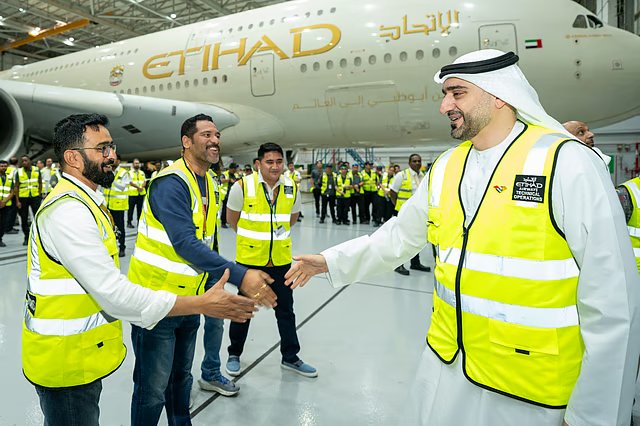
Abu Dhabi: Etihad Airways is set to invest $1 billion (Dh3.67 billion) in a major refurbishment of its existing aircraft cabins as part of an ambitious growth strategy aimed at expanding its fleet to more than 200 aircraft and its global network to over 140 destinations by 2030.
The two-year upgrade programme will see older aircraft undergo extensive interior renovations, bringing their cabins in line with the airline’s latest premium offerings and onboard service standards.
In an exclusive interview with Gulf News, Captain Majed Al Marzouqi, Chief Operations and Guest Officer at Etihad Airways, discussed the carrier’s expansion plans, including fleet growth, new international routes, increased flight frequencies and improvements to the passenger experience.
Strong passenger demand
Al Marzouqi said the airline continued to record robust passenger demand, with average seat occupancy exceeding 88 per cent despite regional conflict. He added that Etihad’s rapid expansion was being supported by new aircraft deliveries, recruitment initiatives and significant investment in employee training.
“We are investing a lot in the product, and we are investing in the service and service excellence as well,” Al Marzouqi said.
He also revealed that Etihad would launch a major initiative next year to upgrade the interiors of its older aircraft.
“There is a $1 billion investment in retrofitting the old aircraft, changing the interiors. We are going to kick off the installation of this project next year, and it is a two-year programme,” he said.
The refurbishment is designed to deliver a more consistent onboard experience across the airline’s fleet as it introduces new aircraft and expands its international network.
Fleet set to exceed 200 aircraft
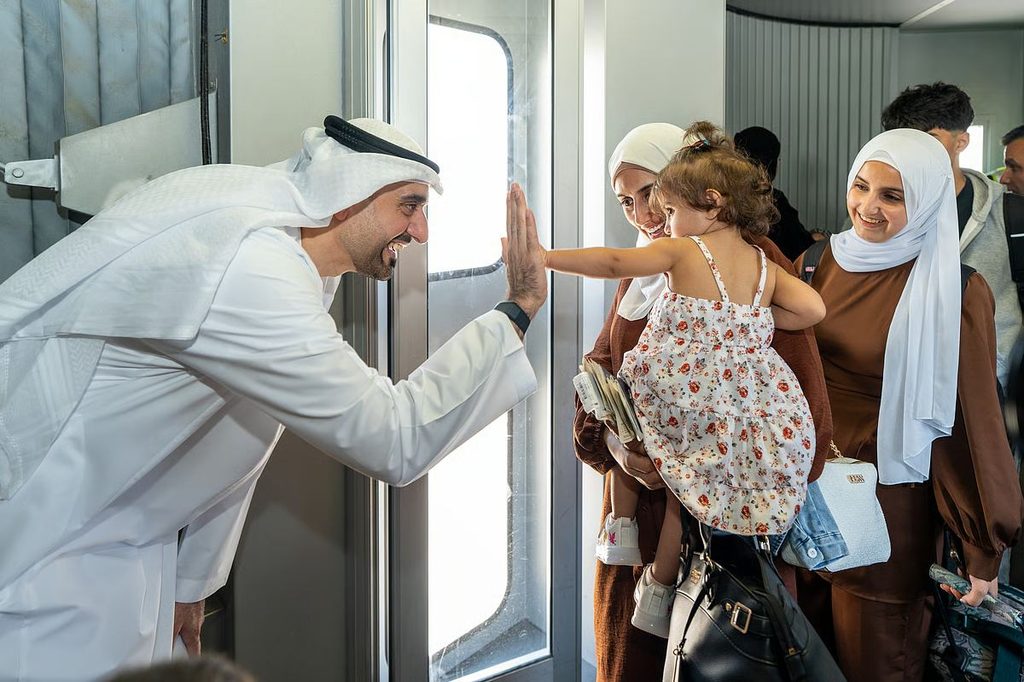
Etihad plans to increase its fleet from approximately 140 aircraft by the end of 2026 to more than 200 by 2030. According to Al Marzouqi, the airline expects to take delivery of between 15 and 20 aircraft annually to support its expansion plans.
“In the last two months of this year, we are receiving around 11 aircraft, more or less,” he said.
The latest additions include Airbus A321LR aircraft, which have received particularly positive feedback from passengers, according to Al Marzouqi.
The airline is also taking delivery of Airbus A350 aircraft, while deliveries of the A330 aircraft ordered last year are scheduled to begin in 2027.
The growing fleet will provide additional capacity for Etihad to introduce new destinations while increasing flight frequencies on established routes.
Network to expand beyond 140 destinations
Etihad currently serves more than 100 cities worldwide and is targeting an expansion to over 140 destinations by 2030, further strengthening Abu Dhabi’s position as an international aviation hub.
However, Al Marzouqi emphasised that Etihad’s growth strategy extends beyond opening new destinations. While the airline has introduced around 15 new destinations annually in recent years, increasing flight frequencies on existing routes remains an equally important part of its expansion plans.
“Don’t forget, we are not only going to new destinations, but we are increasing the frequencies as well,” he said.
Bangkok is one example of this approach, with Etihad operating between four and six flights daily, depending on seasonal demand. Services to Phuket can also increase to as many as five flights a day during certain periods.
The airline has similarly expanded its European operations by adding capacity to popular destinations. “Two years ago, we had one flight to Paris. Today, we have three flights to Paris,” Al Marzouqi said.
Etihad also operates several daily services to Zurich and London, with frequencies adjusted to reflect passenger demand.
Looking ahead, the airline is preparing to strengthen its presence across Europe, Africa and China.
Among the European destinations under consideration or planned for expansion are Gothenburg and Bucharest, while Kazan is also being evaluated.
Africa is expected to be a key growth market in 2027, with six destinations already announced, including Harare, Accra and Lagos.
Etihad is also expanding its Chinese network with five additional destinations, including Shenzhen, Guangzhou, Hangzhou and Chengdu.
Calgary opens up new opportunities
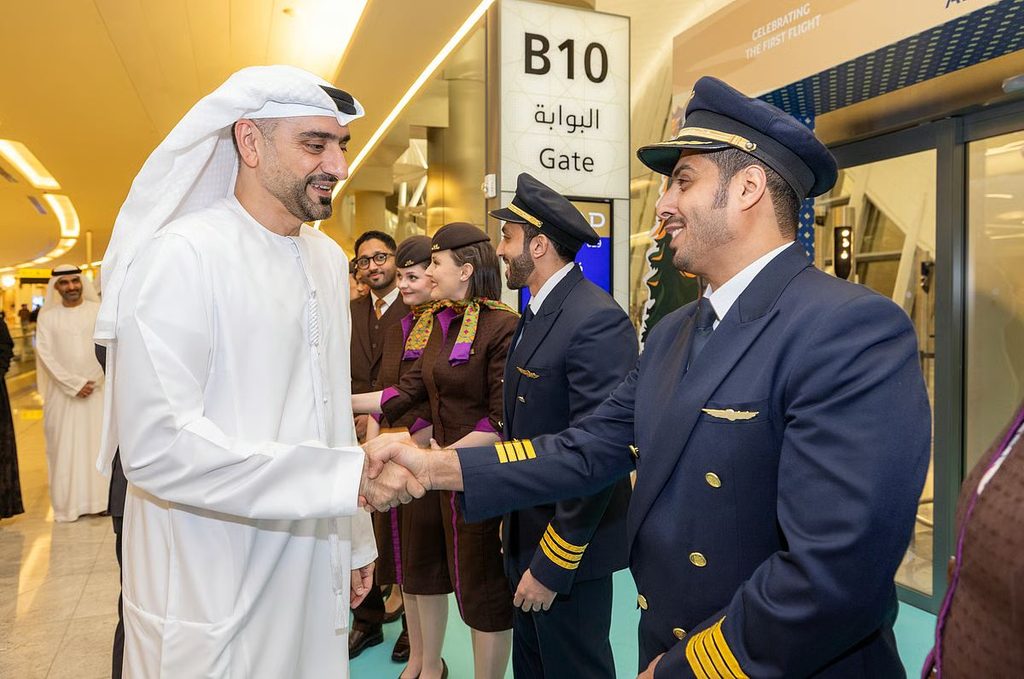
The interview coincided with Etihad’s launch of its inaugural non-stop service between Abu Dhabi and Calgary, making it the first Gulf airline to serve two destinations in Canada.
Al Marzouqi described Canada as an important market for the carrier, which has operated flights to Toronto for several years before launching its Abu Dhabi-Calgary service on October 25.
“The Canadian market is a very important market. We have been flying to Toronto for many years, and we are the first Gulf carrier to fly to Calgary in Canada,” he said.
He highlighted Calgary’s appeal, pointing to opportunities across tourism, business and the energy industry.
Etihad initially introduced four weekly flights between Abu Dhabi and Calgary. However, reflecting growing demand, the airline has announced plans to increase the service to daily operations from winter 2027.
When asked whether Montreal could become its next Canadian destination, Al Marzouqi said the possibility remained open, subject to bilateral aviation agreements between the two governments.
Connecting passengers through Abu Dhabi
The new Calgary service is also expected to create convenient onward travel opportunities for Canadian passengers heading to India, Pakistan and other destinations across the wider Asian region, with Abu Dhabi serving as a connecting hub.
Al Marzouqi said the route would offer travellers an alternative to traditional connecting points, making journeys to the Indian subcontinent more convenient.
“We are going to give an opportunity for people from Calgary to fly to India and the subcontinent via Abu Dhabi. So it’s only one stop,” he said.
The service forms part of Etihad’s broader strategy to strengthen Abu Dhabi’s position as an international aviation hub, linking North America with destinations across Asia, Africa and the Middle East.
Al Marzouqi also highlighted the advantages of Zayed International Airport, pointing to its modern facilities and operational efficiency as key benefits for passengers making connecting journeys.
He further noted the airport’s US pre-clearance facility, which enables passengers travelling to the United States to complete immigration formalities before departure from Abu Dhabi. While the facility does not apply to passengers travelling to Canada, it offers an added convenience for those connecting to US destinations.
Etihad’s North American network currently includes Toronto, Calgary, New York, Chicago, Washington, Boston, Atlanta and Charlotte.
Encouraging travellers to explore Abu Dhabi
Beyond offering convenient connections to international destinations, Etihad is also looking to encourage more passengers to make Abu Dhabi part of their travel plans.
Al Marzouqi said the airline’s stopover programme had been successful in persuading transit passengers to spend time exploring the UAE capital.
“People connecting through Abu Dhabi can stop in Abu Dhabi, enjoy the city, museums and lot of entertainment,” he said.
He noted that Abu Dhabi’s expanding calendar of international sporting events, concerts and cultural attractions was creating further opportunities to draw visitors to the emirate.
The programme enables passengers to break up their journeys with a short stay in the capital, supporting Abu Dhabi’s wider tourism ambitions.
“What we are doing as an airline is putting a very strong footprint across the world, giving people in Abu Dhabi the choice and opportunity to go to new places, but at the same time giving the world an opportunity to come and visit Abu Dhabi,” he said.
Recruitment drive to support expansion
As Etihad accelerates its fleet and network expansion, maintaining high standards of passenger service and operational safety remains a key priority.
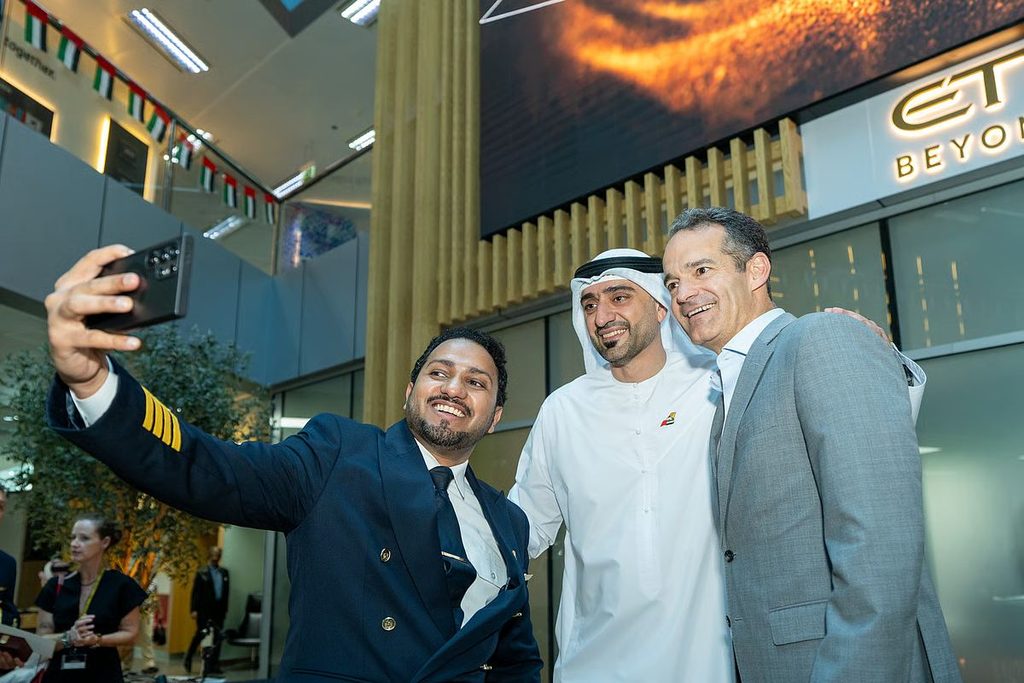
Al Marzouqi said the airline was actively recruiting pilots, first officers, cabin crew and engineers to support its growing operations.
“We are recruiting heavily, investing a lot in training, not only pilots and captains and first officers, but even cabin crew,” he said.
The carrier is also strengthening its engineering workforce to provide the technical support required by its expanding fleet.
According to Al Marzouqi, Etihad’s operations are growing by approximately 20 per cent annually, making continued investment in frontline employees and training essential.
He added that the airline had rolled out several service-enhancement initiatives over the past 18 months to improve and maintain the overall passenger experience.
Passenger demand remains strong
Despite its ambitious growth plans, Etihad continues to see encouraging demand across its network.
Al Marzouqi said the airline had recorded a particularly busy summer, with average passenger load factors exceeding 88 per cent.
“The numbers look really strong in terms of passengers and the load factor. The confidence is there,” he said.
He also reiterated that safety and operational efficiency would remain at the heart of the airline’s expansion as it continues to strengthen its international presence.
For Al Marzouqi, Etihad’s transformation is about more than expanding its fleet or adding new destinations. It is equally about strengthening Abu Dhabi’s global connectivity and making the UAE capital more accessible to travellers worldwide.
“We are very excited. Any growth is happy news for us, and we love it and we welcome it,” he added.

