

Demand for grid equipment in the UAE is projected to rise by around 10 per cent annually through 2030, fuelled by the expansion of the electricity network.
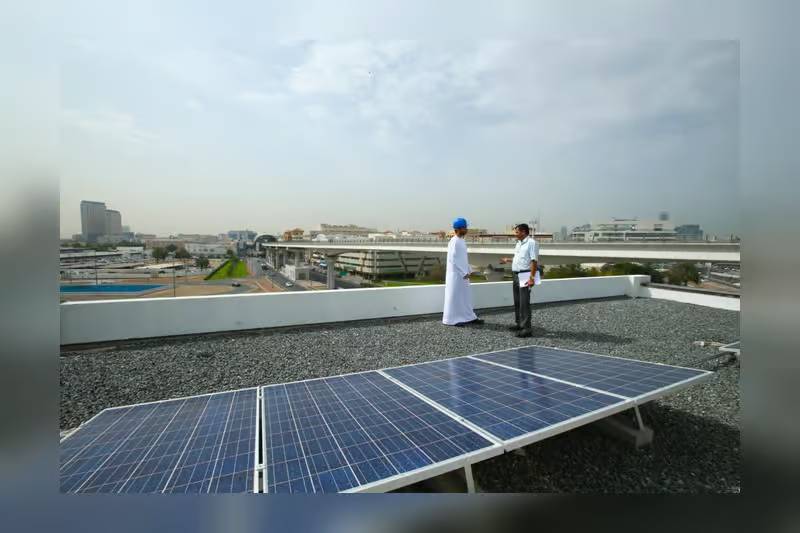
The UAE is expected to rely increasingly on Asian manufacturers for power grid equipment as it expands its electricity infrastructure to meet growing demand from data centres, renewable energy projects and new developments, energy experts say.
Demand for grid equipment in the UAE is projected to increase by around 10 per cent annually until 2030, driven by the expansion of the electricity network, according to Hassan Zaheer, managing partner and chief operating officer at Power Technology Research (PTR).
Although local manufacturers can meet some of the country’s requirements, capacity for high-voltage equipment remains limited across the Gulf region. This means the UAE will need to work with international suppliers to secure the equipment required for future expansion, he said.
“Overall, the capacity for high voltage, which is the more complicated equipment, is a little bit tight across the region. And the UAE needs strategic partners beyond the region to address that requirement,” Zaheer said.
He added that every new substation, solar plant and data centre coming online generates additional demand for equipment such as power transformers and switchgear.
The UAE’s peak electricity demand is expected to rise by around 40 per cent between 2022 and 2030. Meanwhile, renewable energy capacity is projected to expand by approximately 13 per cent annually between 2025 and 2030, according to PTR.
AI ambitions add to demand for power grid equipment
The UAE’s plans to expand its data centre infrastructure are expected to further increase demand for power grid equipment. The UAE-US AI Campus, for instance, has a planned capacity of 5 gigawatts, while the initial phases of Stargate UAE and the Microsoft-G42 expansion through Khazna require a combined 400 megawatts.
Zaheer said the timelines for bringing data centres online increasingly depend on the availability of electrical equipment, including power transformers and switchgear.
UAE competes with other markets for supplies
The UAE is also facing competition from other markets for the same equipment as countries across the Middle East and Southeast Asia ramp up investment in renewable energy and power infrastructure.
Amr Mahmoud, senior vice-president of supply chain research at Rystad Energy, said spending on power grids across the Middle East and Southeast Asia is expected to increase by around 10 to 11 per cent annually until 2030.
Indonesia and Saudi Arabia are projected to account for approximately 37 per cent of total expenditure across the countries included in his analysis between 2026 and 2030.
As a result, the UAE is competing not only with neighbouring countries for equipment but also with markets in Southeast Asia and Europe, where demand for power infrastructure is also rising, Mahmoud said.

