

Nakheel’s Palm Springs development to accommodate 50,000 residents in Dubai South.
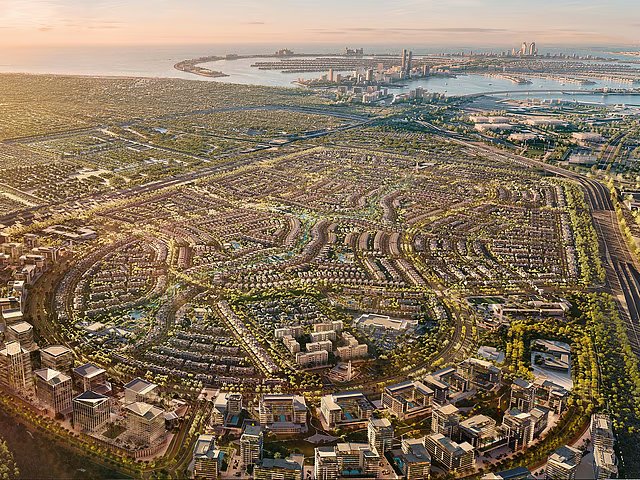
Dubai’s southern corridor is taking shape around the expansion of Al Maktoum International Airport, with new homes, schools, healthcare facilities and hotel apartments planned for the area. On November 10, Nakheel unveiled Palm Springs, a residential community designed for almost 50,000 people beside Palm Jebel Ali.
Covering 3.8 million square metres, Palm Springs will feature villas, townhouses and apartments spread across 15 neighbourhoods. Nakheel, part of Dubai Holding Real Estate, plans to provide a country club, sports club, two schools, a hospital and six mosques. The development will also include recreational, fitness and play facilities, retail destinations and cultural venues, creating a mix of amenities to support family life as the district grows.
Sustainability is a central feature of the project. Palm Springs has secured LEED for Communities Platinum Precertification, making it the first Nakheel community to achieve this distinction. Its masterplan incorporates water, energy and waste management systems designed to reduce carbon emissions.
Around 593,000 square metres of open space, including a central park, will form part of the development. More than 35km of walking, jogging and cycling routes will connect neighbourhoods with parks, retail outlets and leisure facilities. Shaded pathways and climate-responsive landscaping are also intended to make outdoor activities more comfortable.
Location adds weight
Palm Springs will have access to Sheikh Zayed Road and Al Maktoum International Airport. Khalid Al Malik, Chief Executive Officer of Dubai Holding Real Estate, said Nakheel was planning homes alongside supporting infrastructure from the outset, describing the approach as “planning for generations”.
The airport is a major driver of development in the southern corridor. Dubai is building a new terminal at Al Maktoum International Airport at a cost of Dh128 billion. The expanded airport is planned to cover 70 square kilometres, with five runways, five terminals and 400 aircraft gates. Phase 1 is scheduled to begin operations in 2032, while plans also include extending the Dubai Metro network to the airport.
Dubai International Airport remains the emirate’s main passenger hub for now. Al Maktoum International currently handles cargo, executive aviation, charter flights and some scheduled passenger services.
Hospitality added to the mix
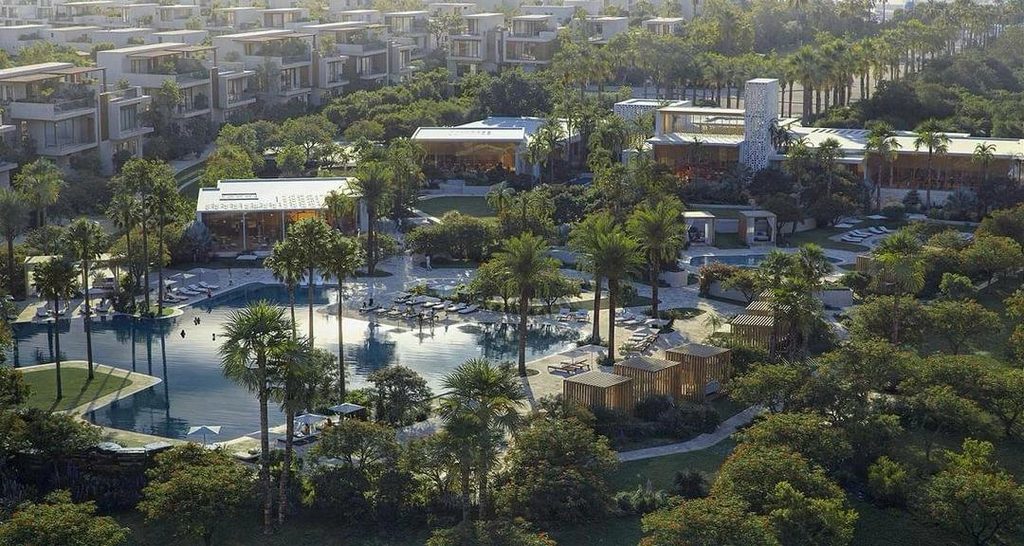
Cheval South Bay will bring a hospitality component to Dubai South’s Residential District, with 193 units planned for the development. These will comprise 98 serviced hotel apartments, ranging from studios to three-bedroom units, and 95 branded residences with one to three bedrooms. The property is scheduled to open in 2030.
The furnished units will feature high-quality finishes, fully equipped kitchens and private balconies. The pet-friendly development will also offer a swimming pool, gym, residents’ lounge and dining outlets. It will be located within South Bay, a waterfront community centred on a one-kilometre lagoon, with direct access to the planned South Bay Mall.
The agreement was signed at Dubai South’s headquarters. Nabil Al Kindi, Group CEO of Dubai South, described the deal as a step into hospitality development. He said the arrival of an international operator would complement the area’s residential offering, with hospitality facilities serving its expanding business ecosystem and visitors.
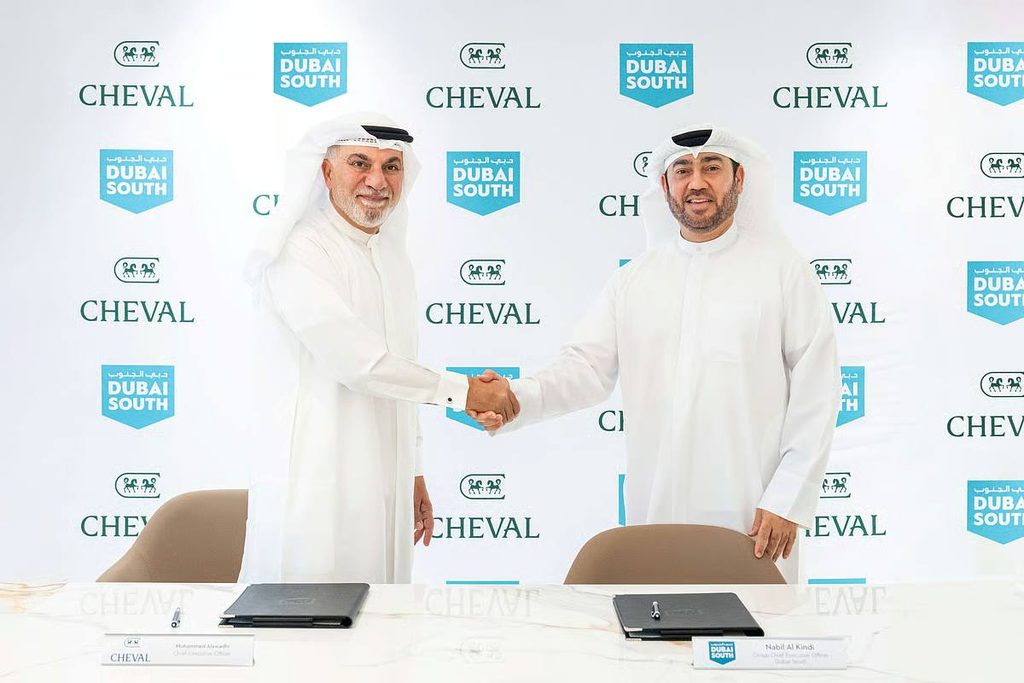
Mohammed Alawadhi, CEO of Cheval Collection, said the Middle East remained central to the group’s expansion plans. He added that residents would enjoy “the luxury of time, space and attention”.
Cheval South Bay will be Cheval Collection’s fourth property in the UAE and sixth in the Middle East, taking its regional portfolio to more than 800 units. Buyers will also have access to the Cheval DISCOVERY loyalty programme, offered in partnership with Global Hotel Alliance, with branded residence purchasers eligible for elite status.
Anchored by Dubai South’s aviation and logistics operations, the southern corridor is expanding its offering beyond business infrastructure. Family housing, schools, healthcare, waterfront developments and short-stay accommodation are increasingly becoming part of the area’s growth.

