

UAE deploys 26 ships and 218 aircraft to deliver humanitarian aid to Gaza.
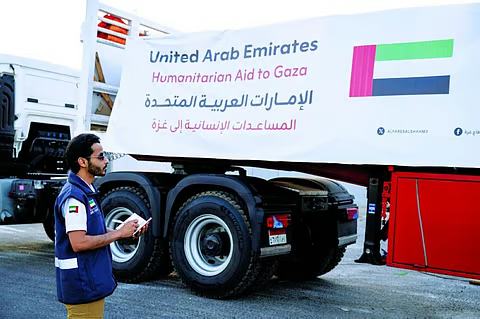
Operation Chivalrous Knight 3 has delivered more than 136,000 tonnes of humanitarian assistance to the Gaza Strip, valued at over $4.3 billion, accounting for approximately 46 per cent of all international aid provided to the territory, according to the latest figures released by the UAE relief campaign.
The operation has relied on an extensive multi-route logistics network involving 26 aid ships, 218 aircraft, 81 airdrop missions, 22 charitable organisations and more than 500 volunteers.
Overall, 15,529 transport assets, including aircraft, ships and trucks, have been involved in delivering humanitarian supplies through the operation’s integrated logistics network.
Launched on November 5, 2023, under the directives of President His Highness Sheikh Mohamed bin Zayed Al Nahyan, Operation Chivalrous Knight 3 has developed into a wide-ranging humanitarian programme combining large-scale aid deliveries with healthcare, relief and community initiatives.
Over time, the operation has expanded beyond supplying essential goods to include social programmes aimed at supporting families, young people and children across the Gaza Strip.
UAE delivers more than $4.3 billion in aid to Gaza
Hamoud Al Afari, Director of UAE Relief Operations under Operation Chivalrous Knight 3, confirmed that the total volume of UAE assistance delivered to Gaza had exceeded 136,000 tonnes, with a value of more than $4.3 billion.
He said this represented approximately 46 per cent of all international humanitarian assistance provided to the territory.
Al Afari noted that 15,529 transport assets, including aircraft, ships and trucks, had supported the delivery of relief supplies through an integrated, multi-route logistics network.
He said the figures reflected the UAE’s humanitarian commitment to the Palestinian people and its ability to mobilise national resources, logistical capabilities, medical expertise and institutional support to address growing humanitarian needs.
Over the past three years, he explained, the operation had evolved from an emergency relief response into an integrated humanitarian framework covering healthcare, water, food, education and shelter.
It has also incorporated medical evacuations, rehabilitation services and social initiatives to support people affected by the crisis.
He added that the operation’s continued efforts reflect a humanitarian approach centred on rapid response, adapting relief programmes to changing conditions on the ground and coordinating the contributions of government entities, charitable organisations, partners and volunteers. This integrated approach helps ensure that assistance reaches those most in need while maximising its impact.
26 aid ships transport relief supplies from the UAE, Egypt and Cyprus
Al Afari said the maritime relief operation involved 26 vessels, including 14 ships departing from the UAE, three from Al Arish in Egypt and nine from Cyprus.
Aircraft and trucks have also played a key role in transporting, preparing and delivering supplies through available routes, supporting the continued flow of food, medical supplies and other essential assistance.
He said the operation had diversified its delivery methods to reach areas that are difficult to access by land through the Birds of Goodness initiative.
The initiative has carried out 81 airdrop missions involving 218 aircraft, delivering a total of 4,076 tonnes of humanitarian assistance.
These airdrops have provided an additional channel for delivering relief supplies as part of the UAE’s wider humanitarian network.
Multiple transport routes strengthen aid delivery
Al Afari stressed that using different modes of transport had improved the flexibility and resilience of humanitarian supply operations, allowing teams to respond to changing conditions and restrictions on the ground.
He explained that humanitarian logistics involve much more than transporting supplies. The process also includes receiving, sorting, storing and classifying aid, monitoring beneficiaries’ requirements and organising distribution according to the most urgent needs.
Three centres coordinate relief operations around the clock
Al Afari said the operation is managed through three main centres that work around the clock: the Operations Room in Abu Dhabi, the logistics centre in Al Arish, Egypt, and relief teams deployed inside the Gaza Strip.
The integrated system connects strategic planning and coordination with the preparation of humanitarian supplies, monitoring of needs and implementation of relief activities on the ground.
Abu Dhabi operations room oversees humanitarian coordination
He explained that the Operations Room in Abu Dhabi is responsible for overall coordination, monitoring assignments and directing relief efforts in collaboration with participating organisations and institutions.
The logistics centre in Al Arish receives humanitarian assistance arriving by air and sea, sorts and stores supplies, and prepares them for onward transportation. Meanwhile, relief teams inside Gaza monitor conditions on the ground and identify priorities based on changing humanitarian needs.
Al Afari said the system operates through a clear division of responsibilities and the integration of expertise and resources, helping teams respond to changing requirements, speed up decisions and deliver assistance through the most suitable channels.
He added that UAE teams continued their work under challenging field conditions, coordinating closely with humanitarian organisations, partners and volunteers.
Managing an operation of this scale requires continuous monitoring of supply movements and humanitarian needs, alongside coordination between organisations handling transportation, storage, distribution, medical services and relief activities. This helps maintain the flow of assistance and adapt responses to changing priorities.
22 charitable organisations and more than 500 volunteers support relief efforts
Al Afari confirmed that Operation Chivalrous Knight 3 had attracted extensive participation from charitable organisations, associations and community members.
More than 22 UAE-based charitable institutions and associations have participated in the operation, alongside over 500 volunteers, including Emiratis and residents, who have contributed to various humanitarian and relief activities.
Around 130 doctors, healthcare professionals and support staff of different nationalities have also volunteered to assist medical operations.
Al Afari said their participation reflected the UAE’s growing culture of volunteerism and the community’s willingness to contribute professional expertise and humanitarian support to those in need.
He noted that community contributions included financial, in-kind, food and medical assistance, as well as support for transportation, logistics and field operations.
He added that bringing together these contributions had helped diversify the operation’s resources and expand the reach of its humanitarian interventions.
‘Thoub Al Farah’ initiative brings joy and hope to Palestinian families
Al Afari said social initiatives form an important part of Operation Chivalrous Knight 3, noting that humanitarian assistance goes beyond providing food, medicine, water and shelter. It also involves supporting families, young people and children, addressing their psychological and social needs, strengthening community ties and restoring a sense of hope and stability.
He highlighted the mass wedding initiative, ‘Thoub Al Farah’ (The Dress of Joy), as an example of this broader approach. The programme aims to help young Palestinian couples start families, reduce the financial burden of marriage on couples and their relatives, and celebrate important social occasions despite the extremely difficult humanitarian conditions in Gaza.
The first edition of the initiative saw more than 54 grooms get married. The second edition, held in Deir Al Balah in the Gaza Strip, brought together 300 brides and grooms.
The second edition received support from the Khalifa Bin Zayed Al Nahyan Foundation for Humanitarian Works, reflecting the initiative’s expanding reach and its efforts to address the social needs of Palestinian youth and families.
The third edition aims to support 250 couples, benefiting 500 people, as the programme continues to help young Palestinians establish families.
Al Afari stressed that the initiative is about more than organising mass weddings. It also seeks to ease financial pressures on families, promote solidarity and strengthen social cohesion by sharing in important milestones in the lives of Palestinians.
UAE supports education for Gaza’s students
Al Afari said the operation had also expanded its humanitarian programmes to support education and help children and students continue their studies.
Initiatives include distributing school supplies and schoolbags, as well as providing 45 scholarships in the UAE.
These efforts reflect the UAE’s commitment to protecting access to education and helping students pursue their academic goals despite the challenging humanitarian conditions.
He added that humanitarian programmes must continue to evolve in response to changing needs and conditions on the ground.
As part of this approach, Operation Chivalrous Knight 3 has expanded its activities to cover education, public hygiene, environmental protection and infrastructure support, alongside healthcare, food assistance and shelter.
Al Afari said the range of initiatives reflects a comprehensive approach to humanitarian assistance, addressing the needs of individuals, families and communities. It combines the rapid delivery of emergency aid with efforts to provide essential services, improve living conditions and strengthen communities’ ability to cope with ongoing challenges.

