

Why do these costs go unnoticed? It comes down to how our brains process small purchases.
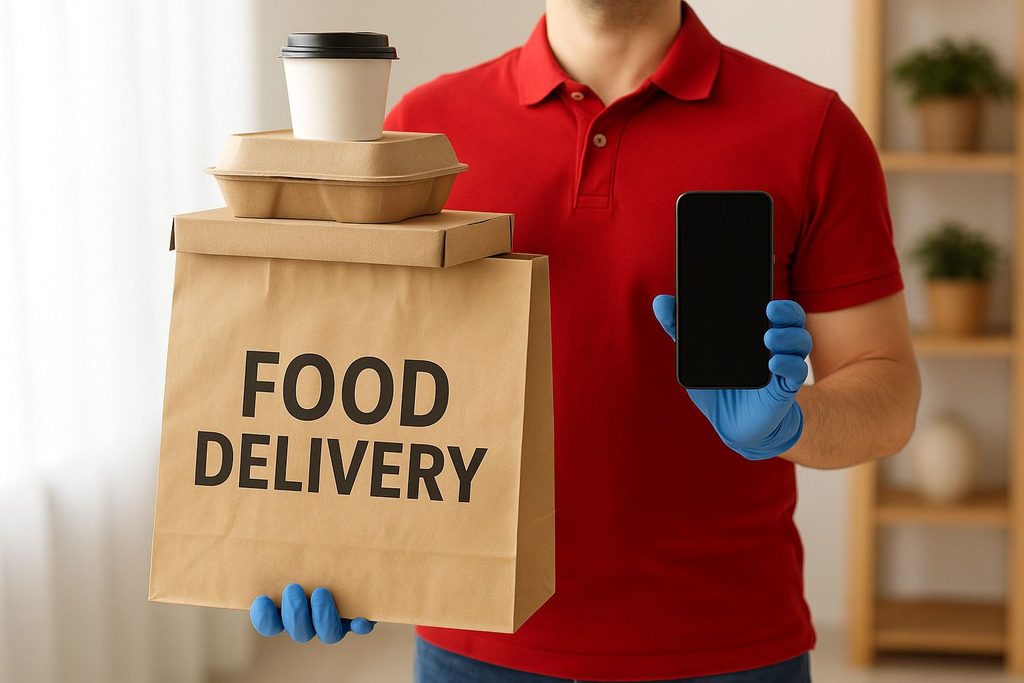
It’s 8.30pm on a Tuesday. You’ve been at your desk since morning, the drive home was painfully slow, and the fridge contains little more than a jar of pickles and good intentions. The delivery app is just two taps away. Twenty minutes later, there’s a knock at the door – and dinner has arrived.
If this sounds familiar, you’re not alone.
For Zaid Barem, media relations director at YMM, it’s a regular routine. He orders takeaway once or twice a week, typically spending between Dh60 and Dh100 each time.
“At the time, it doesn’t really feel like a lot, especially when you’ve had a long day and just want something quick and easy,” he says.
And that’s precisely the problem. Takeaway rarely feels expensive because we don’t pay for it all at once. Instead, the cost is spread across small, hunger-driven purchases over weeks and months. It’s only when those expenses are added up that the true price becomes clear.
The maths of ordering in every other day
Consider a fairly common habit: ordering food every other day, with each meal costing between Dh40 and Dh60.
Every second day, by the numbers
- Orders per month: About 15
- Monthly cost: Dh600 to Dh900
- Yearly cost: Dh7,200 to Dh10,800
Put another way, a habit that rarely costs more than a decent lunch on any given day can quietly add up to the price of a family holiday, a significant portion of school fees or a solid start to an emergency fund.
“That’s a serious amount of money for something that feels like a small daily expense,” says Ali Alhamed, a licensed finfluencer and CEO of 97 Consultations.
Barem, after running the same calculations, agrees: “That’s quite a lot of money when you think about it.”
You open a delivery app, choose what you want, and the price seems reasonable. But by the time you get to checkout, you’ve got delivery fees, service charges and sometimes other additional costs. I think because we’re already hungry and have spent time choosing what to eat, we usually just go ahead and place the order anyway…
Zaid Barem
Why Dh50 rarely feels like much
If the numbers are so significant, why don’t more people notice how much they’re spending? The answer lies in how our brains process small, everyday purchases.
“If I spend Dh80 on food delivery, I don’t really think much about it at that moment. It just feels like a normal everyday expense,” Barem admits. “But if someone told me I’d spent Dh600 or Dh800 on takeaway in one month, I’d probably be surprised.”
The difference between what we spend in a single moment and what it adds up to over a month is something Alhamed also observes among the people he advises.
“Spending Dh50 today feels harmless, but spending Dh750 at once makes you think twice. That’s exactly why small, repeated purchases are dangerous for your finances.”
Zaid Aboobaker, founder and CEO of CompassPoint Consulting, describes this as a visibility problem – one he encounters in household budgets and company accounts alike. The same pattern can be seen in subscription creep, where several seemingly minor recurring payments gradually add up.
“We register the monthly number and forget to multiply. The spending is not hidden. It is just never gathered in one view,” he says.
Another blind spot is automatic payment. Recurring payments can make spending less noticeable because consumers are not actively involved in approving each transaction, explains Dr Kashif Farhat, assistant professor at Rochester Institute of Technology Dubai.
“With a card saved in the app and a reorder button a thumb’s width away, many of us barely approve a takeaway at all.”
The bill that grows at checkout
There’s another layer to the cost: the difference between the price displayed on the menu and the final amount deducted from your account.
Barem knows the experience well.
“You open a delivery app, choose what you want, and the price seems reasonable. But by the time you get to checkout, you’ve got delivery fees, service charges and sometimes other additional costs.”
By then, he points out, we’re already hungry and have spent time deciding what to eat. Rather than start the process again, many customers simply go ahead and place the order.
It’s 8.30pm on a Tuesday. You’ve been at your desk since morning, the drive home was painfully slow, and the fridge contains little more than a jar of pickles and good intentions. The delivery app is just two taps away. Twenty minutes later, there’s a knock at the door – and dinner has arrived.
If this sounds familiar, you’re not alone.
For Zaid Barem, media relations director at YMM, it’s a regular routine. He orders takeaway once or twice a week, typically spending between Dh60 and Dh100 each time.
“At the time, it doesn’t really feel like a lot, especially when you’ve had a long day and just want something quick and easy,” he says.
And that’s precisely the problem. Takeaway rarely feels expensive because we don’t pay for it all at once. Instead, the cost is spread across small, hunger-driven purchases over weeks and months. It’s only when those expenses are added up that the true price becomes clear.
The maths of ordering in every other day
Consider a fairly common habit: ordering food every other day, with each meal costing between Dh40 and Dh60.
Every second day, by the numbers
- Orders per month: About 15
- Monthly cost: Dh600 to Dh900
- Yearly cost: Dh7,200 to Dh10,800
Put another way, a habit that rarely costs more than a decent lunch on any given day can quietly add up to the price of a family holiday, a significant portion of school fees or a solid start to an emergency fund.
“That’s a serious amount of money for something that feels like a small daily expense,” says Ali Alhamed, a licensed finfluencer and CEO of 97 Consultations.
Barem, after running the same calculations, agrees: “That’s quite a lot of money when you think about it.”
You open a delivery app, choose what you want, and the price seems reasonable. But by the time you get to checkout, you’ve got delivery fees, service charges and sometimes other additional costs. I think because we’re already hungry and have spent time choosing what to eat, we usually just go ahead and place the order anyway…
Zaid Barem
Media Relations Director at YMM
Why Dh50 rarely feels like much
If the numbers are so significant, why don’t more people notice how much they’re spending? The answer lies in how our brains process small, everyday purchases.
“If I spend Dh80 on food delivery, I don’t really think much about it at that moment. It just feels like a normal everyday expense,” Barem admits. “But if someone told me I’d spent Dh600 or Dh800 on takeaway in one month, I’d probably be surprised.”
The difference between what we spend in a single moment and what it adds up to over a month is something Alhamed also observes among the people he advises.
“Spending Dh50 today feels harmless, but spending Dh750 at once makes you think twice. That’s exactly why small, repeated purchases are dangerous for your finances.”
Zaid Aboobaker, founder and CEO of CompassPoint Consulting, describes this as a visibility problem – one he encounters in household budgets and company accounts alike. The same pattern can be seen in subscription creep, where several seemingly minor recurring payments gradually add up.
“We register the monthly number and forget to multiply. The spending is not hidden. It is just never gathered in one view,” he says.
Another blind spot is automatic payment. Recurring payments can make spending less noticeable because consumers are not actively involved in approving each transaction, explains Dr Kashif Farhat, assistant professor at Rochester Institute of Technology Dubai.
“With a card saved in the app and a reorder button a thumb’s width away, many of us barely approve a takeaway at all.”
The bill that grows at checkout
There’s another layer to the cost: the difference between the price displayed on the menu and the final amount deducted from your account.
Barem knows the experience well.
“You open a delivery app, choose what you want, and the price seems reasonable. But by the time you get to checkout, you’ve got delivery fees, service charges and sometimes other additional costs.”
By then, he points out, we’re already hungry and have spent time deciding what to eat. Rather than start the process again, many customers simply go ahead and place the order.
Those extra charges may look insignificant on a single receipt. Over a year, however, they can make a substantial difference.
Spending Dh40 to Dh60 every other day works out to around Dh600 to Dh900 a month, or Dh7,200 to Dh10,800 a year. That’s a serious amount of money for something that feels like a small daily expense. Cutting your orders in half could save you thousands of dirhams every year…
Ali Alhamed
Licensed finfluencer and CEO of 97 Consultations
What Dh10 in fees really costs
- Extra fees per order: Dh10
- 15 orders a month: Dh150
- Annual cost: Dh1,800
“My advice is simple: always look at the final amount you’re paying, not just the advertised price,” says Alhamed.
Even menu prices may be higher on delivery apps. Ahmed Sameh, chief marketing officer at Fortis Digital Solutions, which provides point-of-sale and business management software to food and beverage outlets and retailers, says promotions are the biggest factor influencing where people order. But prices also matter, as menu items often cost more on apps than they do in restaurants.
For Barem, the frustration isn’t necessarily about the money itself.
“For me, it’s not necessarily about the extra Dh5 or Dh10. It’s the fact that you’re paying quite a bit for convenience, and you expect the experience to be worth it.”
Sometimes, despite all those extra charges, the food doesn’t even arrive hot.
A country that runs on delivery
If it feels as though everyone around you is ordering in, the data suggests delivery has become a significant part of the UAE’s dining habits.
Figures from Syrve, which tracks the restaurant side of the transaction, show delivery accounted for 36% of all orders at UAE restaurants in the third quarter, up from 30% a year earlier. Delivery orders rose 8% year on year, while dine-in orders fell 16%. These figures offer a snapshot of changing habits among the restaurants tracked, rather than necessarily representing the entire UAE food and beverage market.
Alex Ponomarev, CEO of Syrve MENA, says the shift is happening at individual venues, not just across the market: two-thirds of restaurants that offered delivery in both years saw delivery account for a larger share of their own orders.
Growth is cooling, however, and he sees a broader pattern emerging.
“People are ordering less frequently, and a larger proportion of the orders are now for delivery.”
Restaurants, meanwhile, have expanded across almost every available ordering channel. Sameh says it’s now common to find a single outlet listed on Talabat, Keeta, Noon, Careem, Deliveroo and Zomato, while also accepting orders through WhatsApp and over the phone.
Of the 30 food and beverage businesses his team spoke to in 2025, 28 offered delivery. More choice is good news for diners, but having more channels also means more promotions, notifications and prompts to place an order.
Nor, according to Ponomarev, is the food itself necessarily becoming more expensive.
“A delivery order is still worth around a third less at the till, so the delivery basket is smaller, not cheaper.”
In other words, if your monthly spending is creeping up, the likely culprits are the additional charges and how often you tap ‘order’.
That echoes a warning Farhat makes about subscriptions.
“Increases in subscription fees can add another layer to the total expenses, meaning overall spending may rise even when the number of subscriptions remains unchanged.”
The same principle applies to food delivery: even if you order just as often as you did last year, you could still end up spending more.
The pay-later effect
How we pay matters, too. Barem doesn’t use buy now, pay later services such as Tabby or Tamara, but he does rely on a credit card – and he’s candid about how that affects his spending awareness.
“I think paying by card makes spending so easy that you sometimes don’t realise how much you’ve spent until you check your statement.”
Splitting payments into instalments can make it even harder to see the full picture.
“Buy now, pay later doesn’t make something cheaper; it simply delays the payment,” says Alhamed. “When you’re splitting multiple purchases into small instalments, you can easily lose track of your total commitments. The biggest mistake is confusing what you can afford monthly with what you can actually afford.”
Barem agrees. “You might think Dh100 or Dh150 a month isn’t much, but if you have several purchases on instalments, suddenly you’re paying a significant amount every month.”
The same arithmetic can drive up subscription bills. Dr M. Erdem Coskun, assistant professor at the School of Management at Canadian University Dubai, says Noon One is among the services people commonly sign up for, alongside Netflix and Spotify.
Because these recurring payments are relatively small and charged automatically, he says, “Consumers may not realize how much they are spending on subscriptions until they review their total annual expenses.”
And subscriptions don’t exist in isolation. “If not carefully budgeted, subscriptions can significantly increase a person’s total monthly expenses alongside other recurring costs such as home and car insurance, DEWA, gas, utilities, phone bills, and groceries.”
Farhat believes routine is what eventually makes these costs less noticeable.
“As such payments become part of a routine, they can gradually fade into the background of everyday spending.”
Takeaway orders paid for automatically, by card or in instalments, can follow much the same pattern.
It is a visibility problem, and I see the same thing in businesses. Each charge is small enough to pass under your mental radar. Autopay means you never actively approve it. The payments are spread across different cards and dates, so they never land in one place where you can see the total.
Zaid Aboobaker
Founder and CEO of CompassPoint Consulting
What cutting back actually saves
The good news is that you don’t need to delete your delivery apps to make a meaningful difference to your finances. Consider someone who reduces their orders from 15 a month to five. Cooking at home isn’t free, of course, so the calculations also need to account for grocery costs.
Here are two estimates based on different spending assumptions.
From 15 orders a month to five
Barem’s calculation
- Takeaway at Dh50 per order: Dh500 less spent each month
- Groceries for 10 home-cooked meals: About Dh150
- Estimated saving: Dh350 a month, or Dh4,200 a year
Alhamed’s calculation
- 10 fewer orders a month: 120 fewer orders a year
- Takeaway costs Dh40 to Dh60 per meal, compared with Dh15 to Dh20 for a home-cooked meal
- Estimated saving: About Dh2,400 to Dh5,400 a year, before delivery fees
“That’s money you could put towards an emergency fund or long-term investments,” says Alhamed.
Barem is realistic about the trade-off. “I do cook at home sometimes, but I also find ordering much easier, especially when I’m busy or don’t feel like preparing anything.”
His conclusion is reassuring: “You don’t have to completely stop ordering food to save money. Even making a few small changes can make a difference over time.”
Consumer psychology helps explain consumers’ tendency to focus on the small monthly amount instead of the cumulative cost. Generally, consumers tend to pay more attention to a purchase of Dh300 than to a purchase of Dh30 repeated every month. Automatic payments further reduce this visibility for consumers since consumers have no active involvement in each recurring purchase. As such payments become part of a routine, they can gradually fade into the background of everyday spending…
Dr Kashif Farhat
Assistant Professor at Rochester Institute of Technology Dubai
Keep the convenience, lose the shock
So, where should you start? On one point, the experts agree: the goal is greater awareness, not giving up convenience altogether.
“I’m not against ordering food or enjoying your money; I’m against spending without knowing where it’s going,” says Alhamed.
Here are some practical ways to bring your spending under control:
- Find out what you’re really spending. Aboobaker’s method for auditing subscriptions works just as well for takeaway orders. “Take your last three months of bank and card statements and highlight every recurring charge.” Add up your delivery orders, divide the total by three, then multiply by 12. Seeing the annual figure can be a wake-up call.
- Set a monthly takeaway budget. Barem and Alhamed both recommend setting a fixed limit for food delivery. This turns ordering into a conscious spending decision rather than an automatic habit.
- Check the final bill, not just the advertised price. Sameh advises looking beyond the discount and checking the full amount, including menu prices, delivery charges, service fees and minimum-order requirements.
If there are multiple similar services, keep the one used most and cancel the extras…
Dr M. Erdem Coskun
Assistant Professor, School of Management, Canadian University Dubai
- Compare your options. The same restaurant may offer different prices and promotions across delivery apps, Sameh says. Ordering directly from the restaurant or collecting your food yourself may also work out cheaper than using a delivery platform.
- Be selective about loyalty programmes. Sign up only when the terms are clear and you regularly order from the restaurant. Otherwise, the membership fee may outweigh the benefits.
- Keep track of instalments. If you use buy now, pay later services, Alhamed recommends recording all your outstanding commitments in one place so the total doesn’t catch you by surprise.
- Put recurring expenses to the test. Farhat suggests asking three questions about any regular payment: “How often do I use this service? What value does it provide? And would I subscribe to it again today at its current price?” Applying the same questions to a habitual Thursday-night takeaway order could reveal whether it’s really worth the expense.
For Barem, striking that balance is what matters.
“For me, it’s not about giving up convenience or the things I enjoy. It’s more about finding a balance and being aware of where my money is going, rather than being surprised by the total at the end of the month.”
Aboobaker puts it even more simply: “The goal is not to cut everything. It is to make every recurring charge a decision again, rather than a default.”
So, the next time your delivery app pings at 8.30pm, ordering in may still be the right choice. Just make sure it’s a decision you’re making consciously.