

Stay alert and make proactive decisions to drive safely, say Excellence Driving experts.
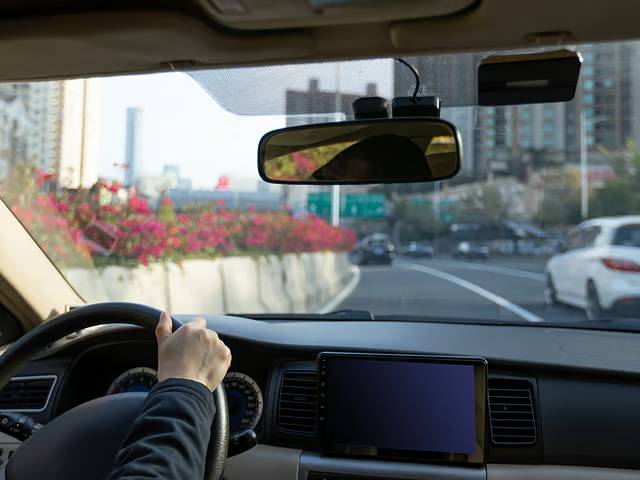
From scanning the road several cars ahead to resisting the urge to react when another driver cuts in, experts say safe driving in Dubai depends on a combination of observation, sound judgement and self-control.
Driving in the UAE can change character in a matter of minutes. A quiet residential street can lead to a busy junction, a multilane highway or heavy rush-hour traffic. In such conditions, knowing how to operate a car is only part of being a safe driver.
Motorists must be able to assess their surroundings, anticipate what could happen next and make sound decisions before a situation becomes urgent, says Khalid Javaid, Director of Operations at Excellence Driving, which was named Dubai’s No. 1 driving school by the Roads and Transport Authority in 2025.
Five skills that matter
According to Javaid, every motorist should develop five core skills: observation, anticipation, planning and decision-making, appropriate speed management and vehicle control, and emotional control.
Effective observation and scanning are very important on the roads. That means continuously looking around the vehicle and identifying potential hazards and mistakes made by other drivers.
Khalid Javaid, Director of Operations at Excellence Driving
Anticipation builds on that awareness. It involves understanding what another driver, motorcyclist or pedestrian might do next and preparing for it before it happens.
Planning and decision-making give motorists time to respond early rather than resorting to sudden braking, sharp steering or last-minute lane changes.
Javaid stresses that speed management is not simply about staying within the legal limit. Drivers must choose a speed suited to road conditions, traffic and weather while maintaining full control of the vehicle.
Another skill that often receives less attention than mirrors, manoeuvres and road markings is emotional control.
Dubai’s roads can test a driver’s patience. A sudden lane change, an impatient motorist or a missed signal can cause frustration. But Javaid says the way drivers respond to such situations can be just as important as their ability to handle the vehicle.
“We should always remind ourselves that our safety is ultimately in our own hands,” he says.
Thomas Edelmann, Managing Director of RoadSafetyUAE, shares a similar view. He believes that if drivers could improve just one habit, it should be developing “a caring attitude towards themselves, their passengers and all other road users around them”.
That mindset can influence dozens of decisions on every journey, from whether to force entry into a gap or follow another vehicle too closely to how a motorist responds to someone else’s mistake.
Lane changing: A skill that tests everything at once
On a multilane road, changing lanes may appear straightforward. In reality, it requires several decisions to be made almost simultaneously.
“Safe lane changing on multilane roads is one of the skills that often takes the longest to master,” says Javaid.
“It requires the motorist to combine effective mirror scanning, blind-spot check, speed management, judgement and appropriate timing while also anticipating the behaviour of surrounding traffic.”
This combination makes lane changing one of the more demanding everyday driving skills.
Common mistakes include relying only on mirrors, failing to check blind spots, signalling too late, and moving across too quickly or attempting to enter a gap that is simply too small.
Khalid Javaid, Director of Operations at Excellence Driving
Safe drivers do not simply spot an empty space and move into it. They assess the speed of surrounding vehicles and consider whether the gap will remain safe by the time they reach it.
Good lane discipline starts before the junction
Drivers can run into trouble when they concentrate only on traffic immediately around them instead of looking further ahead, Javaid says.
This is particularly important at multilane junctions, roundabouts and complex intersections.
“Good lane discipline starts with early observation, understanding road signs and markings, selecting the correct lane in good time, and maintaining it unless a safe and necessary change is required,” he explains.
Navigating heavy traffic
The same principles apply in congested conditions. Frequent lane changes may feel like a way to make progress, but they often save little time while increasing risk.
Javaid recommends maintaining a safe following distance, anticipating braking and lane changes, and keeping vehicle movements smooth and predictable.
Sometimes, the safest way to make progress is not to rush.
How to merge without losing momentum
Joining a high-speed road is another situation in which hesitation can create additional risks.
“A common mistake is to slow down unnecessarily at the end of the acceleration lane,” Javaid says.
This can leave drivers attempting to join fast-moving traffic at a significantly lower speed, making the manoeuvre more difficult.
Instead, motorists should observe traffic early, identify a suitable gap and adjust their speed progressively to merge smoothly with the flow.
It is a clear example of the difference between confidence and recklessness.
A hesitant driver may wait too long, while an overconfident one may force their way into an unsuitable gap. Safe driving requires a balance between the two.
When confidence goes too far
Confidence is important because motorists need to make timely decisions. However, Javaid warns that experience can become a liability when drivers start believing they are less vulnerable to risk.
Overconfidence can lead to speeding for the conditions, tailgating, taking unnecessarily small gaps or assuming other road users will behave as expected.
“A good driver should be confident enough to make safe decisions, but humble and courteous enough to respect the other road users,” he says.
Dealing with aggressive drivers
Few situations test emotional control more than encountering an aggressive or unpredictable motorist.
The temptation to retaliate, block another vehicle or prove a point can be strong. Javaid advises drivers to take the opposite approach.
“The safest response is to remain calm, keep safe separation distance and avoid confrontation.”
Motorists should not race, retaliate or challenge another driver. Where possible, allowing an aggressive vehicle to move ahead can create distance and reduce the risk of escalation.
“You cannot control their behaviour, but by maintaining good emotional intelligence, you can remain calm and rise above the situation,” Javaid says.
The road is not the place to win an argument.
Common mistakes new drivers make
According to 2025 Ministry of Interior data cited by RoadSafetyUAE, new licence holders were involved in 15 per cent of major accidents, up from 11 per cent in 2024.
Javaid says new drivers often struggle to anticipate the actions of other road users. Distraction, failing to maintain a safe following distance and relying too heavily on navigation systems can also increase risks.
Learning to drive, therefore, involves developing habits that extend well beyond passing the driving test, says Dheer Sharma, Director of Sales and Marketing at Excellence Driving.
The safest driver is not the one who reacts fastest, but the one who stays calm, anticipates what may happen next and remains in control. At Excellence Driving, we believe every journey should begin with that mindset.
Dheer Sharma, Director of Sales and Marketing at Excellence Driving

