

Farm Tenants Required to Keep Livestock, Stay Within Plot Boundaries and Use Designated Waste Disposal Sites.
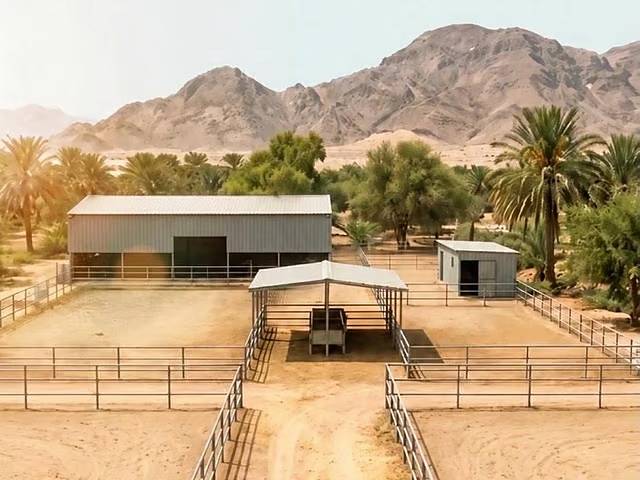
Dubai: Abu Dhabi’s Department of Municipalities and Transport (DMT) has announced four key conditions for tenants renting livestock farms, locally known as Izab, warning that violations could lead to financial penalties or the repossession of allocated plots without prior notice.
The regulations aim to safeguard land and natural resources, promote responsible use of designated farming areas and ensure tenants fulfil their contractual obligations.
Under the guidelines, tenants must prepare their allocated plots and begin the authorised activity within the prescribed timeframe.
They must also maintain the minimum number of livestock required for their plot size, stay within the boundaries and dimensions specified in their rental agreements, and ensure that waste is disposed of exclusively at approved locations.
The department clarified that tenants must continue meeting the minimum livestock requirement when applying to renew their leases.
It also urged tenants to understand their responsibilities for maintaining and managing livestock enclosures in accordance with municipal regulations.
DMT warned that failure to comply with these conditions could result in the relevant municipality reclaiming the allocated land without advance notification.
Land use, boundaries and waste management regulations
The department further reminded tenants that livestock enclosures, commonly referred to as Izab, must be used in accordance with Abu Dhabi’s laws, customs and established traditions.
Tenants are expected to respect neighbouring properties and the privacy of others, avoid activities that cause disturbances and ensure that their operations remain within the approved plot boundaries.
They must also adhere to the dimensions and identifying reference number recorded in their lease agreements.
DMT stressed the importance of maintaining cleanliness within livestock enclosures and the surrounding areas, preserving the general appearance of the premises and transporting all waste to officially designated disposal facilities.
If a rental agreement expires or is not renewed, tenants are responsible for clearing the property completely.
This includes removing any buildings, temporary structures, fences, equipment, installations and accumulated waste before returning the land to the relevant authorities.
Tenants are also required to return the land to its original condition as it was before the rental agreement began, unless the municipality grants permission for certain structures or improvements to remain in place.
Conditions for merging adjacent livestock enclosures
The Department of Municipalities and Transport (DMT) explained that tenants renting neighbouring livestock enclosures may be permitted to combine them into a single plot, provided the proposed merger does not conflict with existing planning regulations.
Where approval is granted, the municipality will issue one lease agreement covering the combined plots as a single livestock enclosure.
However, municipal authorities reserve the right to cancel the merger and reinstate the original plot boundaries and arrangements whenever necessary.
DMT encouraged all tenants to comply with the established rules to preserve land and natural resources, maintain hygiene standards and ensure the responsible management of livestock enclosures.
The department reiterated that following these requirements is essential to avoiding fines, other enforcement measures or the possible repossession of rented plots.

