

AI-powered healthcare innovations in Abu Dhabi aim to reduce administrative tasks, allowing doctors to spend more quality time with patients.
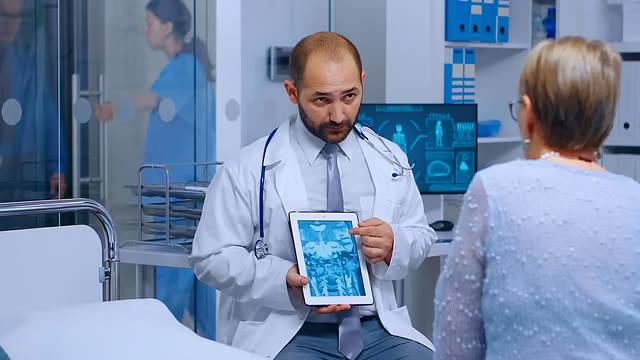
Abu Dhabi: Private healthcare providers in Abu Dhabi are increasingly adopting artificial intelligence (AI) to simplify medical documentation and administrative processes, allowing doctors to dedicate more time to direct patient interaction rather than computer-based tasks.
Speaking to Gulf News at the Future Health Summit 2026, Christopher Habib, Chief Strategy Officer at NMC Healthcare, explained that the organisation is developing a new approach to patient care designed to improve communication between doctors and patients.
“We are currently building a new patient journey which allows the doctor to spend a lot more time engaged in a meaningful conversation with the patient vs behind a computer screen,” Habib said.
He emphasised that introducing AI is not the ultimate goal. Instead, the focus is on improving healthcare experiences by reducing administrative burdens and ensuring medical professionals have access to relevant patient information when making treatment decisions.
“AI itself is not the objective. The objective is a patient spending less time dealing with administration, a clinician spending more time with their patient,” he explained.
According to Habib, having accurate information available at the right time can also support more personalised treatment and better-informed clinical decisions.
Dr. Mohammad Fityan, Group Chief Medical Officer at Burjeel Holdings, expressed a similar view, highlighting the growing role of AI in improving hospital operations.
He said AI-powered clinical documentation and automated workflows are helping healthcare teams streamline routine processes, improve operational efficiency and dedicate more time to patient care.
However, Dr. Fityan stressed that artificial intelligence is intended to support medical professionals rather than replace them.
“AI is not replacing radiologists or physicians. It acts as an additional layer of support, helping teams work faster and more efficiently.”
— Dr. Mohammad Fityan, Group Chief Medical Officer, Burjeel Holdings
How Will Patients Benefit from AI-Powered Healthcare?
For patients, the introduction of AI could mean smoother hospital visits, less repetitive paperwork and better coordination between different medical departments.
Dr. Fityan explained that improved information-sharing systems would allow patient records and relevant medical details to move more seamlessly through different stages of treatment.
“Information would follow them throughout their journey, reducing delays and unnecessary repetition,” he said.
Such improvements are expected to create a more connected healthcare experience, reducing the need for patients to repeatedly provide the same information when accessing different medical services.
The goal is to make healthcare delivery more coordinated, efficient and patient-focused.
Meanwhile, Habib emphasised that technological advancements should complement, rather than replace, the relationship between patients and their doctors.
“AI is not a substitute for good primary care,” he said.
He added that combining reliable medical information, AI-powered tools and a physician who understands a patient’s health history over time offers significant opportunities to improve healthcare outcomes.
Habib also encouraged UAE residents to adopt a proactive approach to managing their health instead of seeking medical attention only when symptoms develop.
“Don’t wait until you are sick to engage with healthcare. Find a primary care physician you trust, see them regularly and follow the screening recommendations appropriate for your age, medical history and individual risk factors,” he advised.
As Abu Dhabi’s healthcare sector continues to explore AI-driven solutions, the emphasis remains on reducing administrative work, strengthening doctor-patient relationships and delivering more personalised, coordinated medical care.
Abu Dhabi Strengthens Its Healthcare Sector Through Innovation
Abu Dhabi’s growing adoption of artificial intelligence in hospitals is part of a broader strategy to transform healthcare services through advanced technology, medical research and personalised treatment.
Both healthcare leaders highlighted the emirate’s continued investment in innovation as a major factor driving improvements in patient care.
Dr. Mohammad Fityan, Group Chief Medical Officer at Burjeel Holdings, pointed to ongoing initiatives in genomics, precision medicine and clinical research, supported by the Department of Health – Abu Dhabi and its healthcare partners.
These developments aim to expand treatment options, strengthen specialist medical services and make advanced healthcare more accessible to residents.
According to Dr. Fityan, such investments could provide patients with “greater access to advanced treatments, specialist expertise, and innovative care closer to home.”
Meanwhile, Christopher Habib, Chief Strategy Officer at NMC Healthcare, identified accessibility as one of Abu Dhabi’s key strengths in healthcare delivery.
He noted that many developed healthcare systems continue to struggle with limited capacity and long waiting periods for specialist consultations, diagnostic procedures and medical treatments.
“In many developed healthcare systems today, patients face significant capacity constraints and delays in accessing specialists, diagnostics or treatment,” Habib explained.
In contrast, he highlighted Abu Dhabi’s efforts to expand healthcare infrastructure while investing in preventive medicine, artificial intelligence, genomic research and precision healthcare.
“Abu Dhabi has built substantial healthcare capacity while continuing to invest in prevention, precision medicine, genomics and AI,” he said.
Habib also praised the emirate’s approach to encouraging collaboration between healthcare providers, life sciences organisations, technology companies and regulatory authorities.
By bringing these sectors together, Abu Dhabi aims to accelerate medical innovation and support the development of more effective, patient-centred healthcare services.
For residents, Habib believes these advancements should deliver practical improvements, including faster access to medical services, earlier detection of diseases and better long-term health outcomes.
Summarising the potential benefits, he said the goal is to achieve “better access, earlier diagnosis and more years lived in good health.”

