

The many faces and tragic transformations of one of DC’s most troubled villains.
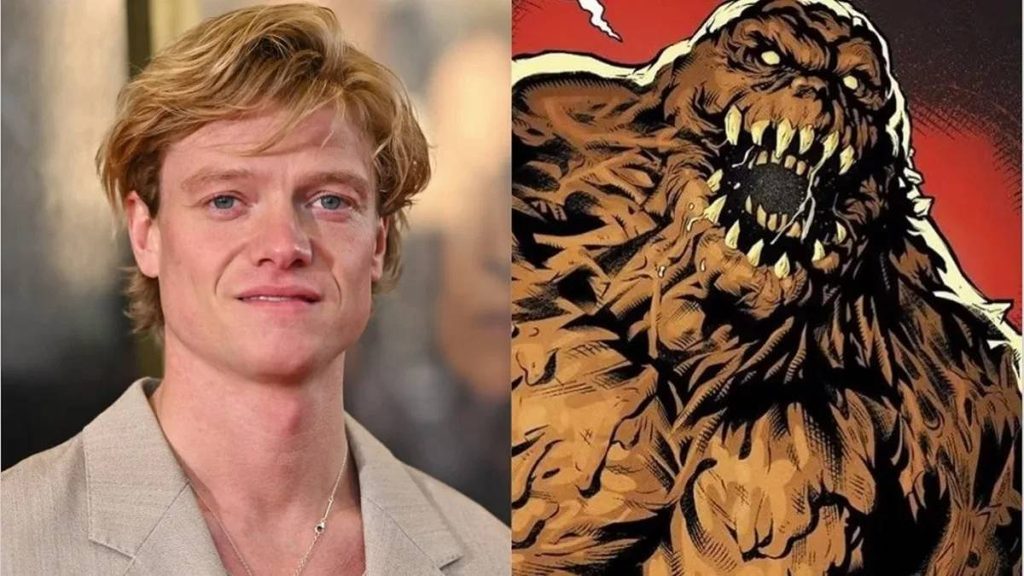
UAE moviegoers are set to get an early glimpse of one of DC’s most unusual cinematic experiments. Clayface arrives in cinemas across the Emirates on Thursday, October 22, a day ahead of its US release, just in time for Halloween.
And the timing could hardly be more fitting.
Judging by the trailer, this is less a conventional superhero movie and more a disturbing body-horror story unfolding within the DC Universe.
The film follows Matt Hagen (Tom Rhys Harries), a rising Hollywood actor whose promising career and physical appearance are destroyed when a scientific experiment goes horribly wrong.
Set to a haunting rendition of The Flaming Lips’ Do You Realize??, the trailer offers unsettling glimpses of hospital rooms, heavily bandaged faces and a human body gradually losing its form.
Rather than relying on superhero spectacle, the footage suggests a deeply personal tragedy about a man losing control of his identity.
The creative team behind Clayface
The film brings together some notable names from the horror genre.
James Watkins, known for directing Speak No Evil, takes the director’s chair, while acclaimed horror filmmaker Mike Flanagan, whose work includes The Haunting of Hill House, shares screenwriting duties.
Harries headlines the cast as Matt Hagen, alongside Naomi Ackie, whose character appears to have a significant connection to his transformation.
David Dencik and Eddie Marsan also feature in the film.
With this creative team, Clayface appears to be leaning into psychological horror and physical transformation rather than the familiar superhero formula.
Who is Clayface, Batman’s shape-shifting enemy?
Unlike many of Batman’s most recognisable adversaries, Clayface is not a single character.
The name has been adopted by several individuals throughout more than 80 years of DC Comics history, each with a different origin story shaped by personal tragedy, obsession or scientific experimentation.
The original Clayface, Basil Karlo, first appeared in 1940.
Unlike later versions, Karlo possessed no supernatural abilities. He was a struggling actor whose obsession with his former fame pushed him towards violence.
When a film studio decided to remake the horror movie that had established his career without casting him, Karlo became consumed by resentment.
He adopted the identity of the fictional killer from the original film and began targeting the remake’s cast.
His transformation was psychological rather than physical: an actor so consumed by his performances that he eventually lost his grip on reality.
Matt Hagen, introduced in 1961, became one of the most recognisable versions of Clayface and serves as the inspiration for the new movie.
In the comics, Hagen was originally a treasure hunter who encountered a mysterious radioactive substance that transformed his body into a malleable, clay-like material.
The transformation gave him extraordinary shape-shifting abilities, allowing him to imitate other people, become everyday objects or turn parts of his body into weapons.
However, his powers were temporary, forcing him to repeatedly return to the substance responsible for his transformation.
That dependence became an important element of his character, reflecting themes of addiction, desperation and the fear of losing control.
The 1992 Batman: The Animated Series episode “Feat of Clay” gave Hagen an even more tragic backstory.
In that interpretation, he was a disfigured actor who became dependent on an experimental cosmetic treatment that temporarily restored his appearance.
An overdose ultimately transformed him into the monstrous Clayface.
The animated series helped establish Hagen as one of Batman’s most emotionally complex enemies, portraying him as a victim of exploitation and desperation as much as a villain.
The upcoming film appears to draw inspiration from that interpretation.
Another incarnation, Preston Payne, made his debut in 1978.
A scientist suffering from a disfiguring medical condition, Payne attempted to cure himself using a serum developed from Hagen’s blood.
Instead, the experiment left him with a terrifying ability: his touch could dissolve living flesh.
To survive, he was forced to transfer the effects of his condition to other people, leaving him increasingly isolated.
Unable to experience ordinary human intimacy, Payne eventually developed an attachment to a department-store mannequin, creating one of the most heartbreaking storylines associated with the character.
In 1987, Sondra Fuller emerged as Lady Clay.
Unlike earlier versions, her transformation into a shape-shifting being resulted from a deliberate technological process rather than an accidental exposure.
She later formed a relationship with Payne, and the pair had a child, adding another unusual chapter to the complicated Clayface mythology.
Why Clayface is one of Batman’s most tragic villains
Batman has faced countless enemies, but Clayface stands apart because of the deeply personal nature of his suffering.
The Joker embraces chaos. The Penguin pursues influence and power. Two-Face struggles with a fractured identity while retaining a visible reminder of his former self.
Clayface’s tragedy runs deeper.
Across his many incarnations, the character is frequently shaped by desperation, fading fame, physical disfigurement, illness or scientific experiments that spiral out of control.
His descent into villainy is often rooted in circumstances that make him as much a victim as a threat.
At the heart of the character lies a painful contradiction: Clayface can assume virtually any appearance, yet struggles to reclaim his own.
For a villain whose history is closely tied to actors and performers, that loss carries particular significance.
These are characters whose identities were built around recognition, admiration and the ability to present themselves to the world.
Their extraordinary powers ultimately rob them of the very individuality they once valued.
Clayface can imitate anyone, but that ability only reinforces the absence of a stable identity of his own.
Every transformation becomes a reminder of the person he used to be and the life he may never recover.
That is what makes Clayface such a compelling figure in Batman’s world: his greatest power is inseparable from his deepest suffering.
That complexity has made Clayface one of the most difficult Batman villains to define. In some comic book storylines, he is a terrifying monster who must be stopped. In others, he is a deeply troubled man searching for redemption, occasionally joining forces with the Dark Knight when given the opportunity. Few of Batman’s enemies inspire such a powerful mix of fear and sympathy.
If Watkins and Flanagan successfully capture that emotional depth, Clayface could emerge as the DCU’s first genuine tragedy: not simply the story of a villain’s creation, but the heartbreaking unraveling of a man who loses everything, including himself.

