

Official Findings, Eyewitness Accounts and Expert Analysis Shed Light on Key Claims About FZ1073.
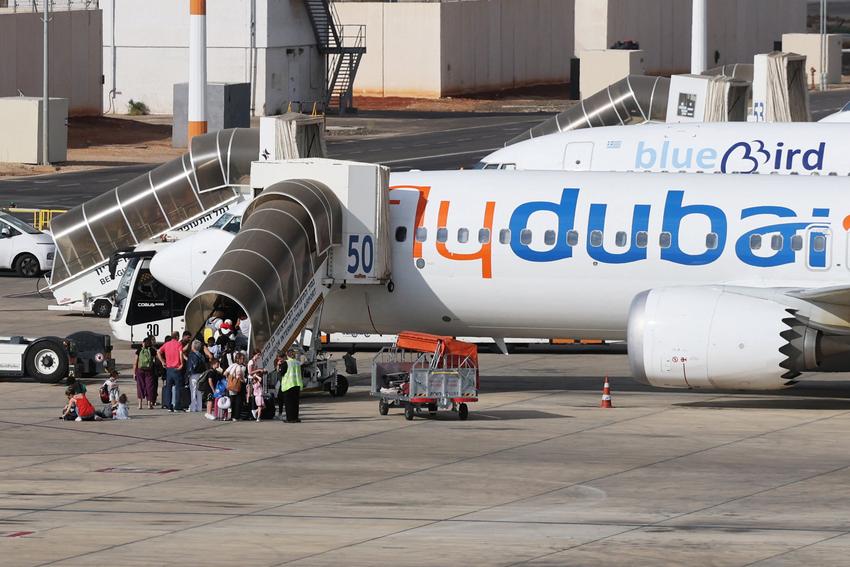
Several theories have emerged about what happened aboard flydubai flight FZ1073 since the aircraft made an emergency landing in Saudi Arabia on September 30. While some claims remain unverified, others have been based on brief video clips, flight-tracking information and eyewitness accounts that may not provide the full picture.
UAE investigators have released preliminary findings, including that the co-pilot allegedly attempted to carry out a terrorist act. However, both the aviation and criminal investigations are continuing, and a number of details surrounding the incident have yet to be conclusively established.
Still, several questions raised in the aftermath can be examined using the information currently available. Why did the oxygen masks remain stowed despite the aircraft losing around 16,000 feet of altitude? How was the plane able to continue flying despite visible damage to its rudder? Did a plumber actually land the aircraft? And how could a passenger jet withstand such a dramatic descent?
Here are five key questions surrounding FZ1073, examined using official statements, witness accounts in their proper context and insights from aviation analyst Saj Ahmad, chief analyst at StrategicAero Research.
1. Why didn’t the oxygen masks drop despite the aircraft losing around 16,000 feet?
Video footage recorded inside the aircraft showed that the passenger oxygen masks remained stowed even as flight-tracking data suggested the plane had experienced a rapid loss of altitude. This led to widespread questions online about why the masks were not deployed.
According to Ahmad, the important distinction is that passenger oxygen masks are activated by changes in cabin pressure rather than simply by how quickly an aircraft descends.
He explained that an aircraft can lose altitude rapidly while its pressurisation system continues to maintain safe conditions inside the cabin.
In the case of FZ1073, Ahmad said there was no evidence indicating a cabin pressurisation failure or decompression severe enough to require the deployment of oxygen masks.
As a result, supplemental oxygen would not necessarily have been needed despite the aggressive manoeuvres experienced by the Boeing 737 MAX 8.
Modern aircraft are designed to maintain cabin pressure through substantial altitude changes, he added. A sudden or steep descent therefore does not automatically mean that passengers will need oxygen masks.
2. Did a plumber really land the aircraft?
One of the most widely circulated claims following the incident suggested that a plumber with no professional flying experience had successfully landed the aircraft.
However, accounts from the passenger himself, as well as statements from flydubai, indicate that this was not what happened.
Yaniv Hayun, the plumber who assisted during the emergency, told Reuters that he briefly took control of the aircraft. However, he also made clear that another pilot later took over and carried out the landing.
flydubai’s initial statement said crew members who were travelling on the flight managed to secure the aircraft, divert it and land safely in Tabuk.
Two days later, flydubai CEO Ghaith Al Ghaith also credited the pilots with securing the aircraft and bringing it safely to the ground.
The available accounts therefore suggest that while Hayun played a role during the emergency and briefly handled the controls, he was not the person who ultimately landed FZ1073.
Hayun may therefore have briefly taken the controls during the emergency, but neither his account nor flydubai’s statements support claims that he was responsible for landing the aircraft.
3. How could the aircraft continue flying and land with a damaged rudder?
Images taken after the emergency landing showed significant visible damage to the aircraft’s rudder, raising questions about how the jet remained controllable and was able to land safely.
Ahmad explained that the rudder controls an aircraft’s yaw — its side-to-side movement — but it forms only one part of a broader flight-control system.
Despite losing a sizeable section of the rudder, the pilots still had functioning elevators to control the aircraft’s pitch and descent. They also retained control of the ailerons, the hinged surfaces on the wings used to roll or bank the aircraft left and right.
In addition, the pilots could use engine thrust to help manage the aircraft’s speed and overall performance.
Ahmad said damage to any major control surface introduces additional risks. However, the remaining flight-control systems meant the pilots still had ways to manoeuvre the aircraft and bring it safely to the ground.
4. Could an aircraft survive losing around 16,000 feet?
Another question circulating online is whether an aircraft could lose approximately 16,000 feet of altitude in a short period and still remain structurally intact and recoverable.
According to Ahmad, the amount of altitude lost alone does not determine whether an aircraft should break apart or become impossible to recover.
Commercial aircraft are designed with significant structural strength and flexible wings to withstand substantial aerodynamic forces. The more important factors are how the altitude was lost, including the rate of descent, airspeed, pitch angle, G-forces and whether the pilots retained sufficient control to recover the aircraft.
A rapid descent, therefore, does not necessarily mean an aircraft was simply falling uncontrollably from the sky. Nor does the number of feet lost on its own indicate that the aircraft should have suffered a structural failure.
Even a steep descent can potentially be recovered from if sufficient control authority remains available.
Ahmad said information from the aircraft’s flight data recorders should ultimately provide investigators with the clearest picture of the descent, including the forces experienced by the aircraft during the incident.
5. How was Captain Machchhar caught off guard by the attack?
Questions have also been raised about how Captain Smit Machchhar could have been taken by surprise inside the cockpit.
According to Machchhar’s own account, the attack began suddenly, with the first blow coming from behind and without warning.
He said he initially felt a heavy impact to the back of his head and believed something catastrophic might have happened to the aircraft. Only after further blows did he realise that the threat was coming from the other person inside the cockpit.
The UAE Attorney-General later said investigators found that the co-pilot attacked Machchhar inside the flight deck with a crash axe while attempting to take control of the aircraft’s flight controls.
Machchhar recalled that his vision began to fade as he tried to resist the attack while the aircraft pitched downwards.
Despite being injured, he managed to open the cockpit door, although the attacker subsequently closed it again.
Machchhar said he was on the floor when he heard people screaming outside the cockpit. He then reached for the door control once more and succeeded in opening it, allowing others to enter the flight deck and intervene.

