

BA295 Returns to Heathrow Following Rapid Descent and Emergency Alert.
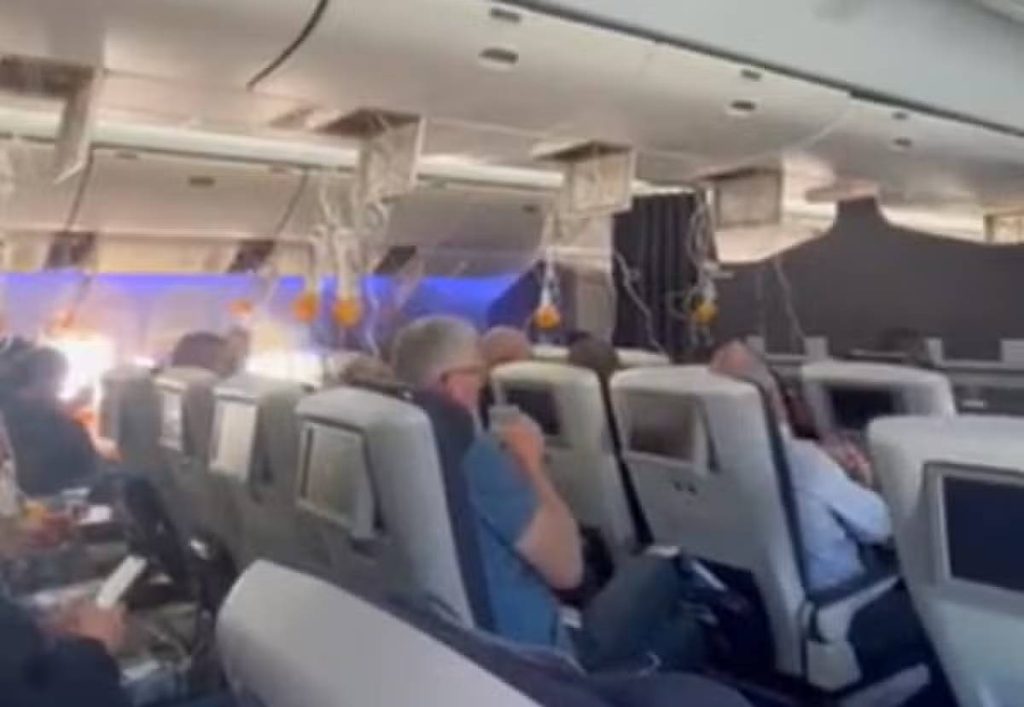
Passengers aboard a British Airways flight from London to Chicago had to use oxygen masks after the aircraft encountered a pressurisation problem while flying over Ireland, leading pilots to carry out a rapid emergency descent before returning to Heathrow.
British Airways flight BA295, operated by a Boeing 777-200ER, was travelling from London Heathrow to Chicago O’Hare on October 5 when it descended from approximately 37,000 feet to around 9,000 feet within a matter of minutes.
Flight-tracking data indicated that the crew set the aircraft’s transponder to code 7700, the internationally recognised signal used by pilots to declare a general emergency.
A loss of adequate cabin pressure appears to have prompted BA295’s rapid descent, although the precise technical fault behind the incident has not yet been confirmed.
What happened on BA295?
The Boeing 777 had climbed to a cruising altitude of approximately 37,000 feet when the issue developed while the aircraft was flying over Irish airspace.
Oxygen masks were deployed inside the cabin as the pilots initiated an emergency descent. Flight-tracking data showed the aircraft descending by around 28,000 feet, reaching approximately 9,000 feet in less than 10 minutes.
After reaching the lower altitude, the crew turned the aircraft back towards London and continued flying at around 9,000 feet while making preparations for its return to Heathrow.
The flight landed safely, and no injuries were reported.
Why did the aircraft circle before landing?
When a long-haul aircraft returns soon after departure, pilots may need to manage its weight before attempting a landing.
Long-distance flights typically depart carrying substantial amounts of fuel. If a flight turns back relatively early in its journey, the aircraft may still be above its normal maximum landing weight.
Depending on the circumstances, pilots may remain airborne for a period to burn additional fuel and reduce the aircraft’s weight. Other procedures, including the use of landing gear to increase drag when appropriate, can also help increase fuel consumption.
In an emergency, an aircraft can land above its normal maximum landing weight if necessary. However, when conditions allow, reducing weight before landing can bring the aircraft closer to its normal operating limits.
BA295 remained at an altitude of approximately 9,000 feet as it headed back towards Heathrow and prepared for its eventual landing.
What does squawk 7700 mean?
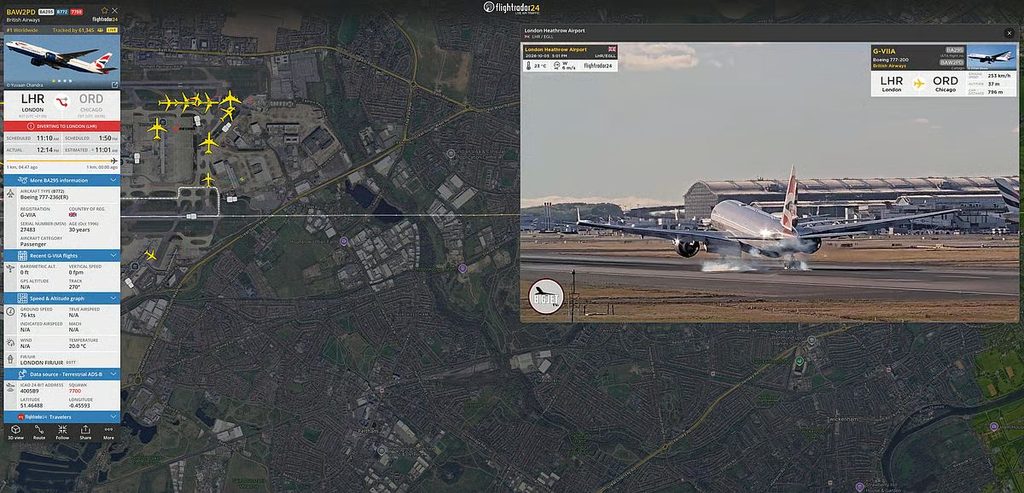
Squawk 7700 is the internationally recognised transponder code used by pilots to indicate a general emergency.
When the code is selected, it alerts air traffic controllers that the aircraft is experiencing an emergency and may require priority handling or additional assistance.
When pilots select transponder code 7700, air traffic controllers are immediately made aware that the aircraft requires priority attention. The code itself does not specify the nature of the emergency and can be used in various situations, including technical problems, medical emergencies or other incidents requiring urgent assistance.
Flight-tracking service Flightradar24 reported that BA295 was transmitting the 7700 emergency code and had descended to approximately 9,000 feet while over Ireland.
How does aircraft pressurisation work?
Passenger aircraft do not maintain cabin conditions by simply pumping oxygen into the cabin.
Instead, compressed air is supplied through the aircraft’s systems and conditioned before entering the cabin. Cabin pressure is then controlled by an outflow valve, which regulates the rate at which air is released from the aircraft.
This allows the cabin to remain at a pressure corresponding to an altitude considerably lower than the aircraft’s actual cruising level, enabling passengers and crew to breathe normally.
Pressurisation issues can develop if components involved in the process, such as air-conditioning packs, valves or related systems, fail to function as intended.
Why did BA295 return to Heathrow?
After completing the emergency descent and turning back towards the UK, the pilots decided to return the Boeing 777 to London Heathrow rather than continue the transatlantic journey to Chicago.
British Airways said the safety of passengers and crew remained its highest priority and confirmed that its pilots returned to Heathrow following a technical issue. The aircraft landed safely, and passengers were able to disembark normally.
The airline said its teams were also working to arrange alternative onward travel for affected passengers.
The precise cause of the technical problem has not been disclosed.
Oxygen masks deploy during emergency descent
The cabin oxygen masks provided passengers with supplemental oxygen while the aircraft descended towards a safer altitude.
After BA295 reached approximately 9,000 feet and conditions had stabilised, the supplemental oxygen was no longer required.
The Boeing 777 later landed safely at Heathrow, where passengers left the aircraft normally.
British Airways has not confirmed how many passengers were travelling on the flight at the time of the incident.
BA295 incident at a glance
- Flight number: British Airways BA295
- Route: London Heathrow to Chicago O’Hare
- Aircraft type: Boeing 777-200ER
- Nature of incident: Technical issue involving cabin pressurisation
- Location: Irish airspace
- Cruising altitude: Approximately 37,000 feet
- Emergency descent: Down to around 9,000 feet
- Emergency code: Squawk 7700
- Outcome: Aircraft returned safely to London Heathrow
- Reported injuries: None
- Exact cause: Technical fault has not been confirmed

